The classical gap

True Story No. 1: In three completely separate conversations with as many different long-time classical music fans, my interlocutor has used the same phrase to describe a cappella (i.e., unaccompanied) choral music: “It was just singing — no music!”  This story always gets a chuckle from my choral-singing friends, who most certainly consider themselves to be musicians and what they do to be music.

True Story No. 2:  Many years ago, I attended a recital by a top American oboist, featuring among other works, J.S. Bach’s Sonata in G Minor for oboe and harpsichord, BWV 1030b — which, as the oboist explained from the stage, is, “better-known, of course, in its later version in B Minor for flute.”  Of course?  Raise your hand if you knew this already.  Uh-huh…I thought not.

OK, so the nice people in the first story may have been confused.  And the oboist in the second story may have added “of course” to his intro as a verbal tic, without thinking.

But scout’s honor, I could come up with several other instances to demonstrate the same point, which is:  Classical musicians and other insiders (academics, critics, presenters, broadcasters, etc.) often assume a higher level of musical knowledge among the audience than the audience actually possesses.  And the insiders too often operate accordingly, oblivious to or unconcerned about the fact that most of people they’re addressing don’t understand what they’re saying.  I call this difference between insiders and non-insiders (i.e, typical listeners) the “classical gap.”

One more story:  Last year, I taught two sessions of a very general music appreciation course called “The Orchestra Through Time” for Amherst Leisure Services.   Along the way, while tracing the orchestra and its repertoire from the Baroque to the present day, I dropped in some very basic music theory — staffs, clefs, major, minor, flats, sharps, key signatures, that kind of stuff.  With few exceptions, this stuff was a revelation to the attendees, who’d been listening to classical music for years without having anyone explain it to them.  So that’s what they mean by “Symphony in G Minor” or “Concerto in B-flat Major!” (And by the way, the attendees also didn’t know the difference between a symphony and a concerto until I explained it to them.)

Of course, this gap exists outside of classical music as well.  I remember attending a birthday party for a potter friend, attended mostly by other potters, one of whom told a pottery joke.  When I didn’t laugh, the joke-teller said, “Well, I guess it wouldn’t be funny to a non-potter.”  You know, I hadn’t previously given much thought to my sad life as a non-potter.  But boy, I sure felt like a non-potter that night.

Maybe that’s partly why I’ve become sensitized to the insider/non-insider classical gap.  And remember: By “non-insider,” I don’t mean the next person you meet on the street.  I mean the exclusive subset of the population who enjoy listening to classical music.  Even they can’t be assumed to know their G Minor from their B-flat Major.

So what should insiders do about it?  I could list lots of things, and certainly welcome your ideas.  But I will recommend a few crucial steps, before which nothing good will happen:  Acknowledge the gap.  Reflect on it — and I really mean reflect, as in looking at yourself in a mirror.  Embrace it.  It’s a fact of modern classical life, and cannot be wished away.  Ignore the gap, and continue as if it didn’t or shouldn’t exist, and the gap will widen.  You will be tuned out.  Bridge the gap, by first learning how to hear yourself as those on the other side hear you, and it will narrow.  These are good, smart people on the other side, people who pay your salaries and deserve your respect.  Work with them, get to know them, listen to them, and they’ll follow along.  Classical music will be much the stronger for it.
Back into the jungle!

Washington Post classical music critic Anne Midgette has just written her second critique of the new TV series, “Mozart in the Jungle.”  You can read her first critique and my blogged review before continuing.

In short, I found the series, set in the world of classical music and filled with sex, drugs and utter implausibilities, to be a hoot.  Ms. Midgette is far more troubled by the implausibilities, which ruined the experience for her.

Anyhow, here’s my online comment to Ms. Midgette’s latest piece:

I think Ms. Midgette’s critique of “Mozart in the Jungle” would be more apt if the program’s purpose was to depict classical music in a way that classical musicians, critics and other insiders would find accurate. I suspect that the program’s purpose was to be entertaining to a broad audience, the vast majority of whom have little to no knowledge of classical music. A lesson I learned repeatedly in my decades in classical radio was never to assume any specific classical knowledge among listeners, many (perhaps most) of whom would, for instance, not be able to explain the difference between a symphony and a concerto, or to place Bach, Mozart and Beethoven in chronological order. And these were classical listeners!

Thus, when the producers chose the “1812 Overture” in the segment Ms. Midgette mentions, they chose wisely: It’s one of the very few orchestral pieces that a fairly large swath of the audience could be expected to have heard of. Her reasoning of why it was a disappointing choice might make sense to her and to other insiders, but is beside the point, as is her point about the sudden repertoire shift to Mahler’s Symphony No. 8. She’s worried about the implausibility of this plot element, but the producers have to worry about whether viewers even know what an oboe is, much less how many are used in a typical orchestral work.

It might behoove Ms. Midgette or another critic to watch the series again, in the company of more typical viewers, perhaps people who’ve been to a few pops programs or like to sit on the lawn at Tanglewood, but who wouldn’t know an English horn from a French horn. She could stop periodically to offer her insider critiques, and to ask her fellow viewers whether they have any idea what she’s talking about. It could be very instructive.

P.S. (not included online for reasons of space):  Speaking of horns– did you notice how “Rodrigo” admonishes the “French horns” in one segment, even though a real conductor would have just called them “horns?”  Another smart move: the general pubic knows them as “French horns,” so just to call them “horns” would be confusing.

P.P.S.: Overheard (scout’s honor!) in the row behind me at last Friday’s Berkshire Bach concert in Northampton:

Lady No. 1:  “What’s that instrument on the stage?” (referring to a harpsichord)

Lady No. 2:  “That’s an, er, clavichord.”

Lady No. 1:  “Oh.”


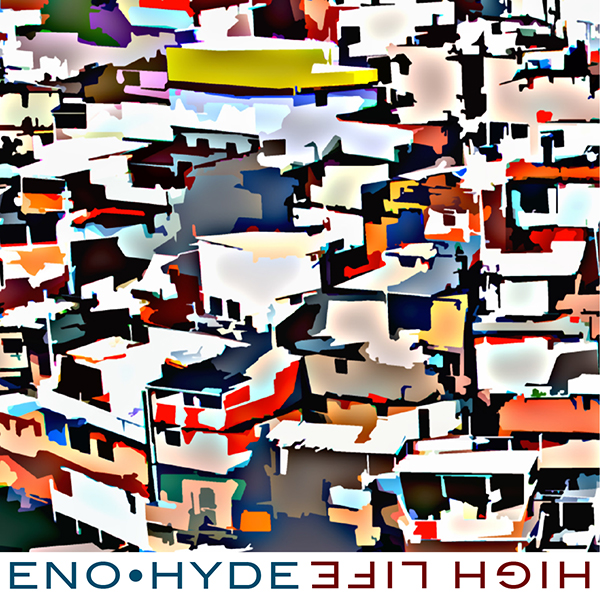
Album du jour: Brian Eno & Karl Hyde, “High Life”

jacket_img_L

By way of memorial, Ireland’s The Journal of Music has just reposted an excellent article by Bob Gilmore, the Irish musicologist and musician who died on Friday at the age of 53.  In the article, “Difficult Listening Hour” (hat tip: my friend, composer Matthew Whittall), Gilmore defended his preference for what he called “difficult music”:

…a kind of music that owes more to Western classical tradition than to traditional, popular or vernacular sources; is usually fully notated; is complex, dissonant and will often not contain any hummable melody or danceable rhythm; is hard to play and difficult to remember exactly. It is the kind of music written by composers like Edgard Varèse, Olivier Messiaen, György Ligeti, Iannis Xenakis, Karlheinz Stockhausen, James Tenney, Horatiu Radulescu, Claude Vivier, Kaija Saariaho and many, many others.

While I like some of the music Gilmore loved, and wouldn’t cross the street to hear some others of his favorites, I appreciated the modesty and gentle humor with which he addressed issues often fought with toxic word-bombs:  Why do so many people shun complex, modernist music?  Are those who claim to like complex modernism really just trying to sound smart, as is sometimes alleged?  What’s the appeal of this incomprehensible stuff anyway?  Only in the final paragraph did Gilmore succumb to the hard-to-resist temptation (which I surely have not always resisted) to feel a little superior about his taste:

People who close their minds to ‘difficult music’ tend to miss one crucial point: for some of us, that very difficulty may in fact be a stimulus. I’m the kind of person — and I’m not alone — that gets bored being told only things I know, by having comfortable conversations that don’t challenge my beliefs or opinions. As with overcoming any difficulty, learning to comprehend a challenging musical style offers an intense pleasure and an excitement that a more familiar style can never provide.

Well, I’d like to think I’m an open-minded sort, open to new ideas of all kinds, even those ideas that challenge my cozy old paradigms.  But I also prefer music that operates at the same pace as my ability to ascertain what’s going on.  A constant barrage of seemingly random detail, whether the detail is really as random at it sounds (i.e., Cage) or not (i.e., Boulez) leads me to what we might call the Five Stages of Hypercomplexity:  Overwhelmed, Frustrated, Annoyed, Bored, and To Hell With It.

So, while in no way begrudging the pleasures such music afforded Mr. Gilmore, his tastes are not my tastes.  But OK, what music floats my boat?  How about music that presents easily graspable ideas, then plays with them in myriad delightful ways, while never exceeding my ability to hear what’s going on?  Sure, I still hear new stuff each time I listen to such music, but only if the initial encounter is so enjoyable that I’m drawn back in to listen again.  This music engages my intellect, but also satisfies my craving for beauty, love, comfort and physical pleasures.  Often, it’s music not of profound complexity but profound simplicity, in which the shift of one note or the addition of one beat says as much as an entire movement of Webern.  This is the music that lately has been on my mind and in my ears, including an album that came out a few months back, but which is my first “Album du jour”of 2015.

“High Life” was the second 2014 collaboration of Brian Eno, the immensely prolific, immensely influential composer, producer and pioneer of “ambient music,” and Karl Hyde, guitarist and vocalist of the well-known techno band Underworld.  What an absolute blast!  Consisting of five onslaughts of volume and energy followed by one gentler epilogue, “High Life” is all about what I wrote in the last paragraph:  easily graspable ideas that are then played with in myriad delightful ways.

Try, for instance, the exhilarating first track, “Return.”  Right from the opening fade-in, you get the basic ideas, introduced one at a time:  A rhythmic guitar drone, a two-chord guitar pattern, a short, infectious percussion pattern, a simple vocal melody, a pulsing bass line, and much later, a circular synthesizer fragment.  For nine minutes, each of these layers is developed in subtle but fascinating ways.  Focus for a minute or so on the two-chord guitar pattern:  Normally according twelve beats to each chord, sometimes the pattern is either shortened or lengthened, or the chord’s texture is enriched, or the way one chord moves to the next is inflected.  Each of these shifts, perhaps not mind-blowing on its own, changes the relationship between this pattern and all the other layers –which are themselves in a constant state of similarly subtle shifts.

Simultaneously simple and complex, incredibly energetic and engaging, this music is, for me, nothing short of mind-blowing.  And every track on “High Life” does the same thing for me — even the somewhat space-agey and progish finale, “Cells & Bells.”  Would I call “High Life” “challenging?” Perhaps, in the way it challenges the listener to pay close enough attention to hear what’s going on.  Would I call it “difficult?”  Naah.  Difficulty was never this much fun.

Reader poll: A most fashionable composer

01SUBENCOUNTERS-articleLarge

READER POLL:  A classical composer is profiled in the New York Times this week — not for his music, but for his fashion and style.  Your reaction:

1.  For shame!  It’s yet another sign of the trivialization and sensationalism that has dumbed down classical music  — and from the paper that just laid off one of its best classical critics.

2.  Great!  It’s a hopeful sign that classical music is finally coming down from its ivory tower and joining the rest of American culture.

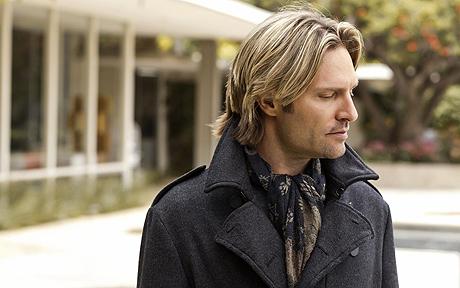
3.  It’s fine with me — just as long at it’s not that &%$# Eric Whitacre (below) again.

eric_1722637c

4.  Where can I find me some cool Ann Demeulemeester pieces?

5.  Whatever.

Please feel free to expound to your heart’s (or spleen’s) content in the reply section.  And Happy New Year!

A critical veto

1ebd6f209e0d8c998b1da0fa83120c5c

The new Tim Burton film “Big Eyes,” which The Wife, The Big Sis and I took in on Christmas, tells the story of Margaret Keane, creator of the paintings of sad, preternaturally wide-eyed children that became a sensation in the 1960s, and how Ms. Keane’s husband Walter, a serial fraud and liar, claimed credit for the artworks.  It’s an enjoyable but rather subdued film, lacking the zany energy of Burton’s earlier biopic “Ed Wood,” also written by the screenwriters of the new film, Scott Alexander and Larry Karaszewski.  I guess that’s the difference between a film that takes place largely in an artist’s home and studio, and one that tracks a manic film director and his eccentric entourage as they sprint from caper to caper.

In a prominent scene of both the film and of the Keanes’ real-life story, a massive painting called “Tomorrow Forever,” depicting a seemingly infinite multi-cultural parade of Ms. Keane’s signature waifs, gets selected as the theme of the Hall of Education at the 1964 New York World’s Fair  — then gets taken down at the directive of Fair officials.

Why the sudden removal?  As narrated in the film with, as far as I can tell, a high level of historical accuracy, it was thanks to an extremely negative article by prominent New York Times art critic John Canaday (incongruously portrayed on-screen by Terence Stamp as 30 years older and 100% more British than Canaday, a native of Kansas).  After attacking the Keane paintings for their “appalling sentimentality” and excoriating them as “tasteless hack work,” Canaday then destroyed the story put out by the Hall of Education’s directors that the painting was chosen by a “panel of critics” from a “large number of submissions.”  In fact, the Hall’s directors make the decision to feature “Tomorrow Forever” quickly and on their own, after being approached by Mr. Keane.

But what really did the trick was the reproduction (in black-and-white, of course) of “Tomorrow Forever” that illustrated Canaday’s article (available in the New York Times online archive).  Such was the negative reaction of prominent figures in the the art world to the Keane canvas that the World’s Fair’s organizers, probably on the orders of Fair president Robert Moses, invoked their “power of censorship in cases of ‘extreme bad taste or low standard'” (as put in a subsequent article by Canaday) and had “Tomorrow Forever” taken down.

So, the triumph of art over kitsch and a thrilling victory for cultural standards, right?  Well…I’ve been mulling this one over ever since seeing the movie, and am not so sure.  For regardless of what you think of the Keane paintings and their place on the artistic spectrum, and whether or not you would have agreed with John Canaday and with the Fair’s decision to take painting down, I think it’s also quite pertinent to ask whether we want to give critics and other artistic insiders a de facto veto over what gets and doesn’t get shown at a major public event.

Or let’s change that to what gets and doesn’t get played, to switch the art form from visual to musical.  Imagine, for instance, if one of the New York Times‘ music critics had veto rights over the programming of big public concerts, such as the New York Philharmonic’s free concerts in New York’s Central Park.

In fact, we don’t have to imagine.  All you have to do is read Times critic Zachary Woolfe’s high-toned dismissal of a July 2013 Philharmonic summer pops concert that played to sixty-thousand attendees.  Read that again: Sixty-thousand!  Scheduled to coordinate with the 2013 Major League Baseball All-Star Game, played at New York’s Citi Field, the concert featured pop diva Mariah Carey, baseball Hall-of-Famer Joe Torre narrating “Casey at the Bat” and other light summery fair.  Doesn’t that strike you as just right for the occasion?  Not if you’re Zachary Woolfe:

But there is no question that the evening diverted resources from the orchestra’s core mission, which in the summer should be to present as much substantive, free classical music as possible across all five boroughs.

Oh, for Pete’s sake!  Isn’t that about the most out-of-touch, out-of-place enforcement of supposedly high artistic standards you’ve ever read?  That’s at least how it struck me at the time, as I wrote in one of my old New England Public Radio blogs.

To get back to “Big Eyes,” Woolfe’s attitude reminds me of that of John Canaday in the 1964 article that led to the World’s Fair decision to take the Keane painting down.  In the article, Canaday reports asking Dr. Nathan Dechter, board chairman of the Fair’s Hall of Education, to describe his standards of fine art.  Dechter’s answer (which Canaday read back to Dechter to make sure it was what he really said): “What is desirable is what pleases the mass public.”  Canaday then helpfully adds his interpretation, in case we ignorant readers missed the point:

In other words, the function of education is to determine the lowest common denominator and see that it is maintained.

But that’s not what Dechter said, was it?  Clearly, Canaday was putting words in Dechter’s mouth to make Dechter seem cheap and pandering, and to place himself on a higher artistic footing.  And note the easy, breezy and false equivalence of “pleasing the mass public” with maintaining the “lowest common denominator.”  Well, sometimes they are the same, or at least they’re overlapping.  Often, they’re not.  Often, “pleasing the mass public” is actually the noble thing do — such as when you’re welcoming over a million visitors to your Hall of Education, or when you’re playing to 60,000 attendees in Central Park.

And maybe in the end, “Tomorrow Forever” was a sub-standard choice for an artwork to portray the values of education.  I haven’t been able to find out what, if anything, went up in its place, and will edit and repost this blog if I do.  But whatever it was, I sure hope John Canaday didn’t get to select it.

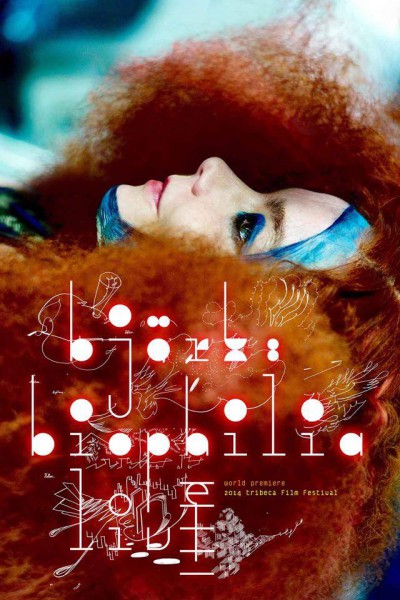
Videos du jour: Antony and the Johnsons, “Turning” & Björk, “Biophilia Live”

screen-shot-2014-10-06-at-10-03-37-am

I have Björk to thank for my discovery of the voice and music of Antony Hegarty, or as he’s better known, Antony.  On the Icelandic singer-composer’s album “Volta,” Björk and Antony sing an extraordinary duet called “Dull Flame of Desire,” one whose repeating harmonic pattern and intense, erotic vocal interplay reminded me, of all things, of ground-bass duets by such 17th-century composers as Claudio Monteverdi and Henry Purcell.  Check these out and hear I mean:

Intrigued by my first encounter with Antony, I gave his original music a try —  what a great find!  Again, if you’d like to hear what I mean, give a listen to an album I would put ahead of any of the last decade for sheer beauty, Antony & The Johnsons’ “The Crying Light”:

For me, Antony falls into the long line of glorious divas of song, including the likes of Billie Holiday, Judy Garland, Maria Callas and Janis Joplin.  I use the term “diva” advisedly, since Antony, who identifies as a transgender man, projects a strong feminine energy when he lifts his soulful, ethereal voice in song.  Regardless of how it strikes you, however, Antony’s is one of those “if you haven’t heard it you haven’t lived” voices that come along very rarely.

Based on a 2006 concert collaboration with filmmaker Charles Atlas, who also directed the resulting film, Antony & The Johnsons’ new DVD/CD set “Turning” celebrates the transgender sisterhood in music and image, and in a most gentle and non-didactic fashion.  Three element alternate through the film.  First, there are  concert performances of Antony’s songs, featuring him, a chamber ensemble and the projected images of female models standing on a rotating pedestal.  Second, there’s footage of Antony and the entourage as they tour through various European cities.  Finally, we see and hear the personal testimony of the models, a diverse group of New Yorkers, each with an individual, often moving story of gender discovery.  Good for Antony for not placing the film’s entire focus on himself.

Regardless of one’s interest in this particular subculture, the warmth and and love of the participants’ interactions, nicely dovetailed with Antony’s beautiful music, make for very rewarding viewing.  In the meantime, here’s the soundtrack album:

bjork-biophilia-live

Then we turn to Björk, and her new DVD/CD set, “Biophilia Live.”  Actually, this is just the final (?) element of a multi-year multi-media “Biophilia” project, also including CD, concert tour, educational programs and smartphone apps.  A musical chameleon, Björk has on the one hand gone back to musical basics with simple, memorable melodies, and on the other hand aimed higher than ever with a concept that rivals Richard Wagner’s Gesamtkunstwerke (complete art works) in hugeness of concept.  Lyrics of a purpleness that only Björk could get away with — ecstatic paeans to everything from single cells of life to the entire cosmos — are draped but not engulfed in music scored for her solo voice, women’s choir and elemental but powerful instrumentation.

On the original 2011 “Biophilia” CD, I found the music to be interesting in the abstract but cold in actual effect — “cool” in both conventional senses of the word.  Fortunately, the “Biophilia Live” film restores a goodly measure of the missing humanity, without diminishing the album’s otherworldly appeal.

Performing in concert in London, Björk comes out dressed in a two-foot-diameter multi-colored fright wig, blue face makeup, and a short, cream-colored dress made of what looks for all the world like vinyl upholstery.  By her standards, it’s actually a fairly tasteful get-up.  Dancing, prancing, in good voice and enjoying herself royally, Björk is joined onstage by two instrumentalists, one doing keyboards and electronics and the other on percussion, along with a 25-woman Icelandic choir called Graduale Nobili, which provides lush, complex backup harmonies and choreographed movement.  Each song, including several from Björk’s earlier albums, was accompanied in the concert hall by psychedelic projected videos; these videos were then intercut with the live concert footage in the resulting film.

If you’re getting the idea of a wild, out-of-this world extravaganza here, then I’ve done my job.  But don’t worry, it’s all very approachable, the music really cooks, the audience is having a splendid time, and such is Björk’s charm and smiling enthusiasm that one can’t help but smile back.  The on-stage choir was a master-stoke as well, adding warmth and no small measure of physical beauty to the proceedings.  Plus, you’ve got to see the really cool custom-made instruments invented for the project, such as the gameleste — sort of a combination Harry Partch and Dr. Seuss.  There’s only one Björk, and this is one of the best things she’s done.  Check out the soundtrack:


TV series du jour: “Mozart in the Jungle”

amazon-tv-pilot-2014-roundup

My daughter and I have a running gag going in which we compete to come up with the most outrageous and implausible punchline to a classical musical joke.  You know, like “He played pizzicato when he should have played portamento!,” followed by exaggerated guffaws and knee-slaps.

I suspect the scriptwriters for a new classical music-based TV series called “Mozart in the Jungle” (released today on Amazon Instant Video) might have been eavesdropping on our hilarity.  Here’s my transcription of a scene from the pilot, where a young hot-shot conductor upbraids an honored elder of the podium at a post-performance party:

Emily Wu, the first violin, she played sharp seventeen time in the first movement alone!  And then the horns came a bar late, which completely threw off the clarinets, and we weren’t able to weren’t able to perceive Tchaikovsky’s desired dynamic shift from bars 27 to 34!

As I’m sure my professional musician friends would vouch, that is absolute gobbledygook.  It’s not the only forehead-slapper in the pilot, either.  Sure, the producers hired enough actual musicians to make the orchestral scenes (with something called the “New York Symphony”) look fairly real.  A cameo by Joshua Bell, who not only plays the final bars of the Tchaikovsky Violin Concerto but handles a few lines of dialogue, also adds to the verisimilitude.

But the “conductors,” played by Gael García Bernal and Malcolm McDowell, flail about with no sense of rhythm, the script is rife with non-sequiturs as bad as the one quoted above, and the whole plot line, drenched in glamour, ego and of course, sex, is absolutely ridiculous.

And you know what?  I loved every moment.

Fictionalized from journalist and oboist Blair Tindall’s real-life memoir of the same name (subtitled “Sex, Drugs and Classical Music”), “Mozart in the Jungle” follows the life and career of a young female oboist from North Carolina trying to break into the New York classical scene.  Let that soak in for a moment:  It’s a TV series about a classical musician.  What fan of classical music wouldn’t applaud that?

Those who can’t get past the inauthenticity of it all, such at least one prominent classical music critic, that’s who.  Fair enough; if you’re extremely annoyed by such things, this is not the show for you.  But not only would it never have occurred to me to ask for classical music authenticity from a TV series, I could imagine too much authenticity making for a duller, less entertaining experience for the average viewer.

Take the scene from the young conductor that I quoted above.  I know it’s nonsense, and you might too.  But to get the point across the general audience that the performance sucked, I think it’s just right.  Anything subtler would go over the audience’s heads, not because the audience is stupid, but because they’re not as conversant with “inside music” talk as you and I are.  This speech is in the classic tradition of such dialogue as that from the 1945 film noir “Laura” that I quoted in an earlier blog:

DETECTIVE: You know a lot about music?

POSSIBLE MURDER SUSPECT: I don’t know a lot about anything, but I know a little about practically everything.

DETECTIVE: Yeah? Then why did you say they played Brahms’s First and Beethoven’s Ninth at the concert Friday night? They changed the program at the last minute and played nothing but Sibelius.

Would either a Brahms First/Beethoven Ninth or an all-Sibelius concert have been given by any American orchestra in 1945?  Probably not.  But the dialogue gets the idea across quickly and clearly, with no muss or fuss.  Besides, what other subculture do you expect to be gotten just right in the movies and on TV?  Sports?  Politics?  The movies themselves, for Pete’s sake?

All right, enough analysis.  Based on viewing the first two episodes, I found “Mozart in the Jungle” to be soapy, sexy, over-the-top fun, with lots of scenery-chewing and a few good classical jibes (e.g., the proposed marketing campaign for the young hot-shot conductor, clearly inspired by Gustavo Dudamel, featuring the slogan “Hear the Hair!”).  Oh, and Bernadette Peters, too.  And I think that for all its inauthenticity, it’s great for classical music to be presented in popular culture like this.  Even if the bassoon in the adagio mistook her staccato for her sostenuto –ain’t that a real knee-slapper?

Another critical loss

There is sad irony in the fact that I read of classical music critic Allan Kozinn’s dismissal from the New York Times on the “Slipped Disc” blog of British classical journalist Norman Lebrecht.  While no uncritical fan of classical music critics, I always looked forward to reading Kozinn’s reviews and features, which struck me as fairer, more open-minded and more audience-focused than those of most of his peers.

On the other hand, while his up-to-the-minute coverage of classical news performs an important service, Lebrecht is an unreliable sensationalist whose frequently outrageous opinions (here’s the latest) and titillating headlines seem geared more for attention than enlightenment.  “Audience whoring click baiting” is how the widely-read “On an Overgrown Path” blog puts it.

I’m sure that many classical musicians feel that for their own benefit, they need to stay on Lebrecht’s good side, much as celebrities and their agents felt about scandal-mongers like Walter Winchell back in the day.  But among the classicalsphere, i.e., the pundits, critics and other wordsmiths one encounters on the net, the verdict is all-but-unanimous:  Kozinn and other “serious” critics good.  Lebrecht bad.

No question, I would rather read a hundred Allan Kozinn pieces than one by Norman Lebrecht.  But that’s not because Kozinn is a high-minded critic and Lebrecht a more populist one.  It’s because I think Kozinn is better than Lebrecht.  In an ideal world, where classical music appealed both to a small group of connoisseurs and to a larger fan base, there would be room for journalism that reached both cohorts.  They’ve certainly figured out how to do this in film, television and pop music journalism.

But in the U.S., there isn’t much room for either, at least in the general press.  You could put all the full-time classical critics in America in one hotel conference room, and still have room, I suspect, for the local chapter of the Lions Club.  (It’s not just classical critics, by the way.  I saw the same shrinkage in my field, classical public radio.)  As to covering the domestic classical scene in print with a more popular touch — who do we have?  Am I missing someone?

And I would say that the lack of the latter, more “popular” kind of critic is every bit as much an indication of the perilous current state of American classical music as is the Times’ layoff of Allan Kozinn.  Classical will always have its connoisseurs, who know how to find and share smart opinion about the music on the internet.  But if the American classical audience grew to the point where we could develop and sustain our own Norman Lebrecht — hopefully a more reliable, less obnoxious one — that would be a sign that classical music was on an upward, less overgrown path.

(P.S.  For those seeking lively daily coverage of the national classical scene, good old public radio does have at least one excellent choice!)


The twelve CDs of 2014

A faithful reader has asked me to compile a “best of” list for CDs of 2014.  OK, I’m game.

But best of what?  My listening is too eclectic to fit into any genre, too spotty to have heard it all, too idiosyncratic to be anything more than my own personal choice.  While my job used to entail keeping up with all the new classical releases — nice work which I was happy to have gotten —  I can’t be bothered to do so anymore, unless it’s something really new.  Living the great classical works in concert can still be a thrill.  But the idea of having to feign excitement for the skatey-eighth recording of the Bach Violin Concertos or Brahms Symphonies frankly fills me with dread.  I’ve heard those notes before, man — give me new notes!

Here, with links to my blogged reviews, are my personal best albums for 2014. Please add one or two of your own, in any genre, in the comments section.

542374581JrI9TiTuL._SX355_

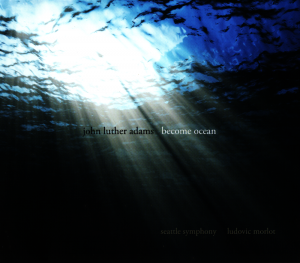
John Luther Adams: “Become Ocean

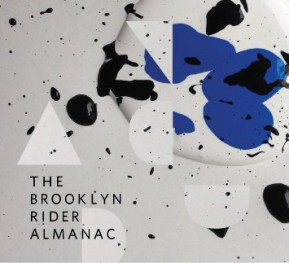
Brooklyn Rider:  “The Brooklyn Rider Almanac

MI0003759262Flying-Lotus-Youre-Dead

A Far Cry: “Dreams & Prayers

Flying Lotus: “You’re Dead!

Grouper20140504083814!Imogen_Heap_-_Sparks

Grouper:  “Ruins

Imogen Heap: “Sparks

Gabriel_Kahane_The_Ambassador_Cover_LoRes812mz9yudll-_sl1500_-e1399824613218

Gabriel Kahane: “The Ambassador

David Krakauer, Matt Haimovitz, et al.: “Akoka

1383841331_coverxin-conflict-1.jpg.pagespeed.ic.xkU5N_nPlp

Leyla McCalla: “Vari-Colored Songs — A Tribute to Langston Hughes

Owen Pallett: “In Conflict

ariel.pink.pom.pomNikki_Nack_artwork

Ariel Pink: “pom pom

Tune-Yards: “Nikki Nack

And yours?  Please share.

Does music need gatekeepers?

It would be impossible for me to react to Sal Nunziato’s guest column in this morning’s New York Times without risking a little hypocrisy.  For while my ideology disagrees with Mr. Nunziato, much of my professional and personal life has been devoted to doing just what he wants more of.  How do I square that?  Let me give it my best shot.

In the column, Mr. Nunziato, an online record dealer, pines for the pre-internet days when record label executives — “suits,” he calls them — winnowed out the superior music from the inferior.  Now, he says, “the Internet has become a forum for all, regardless of talent. Anyone can be a writer. Anyone with GarageBand can make a record.”  His closing paragraph:

I would never discourage any musician, however green, from making music. But I would strongly discourage most from releasing that music just because they can. It seems like a kick to the faces of the genuinely talented and deserving, all because of a technicality called the Internet. Where are the suits when you need them?

Exactly.  And we, or more likely, someone who appoints himself to do so, should now also determine which authors may publish books, which winemakers are allowed to market their wines, which restaurants are permitted to open, right?

Wrong.  No artist should be prevented from making his/her music available because someone else deemed it unworthy.  Most of the music Mr. Nunziato would squash isn’t going to reach a significant audience anyway, so what’s the big deal?  If he feels overwhelmed by the choice he now has, that’s his problem, not the artists’. My music listening is not in the least diminished by the thousands of probably mostly junky albums I’ll never hear.  And the same technology that permits anyone, “regardless of talent,” from being a recording artist has, through preference algorithms, on-line marketing and dumb luck, introduced me to some music I like very much.

Yet of course, I was myself a musical gatekeeper throughout my radio career, when I decided what music my listeners heard, and what music they didn’t.  And I still man the gates of the chamber music series I program.  Hypocrisy?

I don’t think so.  For while I was and am responsible for the quality of what I program, in no way can or would I prevent any listener from going beyond my offerings to discover other music on their own.  In fact, the new technologies that make it easier for listeners to do so also made my radio job easier.  For not only did I have a wider selection to choose the best from, I also could advise listeners to make their own individual journeys of exploration through styles and eras that weren’t going to get much play on my show.  Not enough Renaissance polyphony or 20th-century modernism on the air?  No problem.

In the end, Mr. Nunziato’s worldview, one in which “product is foisted upon the masses whether we want it or not,” is the same tired anti-modernity that too often passes for wisdom in the Times and other gatekeepers of smart opinion. (Here’s an earlier blog in which I take on two other iterations of the same kvetch.)  As a proud member of the masses upon which this “product” is foisted, I say bring it on.  I’m perfectly capable of deciding which to sample and which to ignore, and so are you.