Coming up: Quartets à la russe

photo34

Sunday afternoon at Smith College, the St. Petersburg Quartet will perform a program of Shostakovich (Quartet No. 4), Tchaikovsky (Quartet No. 3) and Bach (their violist Boris Vayner’s arrangement of the Chaconne in D minor), presented by Music In Deerfield and the Smith Music Department.  Pre-game at 3:00, with yours truly and members of the “St. Petes,” and concert at 4:00.  Click here for tickets and information.  Here’s what I wrote for the program booklet:

“We Western musicians play Russian music like we think it’s great.  Russian musician play it like they know it’s great.”

The late violinist, violist and Smith College professor Philipp Naegele said that to me during one of the many times we discussed music over coffee at the Amherst Starbucks.  He was reacting to a Russian performance of a Tchaikovsky rarity he had just heard on my WFCR classical show.  And this afternoon, you are about to hear what Philipp meant.

Of course, the immortal Russian composers, such as Tchaikovsky and Shostakovich, are beloved and performed wherever classical music thrives.  To paraphrase the old Levy’s Jewish Rye commercial, you don’t have to be Russian to play Tchaikovsky’s String Quartet No. 3.  But it makes a difference if you are.  Let me focus on one example from today’s program.

Tchaikovsky composed his Quartet No. 3 in 1876 as a memorial to Ferdinand Laub, the distinguished violinist who had played in the premieres of Tchaikovsky’s first two quartets.  The 3rd Quartet’s third movement, one of Tchaikovsky’s most personal creations, recreates in music an actual Russian funeral service, complete with funeral march, tolling bells, the priest’s intonations and the chants of the choir.  I won’t spoil the effect at the end of the movement, but its intent should be clear to all.

Of course, any quartet from any background who plays the 3rd would know this and apply it to their performances.  But if you’ve grown up with the sounds Tchaikovsky is trying to capture, and understand the music’s meaning not as something you’ve learned but as something you’ve lived, something you know – well, you’ll hear it.  The first time I heard Tchaikovsky’s 3rd Quartet played by the St. Petersburg, many years ago at Mohawk Trail Concerts, I could swear I levitated a millimeter or two during the third movement.  Your altitude may vary, but stay loose.

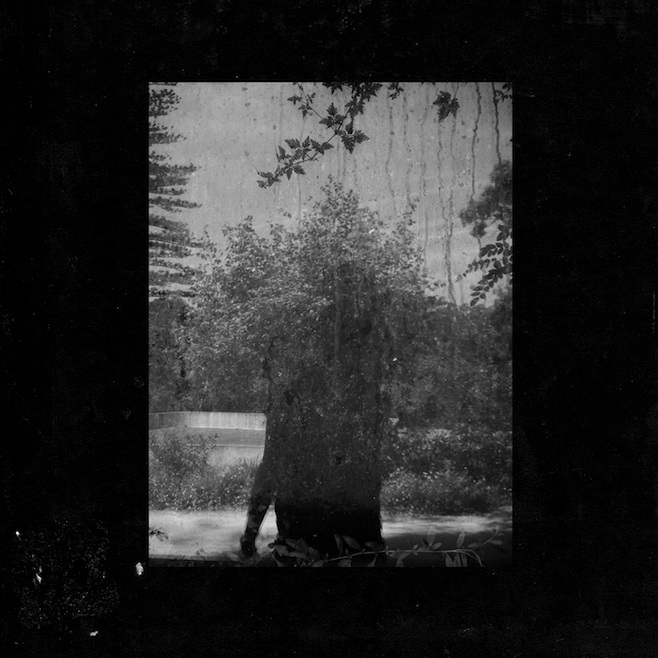
Album du jour: Grouper, “Ruins”

5a266580

How minimal can minimalist music be and still cohere as music?  That was the question that came to me as I listened to, and very much enjoyed, the new album under review here.  Along the way, I was reminded how the pleasure we take in music often comes most from the tiniest things — if we listen closely enough to notice them.

“Ruins” is the eighth album by Grouper, the solo project of Oregon-based musician and visual artist Liz Harris.  Grouper’s previous music, consisting primarily of fuzzily recorded layers of multi-tracked (and haphazardly tuned) guitars and voice, has mostly failed to convince me that there’s enough of a there there to merit prolonged attention.  While I would stop short of questioning the artist’s sincerity, I didn’t hear enough skill or effort to take her music seriously.  There’s minimal, and there’s perilously close to non-existent.  Up til now, Gr0uper has struck me as the latter.

Grouper’s new album, however, has me in her thrall.  What has changed?  For one thing, Ms. Harris has put down her guitar and moved to the piano.  True, her keyboard technique is, to put it gently, rudimentary.  But she plays well enough to express herself coherently.  And the switch to piano seems to have brought out her inner Erik Satie, referring to the French composer (and acknowledged great-grandfather of minimalism) best known for such profoundly simple piano works as the “Gymnopédies” and the “Gnossiennes.”

Consisting of both songs and solo piano pieces, the music of “Ruins” is, if anything, even simpler than Grouper’s earlier stuff.  Yet it coheres, with memorable melodies and discernible shapes.  Mind you, very close listening is required to tease out what’s happening, including vocals so soft as to verge on inaudibility.  But pay attention, and you notice subtle shifts of phrase lengths, or pleasing melodic arcs, or the spine-tingling moment on the song called “Holding” when the overdubbed voices diverge from unison and blossom into harmony.  Tiny things, to be sure, but even in more complex and sophisticated music, it’s often the tiniest things that mean the most.  Even when Grouper goes conceptual and experimental on us, developing electronically transformed piano textures on a track called “Made of Air,” the music coheres as music, and quite absorbing music at that.

I wouldn’t quite call “Ruins” a masterpiece, and have not yet anointed Grouper as a Great Musical Artist.  Yet using the simplest, homeliest musical ingredients, Grouper has created something unique and quietly lovely.  Sometimes, that’s all I want or need.  Please check it out for yourself when you have the time and the space to listen closely.

http://open.spotify.com/a'tlbum/5ElYoVUqRQIlDekD1v6aKa


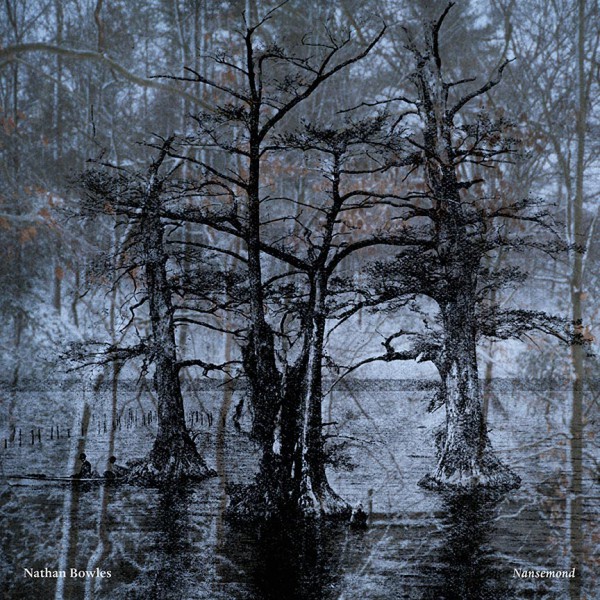
Album du jour: Nathan Bowles, “Nansemond”

Nathan-Bowles-Nansemond-cover-lr

A multi-instrumentalist (primarily drums and banjo) from southwestern Virginia, Nathan Bowles can trace his musical family tree back on the one side to regional clawhammer banjo traditions, and on the other to the “Takoma Revivalists” of the 1960s and later, including such greats as John Fahey and Jack Rose.

But Bowles doesn’t just do old-timey.  According to his website, his music…

…demonstrates the elasticity of Appalachian and Piedmont stringband music and the inherent connections, when those forms are distended, dilated, and dissected…to contemporary improvised and post-minimalist avant-garde music.

Accurate, if boring.  Bowles’s music, on the other hand, mesmerizes and hypnotizes, but does not bore.  Depicting the eponymous historic region of eastern Virginia named for a Native American tribe, his new solo album,”Nansemond,” keeps the listener rapt through seven selections of mostly original composition.  It’s a kind of mountain music answer to Bedřich Smetana’s “Má vlast” (“My Country”), the cycle of symphonic poems that gave us “The Moldau.”

Though, mind you, “Nansemond” is made of far more homespun materials:  Acoustic and electric guitar, fiddle, Bowles’s gritty, plaintive voice, some fairly discrete noise effects (which qualify as homespun nowadays) and, as bardic narrator, the percussive strum of the clawhammer banjo, a sound as lonesome and haunting as a distant train whistle.  Like a good country wine, “Nansemond” may be more rustic than refined, but conveys the unmistakable taste of its terroir.


A critical food fight!

antonaddison

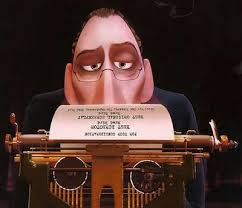
(Above:  Two of the nastiest critics of cinematic history.  Can you name them?)

A couple of weeks ago in this space, I chronicled the request made by classical pianist Dejan Lazić that the Washington Post remove from its web archive a semi-unflattering review by critic Anne Midgette of a 2010 recital he gave in Washington.  Apparently, the review tends to come up prominently in web searches of Lazić’s name, and he would rather not be dogged by it any longer.  The Post said no.

Whatever you think of Lazić’s request, you should note that the tone of the discussion was mostly very civilized, rather like a comedy of manners or, for that matter, a typical classical piano recital, such as the Chopin and Schubert program that was the subject of the review in question.  For all the ardor and passion displayed by Lazić, no knives were sharpened, no one got flamed, no rotten vegetables were flung, metaphorically speaking.

Those metaphors, however, can be taken pretty danged literally in another critic vs. artist dust-up recently covered by the Post.  This time, though, the subject is not the “food of love,” as Duke Orsino describes music in Shakespeare’s “Twelfth Night,” but actual food, as prepared by star chefs in Dallas’s toniest restaurants  — then skewered, roasted and sometimes burnt to a crisp by Dallas Morning News food critic Leslie Brenner.

Well, the star chefs of Big D, members of a profession not known for self-effacement or modest egos, don’t care one bite for Brenner and her salty opinions, and are banding together in an attempt to trim her down to size.  You can read about what they’re doing and what effect its having, if any, in the Post piece.

What I’d like to call your attention to is the decidedly uncivilized tone of some of the chefs’ arguments, particularly that of John Tesar, chef and owner of a restaurant ominously called Knife.  As you can read, Tesar and Brenner are old combatants, going back to his days working with superstar chef-writer-TV host Anthony Bourdain, himself a man of piquant opinions and spicy language.  So long before the most recent plate of hate came out of the kitchen, the table was set and the participants primed for a major beef.

Finally, when Tesar felt insufficiently buttered-up by the three-star review given to Knife in the Morning News, he plated and served the pièce de resistance of anti-critical invective, in the form of this searing tweet to Brenner:

f*** you ! Your reviews are misleading poorly written,self serving and you have destroyed the star system and you really suck

Now then…on the one hand, I’m very glad I was never toasted as thoroughly as this during my radio career.  Sure, when you’re in the public eye or ear as I was, you have a good flambé coming once in a while.  When you get it, you have (to mix both metaphor and recipe) to take your lumps along with the gravy.  But no one should regularly have to be spattered with hot grease like this.  It hurts.

On the other hand…I’m jealous.  Why couldn’t I have been in a pickle so delicious that it made the national news, complete with photo of yours truly?  I could just see it now:  “Crusty Radio Host Likens Symphony Concert to Fallen Soufflé, Is Called Half-Baked By Maestro.”  What fun!

But for that to happen, we would need one unfortunately missing ingredient:  A classical music scene that folks care about as much as they do restaurant reviews, cooking shows and other trappings of foodie culture.  And by “care,” I don’t just mean in number.  I mean especially in passion, as if what went on inside classical music was important enough to drop f-bombs over.  You know, like in TV, or sports, or politics.  Sure, I believe in civility in public discourse.  But when the contents of an art form are under pressure, eventually, the steam has to be released.  And occasionally, someone stands to get scalded.  At present, classical music in the U.S. is at a low, slow simmer, barely hot enough to cook a soft-boiled egg.

Yeah, we had the 2008 case of Cleveland Plain Dealer critic Donald Rosenberg vs. the Cleveland Orchestra, one which resulted in Rosenberg’s demotion and subsequent laying-off by the paper.  The case got some national play, but was mostly confined to the musical press.  And opera is still good for an occasional kerfuffle, such as that surrounding the Metropolitan Opera’s recent production of John Adams’s The Death of Klinghoffer.

But for the most part, what happens in classical music stays in classical music, with little notice taken outside the art form.  Whether it’s orchestras locked out, or the war between opposing classical styles, or a major, potentially controversial classical premiere, the classicalsphere gets mildly excited, the rest of the country yawns — even the smart and cultured cohort.  For there to me a more vigorous, scathing and even profane debate over classical music would not itself be a cause of the music’s revival.  But it would be a sure sign of it.  And if you don’t agree, well — goshdarn you!

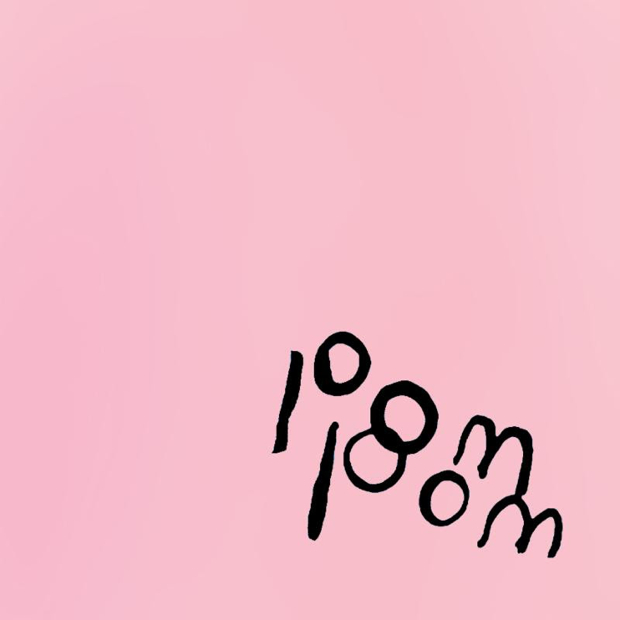
Album du jour: Ariel Pink, “pom pom”

ariel

I’m torn between describing this music for you and just letting you experience it for yourself with expectations or prejudice.  If you would prefer the latter, go straight to the Spotify playlist below; I won’t be offended.  But don’t say you weren’t warned:  This is one weird album.

For those who remain, just a brief primer.  36-year old Los Angeles native Ariel Pink (Rosenberg) chews up surf rock, British invasion, soul, funk, punk, psychedelic and trace amounts of other styles, then spits out some of the coolest, rockingist and most utterly bats**t music this side of purgatory.  If you have a taste for “Absolutely Free”/”We’re Only In It for the Money” Zappa & the Mothers, really dig  (rather than just claiming to dig) Captain Beefheart’s “Trout Mask Replica,” and can listen to of Montreal’s “The Gay Parade” and “Hissing Fauna” as if they were the most normal albums in the world, then Ariel Pink is your kind of guy.

But if you haven’t heard any of the above, don’t let it stop you from giving “pom pom” a try.  Seventeen tracks with titles like “Plastic Raincoats in the Pig Parade,”
“Not Enough Violence,” “Nude Beach A Go-Go” and “Jell-O,” non-stop energy, boundless invention, a boatload of melodic hooks and myriad surprises await those willing to take on the challenge.  And unlike lots of supposedly challenging music, it’s got a great beat, and you can dance to it.  As conductor George Szell said of pianist Glenn Gould, “that nut is a genius.”  Can we say less of Ariel Pink?


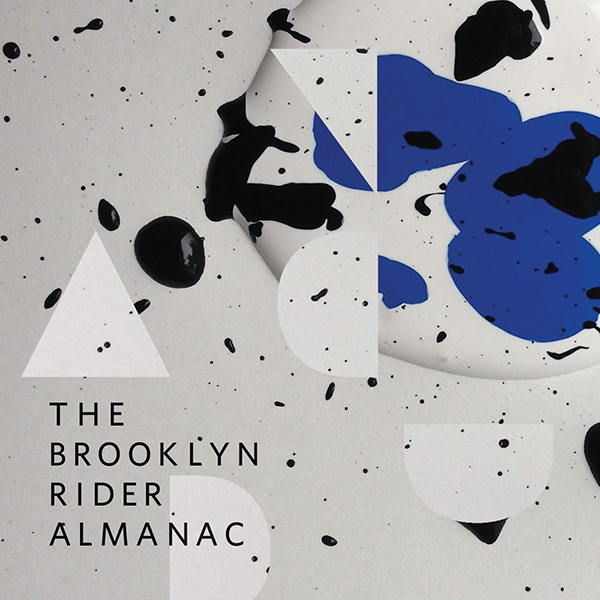
Album du jour: Brooklyn Rider, “The Brooklyn Rider Almanac”

 tumblr_nbsleakltF1tjl4i6o1_1280

In which Brooklyn Rider, the string quartet currently at the forefront of alt-classical music (of which this new album is paradigmatic), performs three-to-nine minute works composed for them by thirteen mostly non-classical musicians, each work inspired by an artist or writer of significance to its composer.

And in which they have come up with one of the year’s best albums, to be enjoyed by anyone with an interest in music of any kind, especially the good kind.  That such a diverse collection of musicians have composed works with the imagination, strong voice and skill you hear on (almost) every track speaks very well for the level of musicianship in non-classical genres.  Then again, Brooklyn Rider wouldn’t ask just any schlub to write a piece for them.

 Only two of the pieces struck me as on the naive and amateurish side, not fully up to the standard set by the others.  But I’m not going to spoil the good mood by naming names.  If you want to listen and guess which they are, be my guest.

Let me instead accentuate the positive by pointing out some faves:  Albanian cellist Rubin Kodheli‘s “Necessary Henry!,” inspired by avant-garde jazz saxophonist/composer Henry Threadgill, is five minutes of hard-driving funk and swing that almost but never quite collapses into chaos.  American multi-instrumentalist Dana Lyn‘s “Maintenance Music,” inspired by artist-activist Mierle Laderman Ukeles, develops and combines two themes, one plaintive, the other insistent, over the accompaniment of open strings, microtonal slides and percussive plucks.  It covers a lot of ground in just seven minutes, saying more than many composers do with four or more times the duration.

Australian multi-instrumentalist Padma Newsome‘s “Simpson’s Gap,” inspired by artist Albert Namatjira, is a lovely little tone poem in four related sections, each based on either or both of two indigenous-sounding melodies.  It actually could have gone on longer for my taste, though it is excerpted from a larger work called “Gaps and Gorges,” so perhaps makes more sense in context.

Inspired by the Godfather of Soul, James Brown, jazz pianist Vijay Iyer gets his groove going in the multi-sectioned “Dig the Say,” in which neither the boundaries of taste nor, fortunately, the quartet’s very fine instruments are threatened by the extensive but not excessive use of percussive effects.   Brooklyn Rider violinist Colin Jacobsen gets on my good side by adding overdubbed vocals by the great Shara Worden (who performs as My Brightest Diamond) to his wild, woolly and exciting “Exit,” setting words by the piece’s dedicatee, David Byrne.

In “Five Legged Cat,” dedicated to jazz pianist Chick Corea, Venezuelan multi-instrumentalist Gonzalo Grau contributes what is no doubt the most exciting string quartet piece ever composed in the 5/8 meter of the Venezuelan merengue.  Cool ending, too.  And in “Ping Pong Fumble Thaw,” Glenn Kotche, the drummer of the rock band Wilco, inspired by minimalist electronic musician Jens Massel (aka “Senking“) used pieces for solo drum kit as the basis of a non-stop four-movement suite with terrific rhythmic drive.

Now, after praising all the composers, let me say a word on behalf of the playing of Brooklyn Rider:  Wow.  And while I can get awfully grumpy about lo-fi recording, especially in classical music, it actually fits the aesthetic of most of the pieces pretty well.

You know what’s really refreshing for this inveterate broadcaster, presenter and lover of string quartet music?  That here we have thirteen selections by as many different composers — and there’s not a single attempt by any of the composers to place him/herself in some great string quartet lineage or to invoke some past or distant style.  Sure, there are influences to be heard  — as the veteran music critic Ecclesiastes put it, there’s nothing new under the sun — but the hereness and nowness of the music is a real treat.  As writers are told to do, these composers wrote what they know.  Could any of them go on now to write a deathless string quartet masterwork?  I couldn’t care less.

(Speaking of my being a presenter of quartets — by amazing coincidence, I just so happen to know when Brooklyn Rider will perform next in the area…)

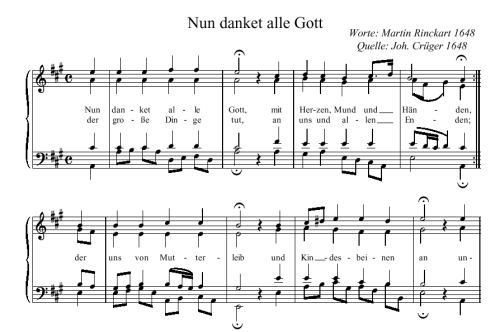
Music of Thanksgiving — please add your own!

mxpre2824

Here’s some music of thanks for your Thanksgiving enjoyment.  Would you like to share other selections in the same spirit, in any language and genre, with fellow readers?  Great!  Send me links or other information, and if the selections meet my exasperating — er, exacting standards, I’ll add them to the playlist.

Happy Thanksgiving to all, from a grateful blogger.

— John


Album du jour: Elena Ruehr, “O’Keeffe Images” (Boston Modern Orchestra Project/Gil Rose)

500x500

Elena Ruehr‘s music has it all going — life, line, color, pulse, depth, shade, shape.  It’s inviting and welcoming, then once you’re inside, stimulates and entertains (what a concept!) to the last note, at which point, like a child after an amusement park ride, you want to go right back and do it again.  She was one of my favorite “go to” living composers for my public radio classical show, and hers is some of the music from my radio days that I’ll continue to track down and enjoy — something that, to say the least, is not true of everything I played on the radio.

A graduate of the University of Michigan and Juilliard, a faculty member at MIT since 1991, recipient of prominent fellowships, “Dr. Ruehr” (as she’s referred to in her biography) may be an academic, but certainly does not compose like one, or at least like the composers who give the word “academic” its musty odor.  Heck, some of my best friends are composing academics who write really good stuff; kudos to them and to her for helping to move classical composition in a positive direction.

The four works on this fabulous new album by the invaluable Gil Rose and the Boston Modern Orchestra Project cover the years 1991 to 2013, yet remain fairly consistent in voice and quality.  Of the virtues I gushed over in this blog entry’s first sentence, the first to grab me in her music is its pulse, and the way a constant underlying pulse becomes the foundation for delightfully complex interplay and counterpoint of small, easily graspable rhythmic ideas.

You hear this right at the start of “Shimmer” (1995), a work for string orchestra that according to Ruehr, and easily confirmed by listening, has precedent in the music of Antonio Vivaldi.  Exhilarating and inventive, “Shimmer” was previously recorded by Scott Yoo and the Metamorphosen Chamber Orchestra, the no-longer-extant group for whom it was composed.  It may be a case of first love, but I’ll admit to enjoying the leaner, more rhythmically incisive original recording (Spotify link here) more than the smoother, more opulent BMOP version.  Your results, however, may vary, the work stands up to multiple approaches, and here and throughout, Maestro Rose and BMOP outdo themselves in their preparation and execution of extremely demanding music.  If you haven’t gotten into their amazing and fast-growing discography yet, you’re missing an awful lot of great music.

In moving to track 2, we move back to 1991, and the earliest work on the album, “Vocalissimus.”  As in “Shimmer,” a steady pulse bubbles throughout, but this time, one’s attention is drawn to the melodic ideas that emerge, develop and coalesce, singly or simultaneously, and which propel the piece forward to a (spoiler alert!) subtle, far-from-obvious conclusion.  Much of the fun comes from the interplay of the instruments of the full orchestra, both solo and in sections, another reminder of what a glorious creation the orchestra is.

Next on the album, “Cloud Atlas” takes its name from David Mitchell’s fantasy novel, one of whose characters, a goddess of the post-apocalyptic future, is given voice by a solo cello, much as the biblical King Solomon was in Ernest Bloch’s “Schelomo.”   With its rhapsodic and ruminative cello melodies, frequent use of odd meters, and liberal sprinklings of harp, the piece gives off a mild and sweet but somewhat generic Asiatic fragrance.  Pleasant as it is, a little more eventfulness and virtuosity might have made “Cloud Atlas” into something more.  Then again, if you had as rich and sleek a cello tone as that of Jennifer Kloetzel (for whom “Cloud Atlas” was composed), you’d also want little to get in the way of showing it off.

With the 33-minute long “O’Keeffe Images,” we get into Major Orchestral Work territory, one which decreasingly and depressingly few composers have access to in current times.  The work’s eponym would of course be American artist Georgia O’Keeffe, three of whose starkest paintings were set to music by Elena Ruehr at separate times over the years 1993-2013.  Of course, just how one can “set” a painting to music, and how much attention one should play to the visual image when listening to the music, remain open questions.  I’ve linked on-line reproductions of the O’Keeffe paintings to the movements’ titles below; as always, I suggest listening at least once before seeing the artwork, reading the program notes, etc.

First in the triptych but most recent in composition, “Summer Days” is no day at the beach; rather, it’s a non-stop ride through hot, dry, dangerous country — and if that image strikes you as cinematic, well, so will the music, in a good way.  Taut and thrilling, it would likely have become a hit back in the days when thrilling new orchestral works actually became hits.

The first of the “O’Keeffe Images” in order of composition, “Sky Above Clouds” exhibits many of the same qualities and employs many of the same processes as “Summer Days” — too much of the same, unfortunately, to provide sufficient contrast.  Somewhat brighter and wider-ranging in color and more complex in its interplay of line and rhythm, “Sky” may actually be a more interesting piece than “Summer Days,” if less immediately graspable than its predecessor in the triptych.

For the wild and exuberant finale of the set, “Ladder to the Moon” (2003) brings on the hand percussion, brings out the polyrhythms and melodic intervals of the East — echoes of earlier Eastern-inspired composers like Colin McPhee and Lou Harrison abound — and engages mind and body to its whirlwind conclusion.  At which point, like the kid on the amusement park ride, you’ll want to go back to the beginning and hear the whole album again.  Here you go:

Album du jour: Deerhoof, “La Isla Bonita”


132392a0

Some day, hopefully not soon, this old orb or ours will stop spinning.  Then and perhaps only then will Deerhoof no longer keep putting out some of the most stimulating sounds in all of American music.  Come to think of it, maybe the two events wouldn’t be a coincidence…

In twenty years since their founding in San Francisco, with a few shifts in personnel and musical focus along the way, Deerhoof have self-produced and issued a baker’s dozen albums, finding their stride about half-way through.  Haven’t heard ’em?  Well, imagine the piledriver beat of The Ramones, the skittery melodies of Frank Zappa, the infernal din of Sonic Youth, the rusty-knife guitars of Dinosaur, Jr., the polyrhythms or Stravinsky, the razor-sharpness of your favorite string quartet, mash ’em all together — and you’re still missing the secret ingredients.

What gives Deerhoof their Deerhoofness comes right at you as soon as you hit “play” on their new album:  A bright beat is established by percussive, pitchless plucks from the guitarist on the right, then following an ultra-brief suspenseful silence, vocalist Satomi Matsuzaki introduces the first melodic and lyrical idea, a descending perfect fourth melisma on the word “girls.”  That’s the drummer’s cue to get into the action, adding an infectious beat to the guitar plucks.  But what about those girls?  Be patient.  After a few iterations of the rhythmic cycle, Matsuzaki is back to tell us more: “Girls,” this time on an extended melisma, “who are smart.”  She repeats the phrase with altered lyric and added cowbell (somewhere Christopher Walken is smiling): “Girls…who will test.”  Enter the left guitar and bass with their respective licks, enriching the rhythmic complexity, then once more with those girls and their tests…

At which point I will mercifully break off this potted analysis of “Paradise Girls,” the first track on the album “La Isla Bonita,” and leave the rest to you.  The point is not that we should always listen to this or any music this way  — what a dreadful thought.  The point is that behind the thudding drums, crunching guitars and Matsuzaki’s delightfully odd and childlike vocals, there’s lots of smart stuff going on.  These aren’t just songs, they’re compositions.

Can Deerhoof be too clever for their own good?  That’s the risk, one that they mitigate by keeping things brief, unpredictable and, best of all, rocking.  And the symbiosis of their visceral appeal and their intelligence — of brain and brawn — is why I love them.

As Deerhoof albums go, “La Isla Bonita” is pretty straightforward in its bare-bones instrumentation, moderately lo-fi production and (relatively) cogent compositions. While it’s a quality one normally wouldn’t associate with Deerhoof, a stream of lyricism runs through several numbers, though it’s only drawn from for occasional telling moments (e.g., the conclusion of “Black Pitch”).  If you have to start somewhere with Deerhoof, and please do, it might as well be here.