What responsibility does the composer have?

The New York Times‘ Zachary Woolfe offered his thoughts on “l’affaire Horst-Wessel” in today’s paper, reaching a not totally dissimilar conclusion to the one I stated in my recent blog on the same subject.  If you’re new to this, you may want to read up by clicking on the above links before continuing.

True, Woolfe was more critical of the commissioning organization, the New York Youth Symphony than I was:

This misguided, mishandled decision (by the NYYS to drop Jonas Tarm’s “Marsh u Nebuttya” from their upcoming Carnegie Hall program) is a blot on the reputation of the youth symphony and its justly praised First Music competition, which has awarded commissions to 139 young composers since it began in 1984. An institution so adept at fostering new work should be particularly protective of artists and the ways they choose to express themselves. And it is pernicious to cloak censorship in the guise of child protection: If “Marsh u Nebuttya” is playable by any orchestra, it should be playable by an orchestra “such as ours.”

But Woolfe also faulted composer Tarm for not being more forthcoming about his piece:

Mr. Tarm told The New York Times this week that his piece is “about conflict, it’s about totalitarianism, it’s about polarizing nationalism.” Why couldn’t he have just said something like that in a program note, and perhaps avoided this whole mess?

But in Woolfe’s concluding paragraphs:

Mr. Tarm’s work revels in that ambiguity. In addition to “Horst Wessel,” he also quotes Ukraine’s Soviet­era anthem. So does that mean he intends to equate the Soviet domination of Ukraine with Nazi totalitarianism? Russia’s president, Vladimir V. Putin, is widely despised in Estonia. Do Mr. Tarm’s charged references have to do with the region’s present­day politics?

I respect and even admire the composer’s choice not to answer these questions directly. But I’d like a chance to think about them for myself. The New York Youth Symphony should program “Marsh u Nebuttya” on its next Carnegie program and give me, and the rest of the audience, that opportunity.

There is where I most strongly disagree with Zachary Woolfe.  When he says that he “respect(s) and even admire(s) the composer’s choice not to answer these questions directly,” I think he is letting the composer off too easy.

I know that some of my composer friends will strongly disagree, as you might as well.  Perhaps my viewpoint comes from my years on the presenting side of music, a side with priorities and stresses quite different from those on the artistic side.

But in my view, when a composer accepts the privilege, and the fee, of a commission for a new work, the composer should be obliged to let the commissioning organization know if it contains potentially controversial elements.  This is especially true of instrumental works, which obviously lack an explanatory text.

Let me state this clearly, to thwart accusations to the contrary:  I do not believe an organization should tell a composer how to compose.  Other than agreeing on such parameters as length and instrumentation, the composer should be left alone.  If the presenting organization doesn’t like the work it receives, it probably chose the wrong composer in the first place.  Too bad.

But really, now — have we reached the point of artistic inviolability that a 21-year old composer can quote a Nazi anthem in his piece and have no responsibility whatsoever to give the commissioners a heads-up on it?  And is it really such a horrible violation of artistic principles for the commissioners to ask what the Nazi anthem was doing there, and why they hadn’t been informed?  For Tarm to act all aggrieved that the orchestra would dare ask him to explain himself is really too much.

There are two sides to any commissioning project.  And both sides, it strikes me, have rights that deserve to be upheld.  Those rights don’t have to be in conflict if each side can respect the needs of the other.  What struck me in the present case is that Jonas Tarm, in particular, failed to show such respect.  Yes, the orchestra perhaps overreacted.  But in all honesty, I’m not sure I wouldn’t also have dropped the piece until the composer was more forthcoming about his intent.

Every once in a while during my radio career, I’d play a piece or song, unaware that it contained the some potentially offensive phrase.  That doesn’t always mean I shouldn’t have played the song, or that I never did again.  But when it happened the first time, I was frankly embarrassed and a little angry that I hadn’t known what I was doing ahead of time.  And I made damned sure to flag the song and give it a brief explanation before I played it again.  It wouldn’t mean that no one would take offense.  But I had protected myself and my station in the case of a serious complaint.  I think the New York Youth Symphony should have been afforded the same protection.

 

Beware the personal project

Back in my radio days, I received new compact discs every day.  Most of them were sent by labels, distributors or promoters, in recognizable packaging.  But every once in a while, I’d get something different, something I came to dread.  It would come in brown wrapping paper or a padded envelope, addressed by hand.  Inside would typically  be a compact disc, a photocopy of a newspaper article, and a letter that read more or less as follows:

Dear Mr. Montanari:

I am a devoted listener and large donor.  I know that you receive many recordings at public radio.  But I trust you will find the time to listen to the recording I am sending today.  It contains my “Symphony No. 1,” a musical mediation on war, peace, the environment, the Holocaust, AIDS, injustice, racism, and the 1986 World Series.  I had never written a classical piece before, though I like to tinker at the piano.  Now that I am winding down my extremely successful and remunerative professional career, I am looking for interesting projects to keep me occupied and which would make a positive contribution to our deeply troubled culture.  I believe we need more inspiration and beauty in our lives, don’t you?

So I took a few lessons from the assistant conductor of the local orchestra (to which I also give a bundle), and he showed me things, like the range of the clarinet and what a half note is.  Once I finished my symphony, with the technical help of several talented assistants (who can actually read and write music), I sent the score (and a nice check) to the State Radio and Television Philharmonic Symphony Orchestra of Freedonia & Sylvania.  After rehearsing it intensely for one hour, they made the present fine recording.  Many of my friends and employees have told me how much they liked it, and I am certain your listeners will too.  Did I mention that I am a devoted listener and large donor?

Please also find enclosed a copy of an article about me and my symphony from the local newspaper.  You will notice that the coverage is very generous and flattering, with many interesting quotes that you could use on the radio.  The article will also provide excellent background for the interview I will graciously make myself available for.  The newspaper’s publisher, a close friend of mine, is also a large donor to your station, and would be thrilled if you would mention his name when you play my symphony.

I look forward the hearing from you at your earliest convenience about the date and time of your broadcast.  By the way, did I hear that you had a big fund drive coming up?

Sincerely,

(I could name names but won’t)

You can well imagine, I’m sure, how a sense of joy and well-being bubbled up in me when I would receive such a package.  Sometimes, I would get so joyous that I had to take an aspirin, lie down and pull a pillow over my head.

And to be perfectly honest, on one or two occasions, when it didn’t suck too loudly, I’d actually go ahead and play part of the damned thing on my show.  Call me a shill or a sell-out, but it was sometimes the only way to make the person and his symphony go away.  If you had done 35 years of radio, you’d surely have done the same once or twice.

So, what brought these lovely memories forth?  It was reading the devastatingly negative reviews in today’s Wall Street Journal and New York Times of Larry David’s play “Fish in the Dark,” also starring Mr. David, and which opened last night on Broadway.  He, if you need reminding, is the one-time stand-up comic who co-created “Seinfeld” and then created and starred in “Curb Your Enthusiasm.”  Actually, the media, including my beloved NPR, did such a thorough and enthusiastic job covering the show in previews that I doubt that even the proudest TV-phobe (and you know the type) would need such a reminder.

OK Montanari, you might say, what on earth do these things have in common?  This:  In the arts, beware the long-time much aspired-to personal project.  You know, the play, symphony, book, painting or whatever that someone in another field has always wanted to do.  Almost without exception, the result is embarrassing.

Of course, Larry David is a major public figure, and my composite composer an unknown.  But the difference is one of degree, not type.  If I take the Times‘ Ben Brantley and the Journal‘s Terry Teachout at their word (which you don’t have to, of course), both would-be artists have blundered, with unmerited confidence, into difficult and competitive fields requiring skill and experience they had perhaps tried to buy, but never legitimately acquired.

They may have pleased themselves and their friends.  They may have even fooled some in the audience, at least in the short term.  Reports are that Mr. David’s play earned the largest pre-sale of tickets in Broadway history.  One wonders how those who purchased the tickets and see the show, if they are really honest with themselves, will feel later about their not inconsiderable expenditure.

But when you either go on NEPR’s classical show or open on Broadway, you’re playing with the big boys, and will be judged accordingly, perhaps harshly. That’s show biz.

There are other examples, too.  Remember the biopic that actor Kevin Spacey made about singer Bobby Darin a few years back?  Like Larry David’s play, that one was also all over All Things Considered, Fresh Air and the NY Times prior to release — after which it disappeared without a trace in about 48 hours.  Then there have been attempts by rock musicians to write classical works without possessing the most rudimentary composing skills, as I documented here and here.  It’s not that easy, people, even with fancy new toys and paid help.

Would you like an inspiring counterexample?  Take former New York Yankees star outfielder Bernie Williams.  Also a fine guitarist, Williams in retirement actually entered a full-time degree program in jazz composition and arranging at the Manhattan School of Music, where I believe his is now a senior.  OK, so his notoriety has helped open doors for him in the music field — that’s show biz too.  But just as he had in his years as an amateur and minor league ballplayer, Bernie the musician is paying his dues and learning his craft from top to bottom.  I wish him well in his new profession.

A failure of classical communication

3659320_orig

You may have missed reading about a very strange case of music’s power to stir controversy in this morning’s New York Times.  In short, a new piece by a young composer named Jonas Tarm was scheduled for a performance by the New York Youth Symphony at Carnegie Hall this Sunday.  But following its premiere last month, a Holocaust survivor in the audience recognized one melody in the piece as the Nazi anthem known as the “Horst-Wessel-Lied” (click on the link for background and to hear a rendition).  With this information, the Youth Symphony dropped the work from its Carnegie program.

A case of artistic censorship?  An appropriate and sensitive decision?  Neither is clear to me, at least until I know more and actually hear the piece, which seems an unlikely prospect.  From what I could glean from the Times article, the Horst-Wessel seems to have been quoted in historical context, much as “La Marseillaise” is quoted in Tchaikovsky’s “1812 Overture” (or in Casablanca, for that matter).  Absent more information, who knows?

But to this veteran music presenter, something was badly botched by all parties.  To quote the famous line from the film Cool Hand Luke, “What we’ve got here is a failure to communicate.”

The Symphony’s executive director, Shauna Quill, said that she was unaware of the Horst-Wessel quote before the orchestra premiered the piece.  Further, to quote the article, she “said that Mr. Tarm had declined to discuss what his piece was about, even when she called to speak with him after receiving the letter of complaint.”

I think that if I were the head of an organization that had commissioned a new work, I would want to know something about the work, and would keep asking for information until I received it.  At very least, I would want to know before it got played if it quoted any Nazi anthems, and what the heck they were doing there.  And if a Nazi anthem was quoted without the composer giving me a heads-up, I would be slightly put out by this.  Wouldn’t you?  Maybe someone could devise a checklist for those commissioning new works:  “Check where applicable:  Your new piece contains:  1. Nazi anthems, 2. Communist hymns, 3. Songs praising Kim Jong-un, 4. Something that might prove offensive to anyone anytime anywhere…”

For his part, Mr. Tarm is playing the free-speech martyr, at least as far as his website and the Times article go.  Now, perhaps he had a perfectly legitimate reason to quote the Horst-Wessel, a reason which could and should have been detailed in program notes.  After all, the song is not exactly a household melody ’round these parts.  In fact, I couldn’t have hummed it before hearing it on the above link, and I can hum a whole lot of tunes.  In which case — what impact did Mr. Tarm expect the quote to have if hardly anyone would recognize it?  Actually, he did provide a program note, consisting of the piece’s title, a dedication, the date of completion, and five lines from T.S. Eliot.  Hey, I dislike verbose program notes as much or more than the next audience member.  But in this case, these notes don’t cut it.

My recommendation:  Mr. Tarm should be more forthcoming about his piece’s intent, and maybe learn a lesson along the way.  And then, the Youth Symphony should play the piece on some forthcoming program, with annotation.  Can we all agree on that?

P.S.  The Times article made me recall the times I broadcast Joseph Haydn’s “Emperor” Quartet, only to receive calls complaining that I was playing “Deutschland über alles.”  Well…I was, sort of, as you can hear here.  And I could explain the historical context of the melody until I was blue in the face (such as that the tune is still the German anthem!).  To no avail; the offence was already felt, and no explanation would make it go away.  So, I eventually stopped playing the piece on the radio.  A case of artistic censorship?  An appropriate and sensitive decision?  An avoidance of unnecessary grief?  You tell me.

A wistful coda, a cheerful prelude

Anne_Koscielny_2

Farewell to a great pianist:  Family, friends and admirers gathered at the Federated Church in Charlemont, Mass., last Saturday morning to pay respects to the late Anne Koscielny, a western Mass. resident who died earlier this month.  A charming lady who maintained her southern graciousness throughout her life, Anne was an admired teacher, an inspiring lecturer — and one of the finest classical pianists I have ever heard, in person or from recordings.

That’s the unanimous verdict among those I’ve spoken to about Anne.  During the service, a recording Anne made of a Chopin Nocturne (Op. 27, N0. 2) played into the sanctuary where she had concertized on a few occasions.  I could only agree the verdict that Estela Olevsky, herself a wonderful Chopin pianist, delivered at the post-service reception:  “Perfect.”

Yet I dare say that most classical fans have never heard of her.  Nor did Anne leave behind a vast discography, though I wonder what else one might find where that Chopin Nocturne came from.  In a column for WNPR radio, Steve Metcalf, a long-time presence on the Connecticut classical scene, speculates as to why that was, and to why classical music has so few superstars at present.  Highly recommended reading.


photo-original

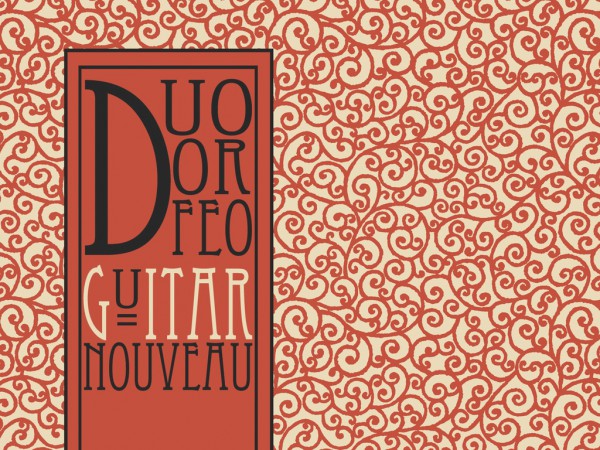
Guitar Nouveau:  Joseph Ricker and Jamie Balmer, better known as Duo Orfeo, plug in to chill out.  Playing classical music on  vintage electric guitars and tube amplifiers, Joe and Jamie use the juice not for volume, but for myriad shades of quiet.

Their previous album, “I Sing the Body Electric,” explored the tradition of classical spareness from Erik Satie to John Cage to Frederic Mompou to the inevitable and most welcome Arvo Pärt.  On Duo Orfeo’s latest, “Guitar Nouveau,” the range expands, both in terms of repertoire and dynamics.  Arranged into two “Books,” “Morning into Evening” and “Night into Dawn,” the nineteen selections come from almost every century from the 14th to the 21st (the 15th gets left out), though their ordering is shaped by emotional affect, not chronology — smart programming.

One of the best comes first, Joe Ricker’s “Variations on a Theme from the Sacred Harp,” to which a panoply of Duane Eddy/Bill Frisell-esque twangs and bends lend a rustic coloration, much like the sepia on old photographs.  Three selections from Leoš Janáček’s introspective piano cycle “On an Overgrown Path” surprised me with how well the transfer from keyboard to fretboards was made.  The last of the three, “The Barn Owl has not flown away!” features the deftest and most delicate interplay on the album.  And William Byrd’s “The Bells,” a classic of Elizabethan keyboard, positively jumps out of the speakers with joyous and playful energy — a delightful way to welcome dawn and conclude the album.

Having made the goal on their just-completed Kickstarter campaign, it looks like Duo Orfeo will be releasing “Guitar Nouveau” sometime in the near future.  As the blog’s title says, “stay tuned…”

Breaking news:  “Guitar Nouveau” will be released on March 21 at the Duo Orfeo website and the iTunes Store.  There will be an album release concert on March 21st at the Thread Arts Collective, 64 Cottage St., Easthampton (7:00 p.m., $15 a the door) and May 30th at the Amazing Things Arts Center in Framingham (details tba).

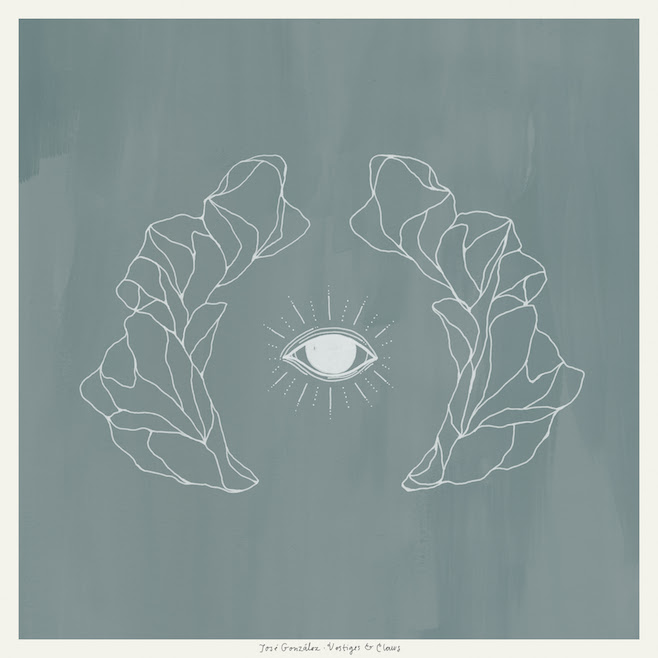
Album du jour: José González, “Vestiges & Claws”

José González - Vestiges & Claws

Imagine the spare, inward Nick Drake of the “Pink Moon” album, but with a stronger, often Latin-tinged rhythmic impetus, and you’ve approximated the music of José González.  The Gothenburg, Sweden-based González makes the most out of very little:  Intricate finger-picked acoustic guitar patterns, an extremely discrete sprinkling of percussion, and light, clipped vocal phrases of as much rhythmic as melodic or lyrical interest.  Like musical minimalism of other persuasions, González’s songs don’t so much build or develop as they start, play along and stop. But while they’re going, they do exactly as one of his lyrics says:  “Let it carry you, let it carry your weight.  Let it carry you, let it carry you away.”

Album du jour: “Africa Express Presents…Terry Riley’s In C Mali”

07a88035

Now this is cool:  Terry Riley’s minimalist classic “In C,” interpreted by an international crew of musicians primarily playing on African instruments.  Talk about shedding new light on a familiar masterwork — wow!

Have you ever heard “In C?”  My first encounter was during a field trip my Ridgefield (Conn.) High School band took in 1972 to Western Connecticut State College (now University) in nearby Danbury, for a special afternoon performance by New England Contemporary Music Ensemble, Richard Moryl, director.  Elsewhere on the program in Ives (as in Charles) Hall, our band’s conductor, Joseph Celli, by then an emerging figure in the musical avant-garde, played an improvised piece for unaccompanied English horn reed, detached from its horn,  while standing in front of a screen upon which abstract red blobs were projected.  Yes, those were heady times on the modern music scene.

But then, the pièce de resistance.  I knew something was up when on stage, in view of musicians and audience, a large display board was set up on which were affixed a series of short melodic fragments — 53 fragments, I came to learn.  So, the musicians came out (I don’t recall exactly, but they may have numbered a dozen or so), the lights dimmed, the conductor lowered the down beat, and the pianist began bonking out repeated octaves at a pretty good clip.  While he continued, the conductor pointed to the first melodic fragment.  Gradually, even tentatively, the other musicians started to play the fragment.

Then, the conductor pointed to the second fragment.  Again gradually, some of the musicians moved on to that fragment, while others stuck with the first.  The conductor pointed to the third fragment; again some but not all of the musicians moved on to it, others sticking with the second, still others moving back to the first…and so on and so forth through all 53 fragments, while all the while, for about half-hour the pianist kept the insistent octaves going — until, as suddenly as he started, he stopped.

This was “In C,” a piece I had heard of, but never heard.  In fact, this was my first direct encounter with musical minimalism –and I was hooked.  Something in my DNA made me respond to this music with an inner ecstasy, and with the feeling that I could crawl into the music and hear it from the inside.  I had never had the feeling before — and to this day, I get the same feeling from good minimalism.

I certainly get the feeling from this new album, the 33rd recording of “In C” according to Wikipedia.  What distinguishes this “In C” from all the others?  Start with the combined sonic texture of the instruments, whether struck, shaken, plucked, bowed or blown, so immediate and tactile that you can practically chew on it.  The substantial deployment of non-pitched percussion (drums, shakers, etc.) gives the piece a celebratory quality (not to mention a fabulous beat), as if the musicians and listeners were joined in some joyous ritual.  And rather than stick with the script throughout, the performers have added a slower, softer interlude, including voices, into the middle of the piece, a nice respite from the norm.  Does that make this recording “inauthentic?”  I’m going to assume that composer Terry Riley was cool with it.  So am I.  Check it out, either in video or audio.

(Disclosure:  I reviewed this album from listening to it on Spotify, not from CD, a copy of which should arrive from England in about a month.  If what I hear then makes me change my mind, I’ll revise and repost this review)

More on “Beyoncé”

1456560_10100373403458681_8510571605651190261_n

Following up on my recent post about the musical argument encapsulated in the viral social media photo above:

I picked up a copy of “Beyoncé,” gave it a couple of close listens, and can now confidently opine that anyone who would assume it to be the overproduced diva turn implied in the photo should perhaps hold off on further disparagement until you’ve heard it.  That should go without saying, of course, but unfortunately, still needs to be said.  And by the way, I’m no saint when it comes to hating on music I haven’t heard, so I know whereof I speak.

‘Cause the darned thing is absolutely fabulous.  The songs, of course jam-packed with catchy hooks and grooves (please pardon me if I sound a little out of my comfort zone describing a genre I don’t spend much time with), are wide-ranging in tone and mood, rich in detail, and filled with surprising twists and turns.  I was mesmerized from first note to last.

And at no time, not a single moment, did I find reason to give Beyoncé less than full credit for the music’s success.  Yeah, she brought in plenty of collaborators — so what?  In this case, a dozen or more cooks made for a very tasty and harmonious broth.  But there’s no question who’s boss.  Beyoncé is 100% front and center, sometimes while also simultaneously in midground, background, soaring over and underpinning the proceedings.  Her vocal range is astonishing, and when I say “range,” I mean high-low, soft-loud, warm-cold, happy-sad and every-which-way.  Here is a diva who’s got the goods, and deserves (I should say “has earned”) every bit of her acclaim.

One’s individual reaction to the highly (to say the least) sexual lyrics may vary, and even I had to detach a little at times to avoid blushing.  But I’m not the album’s target audience; presumably more typical listeners would take them more in stride.  I can say, however, that the character Beyoncé plays on the album (how much is really she I couldn’t say) is strong, aware, and in charge of herself.  That’s a positive way for a young woman to portray herself, isn’t it?

So, here’s your chance to listen.  If you don’t avail yourself of it, could I ask at least for a modicum of circumspection before offering your critical opprobrium (a nice way of saying “either listen or stfu”)?

http://open.spotify.com/album/2UJwKSBUz6rtW4QLK74kQu

Laissez les Gottschalk rouler!

Gottschalk_Tremolo

Before Harry Connick, Jr., before Dr. John, before Ellis Marsalis, before Allen Toussaint, before Fats Domino, before Professor Longhair — hell, even a generation before Jelly Roll Morton, a young piano virtuoso from New Orleans amazed the world with original music steeped in the rich gumbo of the Crescent City’s unique cultural mix.  In a short but eventful life of forty years, he traveled incessantly through the United States, Europe, the Caribbean and Latin America.  His enormous list of piano works includes virtuoso showstoppers, sentimental ballads, rousing mash-ups of patriotic songs and, best of all, the first prominent classical works to incorporate the racial and ethnic diversity of the Americas.  Add an outsized personality, several affairs — even a scandal or two — and you have a suitable subject for a thrilling biopic, if anyone would care to do one.  As for today, I can’t think of any better music for Mardi Gras than a half-dozen of the most flavorful piano works of the one, the only, Louis Moreau Gottschalk!

Beck, Beyoncé, and the battle for the soul of contemporary pop

1456560_10100373403458681_8510571605651190261_n

If you haven’t heard, rap music star Kanye West made a minor ass of himself at last Sunday’s Grammy presentation.  You can get the gist of what he did and said here.  In very short, Mr. West — may I call him “Kanye?” — was disappointed that the Album of the Year Grammy went to Beck for his “Morning Phase” rather than to Beyoncé for her self-titled album.  Here are Kanye’s post-presentation comments:

The Grammys, if they want real artists to keep coming back, they need to stop playing with us. We ain’t gonna play with them no more. ‘Flawless,’ Beyoncé video. Beck needs to respect artistry and he should have given his award to Beyoncé, and at this point, we tired of it. Because what happens is, when you keep on diminishing art and not respecting the craft and smacking people in their face after they deliver monumental feats of music, you’re disrespectful to inspiration.

I’m not going to get into the spat over Kanye’s “dis” of Beck, or weigh in on which album is better — mostly because I haven’t yet spent serious time with “Beyoncé,” though even a cursory run-through reveals it to be an album of scope and ambition, one that touches on many styles and timely concerns.  (I have listened to “Morning Phase” several times, and think that it’s excellent, for what that’s worth.)

But I’m intrigued by one line of debate that has ensued, one summarized by the viral photo at the top of this blog entry.  Beck’s album, you see, was a mostly do-it-yourself (DIY) affair, whereas Beyoncé’s involved several producers, songwriters and other participants.  Does that necessarily make Beck’s album the superior work of art, as the text of the photo implies?  And is an artist who does more than just sing more worthy of admiration than a “mere” vocalist?

Welcome to one of the mini-culture wars of pop music (classical is a whole separate issue), one to which you may not have given much thought, but which has simmered for decades.  On one side are those who claim that pop has gone downhill since the songs have no longer been written by professional craftsman and sung by well-trained singers.  On the other side are those who regard the singer-songwriter (possibly also instrumentalist and producer) as a finer, more complete artist than one who can only do one thing.

These hostilities commenced around 1964, with the advent of the Beatles and Bob Dylan.  Though it’s now the norm, for a big-time pop group to write its own songs and play its own instruments, we should recall,  was a novelty before the Fab Four.  As for Dylan, we have him to thank (or blame) for the proliferation of singer-songwriters that have produced some of the most glorious, and most banal, music of the last generation.

In this culture war’s present state, the battle lines cut many ways.  There’s 0ld school vs. new school.  There’s divas and divos vs. hipsters.  There are certain genres, e.g., country and r & b, vs. other genres, e.g., the various indies- and alts-.  There may to an extent be black vs.white, though I’m not certain how much of an extent that is.

So where do I stand — or do I even take a stand?  Based much more on my own listening preferences than any attempt at Solomonic wisdom, I find that there’s something to be said for both approaches, depending on the style of the music as well as the priorities of the listener.

If, for instance, you want to hear American popular music at its artistic apogee, I direct you to interpretations of the “Great American Songbook” (the Gershwins, Cole Porter, Rodgers & Hart, et al.) by such immortal vocalists as Frank Sinatra, Ella Fitzgerald, Tony Bennett, Billie Holiday, Mel Tormé, Mabel Mercer — the melody goes on an on.  In other words, songwriters who didn’t sing writing songs for singers who didn’t write songs.  With few exceptions, nothing in the last generation of American pop can match these peerless artists for sheer mastery of singing or songwriting.

Yes, some beautiful songs still come out of pop bands and singer-songwriters, but after listening very extensively for years, I can name few in these categories who match the great composers and lyricists named above for professional craft.  Oh, the proliferation of half-formed ideas, lazy construction, bum rhymes and careless text setting!  That’s why when I come across contemporary songwriters who take their craft seriously, I am unstinting in praise.

As to the singers, those who can get by as “mere” vocalists nowadays are those whose talent and polish approximate their great predecessors, such as Michael Bublé and, in fact, Beyoncé.  How many lead singers or singer-songwriters share their vocal gifts or technical polish?  They remain very fine, even essential artists, even if their art is of the re-creative sort.  Would you disparage such fine actors as Meryl Streep or the late Philip Seymour Hoffman because they didn’t write their own scripts or direct their own films?  Maybe if  you’re a French film critic you would, but then, you would worship Jerry Lewis for doing it all himself — case closed.  As for the rest of our current vocalists — you know, a singing lesson or two wouldn’t hurt.

On the other hand, nothing gives me more satisfaction now than the artists who create their own songs, their own albums, their own musical worlds.  You’ll see their albums praised in this space, right up to one I gushed over earlier this week — and have listened to in continued amazement several times since.  These are the musical artists I would put up against any in their generation, in any genre, very much including classical.

Getting back to the viral photo at the top, let’s do a thought experiment.  Suppose instead of Beyoncé, the artist pictured on the bottom was another very talented African-American female, Rhiannon Giddens.  Ms. Giddens, best-known as lead singer of the old-timey Carolina Chocolate Drops, has just released her debut solo album, “Tomorrow is My Turn.”  From her website: “The album, produced by T Bone Burnett, features a broad range of songs from genres as diverse as gospel, jazz, blues, and country, including works made famous by Dolly Parton, Patsy Cline, Odetta, and Nina Simone.”

So, no originals, just covers.  Would Ms. Giddens earn the sneering disapproval aimed at Beyoncé?  Considering that the former’s album was issued by Nonesuch, the NPR of record labels, produced by T Bone Burnett, a certified very cool person, consists of songs by much honored musical and feminist icons, and that Ms. Giddens’s image is more serious artist with retro-hip cred than megawatt diva, I doubt it very much.  No, something else is in play here, something that has as much or more to do with the type of person who would listen to Rhiannon Giddens, or to Beck, as opposed to the kind of person who would listen to Beyoncé.  Now there’s a culture war I wish would go away.

Now that I’ve mentioned it, check out “Tomorrow is My Turn.”


Album du jour: Father John Misty, “I Love You, Honeybear”

father-john-misty-details-new-album-love-honeybear-performs-bored-usa-letterman-truebluemagazine

Josh Tillman, who does music under the moniker Father John Misty, is not an artist to underplay his hand, that’s for sure.  He’s got a lot to say, and will be damned if he isn’t going to put everything he has into saying it.

Fortunately, he has talent to just about match his ambition.  Start with a warm, expressive high baritone, which blends beautifully with itself in the many multi-voice passages.  Then, there’s a generous gift for original melodies and harmonies that delight the ear and tug on the heart.  The scoring and production (done in conjunction with Jonathan Wilson) luxuriate in richness and resonance, laying on the strings heedless of the calorie count.

And it’s a good thing it all sounds so good, because it’s in service of some of the most despairing lyrics this side of Nick Cave.  Nothing escapes Tillman’s dark vision, not his lovers, his country, his generation or himself.  Really, this album would be impossible to get through if not for the way the soaring uplift of the music makes us connect and empathize with the artist rather than feel ranted at.  Perhaps a better comparison would be with the late, great Elliott Smith, another artist whose bleak words of doubt and loathing (especially of self) were buoyed by sweet melodies and a tender voice, though Tillman’s rambling stream-of-consciousness lyrics and occasionally clunky, against-the-grain word setting is miles away from Smith’s impeccable songcraft.

But as I said, Tillman/Misty has a lot to say, and put everything he had into saying it.  Please at least listen to the extraordinary title song.  Maybe you can then hear why I found this album, despite/because of its flaws and excesses, so deeply affecting.