Album du jour: Mary Dullea, “Eric Craven: Piano Sonatas 7 • 8 • 9”

msv28544

In America, we have our “maverick” composers, such as those profiled by conductor Michael Tilson Thomas in a concert series that also spawned one of the best music programs ever done in public radio.  For the English, the equivalent composers fit in among their prized eccentrics, the dafter and dottier the better.  On either side of the ocean, these maverick eccentric composers are the classical cousins of the oddballs and misfits known in pop-music taxonomy as “outsider” musicians.

Whatever we call them, we love them, or at least some of them, in occasional doses and at arm’s length.  Who among us has not proudly touted our appreciation for some really weird stuff, and felt really good about ourselves for doing so?  I’m sure that’s how the late Frank Zappa felt when he (allegedly) said that the pathetically incompetent “outsider” pop band The Shaggs were “better than the Beatles,” while knowing that (if he really said it) to be absolute nonsense.

So who are these classical classical mavericks/eccentrics/outsiders?  They’re the ones who hand-punch holes in piano rolls to compose music no hands could play.  They invent their own tuning systems and the instruments to play them.  They craft dozens of miniatures rarely exceeding two minutes’ duration, build their own American gamelans,  and turn out symphony after dense, impenetrable symphony,  14 of them after the age of 80 , with scant hope of performance .  Each uniquely, none like the other, they eschew the classical mainstream to create something the world has never heard before, whether the world wants it or not.

To be frank, sometimes the romantic ideal of these maverick composers is more appealing than their music.  One’s favorite maverick can be another’s nutcake, and vice versa.  And you know, there’s something to be said for such boring mainstream values as craft, balance, and knowing what you’re doing.  Am I being an old fuddy-duddy when I notice that these things are sometimes insufficiently present, to its detriment, in the music of the mavericks?

But I have my favorite maverick eccentric outsiders in classical music (Lou Harrison), pop (Kevin Barnes of “of Montreal”), jazz (Thelonious Monk, an outsider who became an insider) and other genres.  I bet you do too.  Here’s a new one for you to discover, as have I just this month.  And though I’m only beginning to get a handle on his music,  and perhaps never will, I’m glad to have made his acquaintance, and hope to hear more.

Eric Craven is a former math teacher in his native Manchester, England who, after surviving cancer, turned to music full-time.  A composer since his teens, he seldom sought or received performances until recent years.  As the brief bio in the notes to this new album puts it, “(Craven’s) preference is to work in isolation without reference to or connection with any other musicians.”  Spoken like a good maverick, or since he’s British, a good eccentric.

And of course, to be a good eccentric composer, you have to have your very own personal composing method.  From Craven’s blog:

I have over the last 15 years or so become increasingly focused on developing an experimental compositional technique which I refer to as Non-Prescriptive.

This, essentially, is a method of writing music which permits the performer to determine some or most of the musical parameters which normally constitute the bricks and mortar of a piece of music. Furthermore, the performer may opt to alter these parameters, the consequences of which result in the particular piece being open to any number of different interpretations. The performer thus becomes involved in the compositional process and, as a consequence, the historical relationship of the composer, the performer and the performance are realigned.

Maverick music fans will recognize Craven’s “non-prescriptive” technique (actually a set of techniques, as the dense album notes point out in exhaustive detail) as a descendant of the indeterminacy of John Cage, Earle Brown, et al., though to judge from what I hear, Craven’s music is usually nowhere near as random as his description makes it sound.  In two out of the three sonatas on the new album, “realized and performed” by Irish pianist Mary Dullea, there’s no missing the small melodic motives and other gestures that bind each work together and give each its own character.  You might describe the sonatas as — and I mean this as a compliment — modernism-lite.  Yes, they’re abstract, angular and dissonant.  But unlike in more severe modernism (e.g., Carter, Boulez), you can actually hear what the hell is going on.  There’s no way to predict what will happen next, but when it happens, you understand why it did.

Of the three sonatas presented on the new album under review, No. 7 is my favorite.  In five related but well-differentiated movements, arranged symmetrically, their moods ranging from jazzy to spectral, it’s a cogent, concise and worthy addition to the latter-day piano sonatas of Prokofiev, Copland, Tippett and Carter.  I could imagine other pianists taking it up, though according to “non-prescriptive” theory,  each would make a different work out of it.  How different?  It would be fun to know.

For reasons of timing, Sonata No. 7 is followed on the first of the album’s two CDs by Sonata No. 9, described in the notes (and plainly audible) as a “clear development of Sonata no.7.”  In three movements, the lyrical first (almost as long as the entire 7th Sonata) and probing, unsettled third movements surrounding a spiky and violent second, No. 9 casts material resembling No. 7’s in a dark, even tragic light.  Though the two composers in no way resemble each other, I got something of the same emotional tug from Craven’s 9th Sonata as I get from Franz Schubert’s final three works in the same genre.

Most problematic for me is Sonata No. 8, which comes in one movement of almost fifty-minutes’ duration.  Here, we have at least one foot (one hand?) in the world of Morton Feldman, the late American composer of pointillistic, half-silent works that  can go on literally for hours.  Isolated ideas pop up, are played with for a while, then disappear.  Perhaps, said I to myself while listening, there is some overall pattern or shape that I’m incapable of apprehending, or which will appear to me after maybe a dozen more hearings.  For now, while I don’t really mind the ride, I have no idea where I am most of the time.

Then by reading the program notes after a few listens, as is my usual procedure, I found that my disorientation was the intended effect, and that the works’s seeming randomness was built into its compositional method.  “Hints of Craven’s other works are always just below the surface,” writes annotator Scott McLaughlin of the 8th Sonata, “blending with Dullea’s inspiration into a Proustian journey that takes the listener everywhere and nowhere.”  Does knowing that make listening a more interesting or aesthetically pleasing experience?  I’m not so sure, but in general, prefer my music to take me not everywhere, not nowhere, but somewhere.

Speaking of pianist Mary Dullea, full marks to her for her advocacy and sympathy for Craven’s unique muse, as well as for complete keyboard mastery.  Would that every composer, mainstream or maverick, had such a friend.

So, if you have a quiet half-hour or so, and are intrigued by the idea of using the same notes and piano keys all the other composers have in a very personal, if not utterly new, way, I recommend you give Eric Craven’s Sonatas a try, starting with No. 7.  The Spotify playlist is below; you can also download the Sonatas, either piecemeal or all three, in high quality sound here.  Happy discovery!

http://open.spotify.com/album/7FPkKPbG0EqCjB1Cn7Vh9j
 

Album du jour: Marianne Faithfull’s “Give My Love to London”

london

“That was the worst NPR story I have heard in a long while. Hearing Faithfull’s music, especially her newer creations, made me want to jam a pair of rusty scissors into my eardrum. I have always appreciated NPR’s consideration for culture and artistic expression… but this story demonstrated negligence of discretion. Ugh. Terrible terrible music, weak story.”

So commented listener “Heather D” on NPR’s 2009 interview with singer-songwriter Marianne Faithfull, conducted just after the release of Faithfull’s album “Easy Come, Easy Go: 12 Songs for Music Lovers.”  And Heather wasn’t the only one.  Other comments: “I am completely at a loss with this story.”  “Truly, it was almost cruel to air this story.”  “Like many others – no doubt – I was shocked to hear the dreadful caterwauling of Marianne Faithful on my beloved Weekend Edition Sunday.”  “OMG!”

The on-line verdict on the interview:  Yes 1, No 10.  A decisive defeat for NPR and Marianne Faithfull, yes?

No, or at least not necessarily.  As anyone in the public media should be able to tell you, haters are far more likely to respond to something — a program segment, a piece of music, a schedule change — than lovers or agnostics.  It’s human nature, and media pros have to learn to shrug it off.  If you can’t, the media isn’t the career to you.

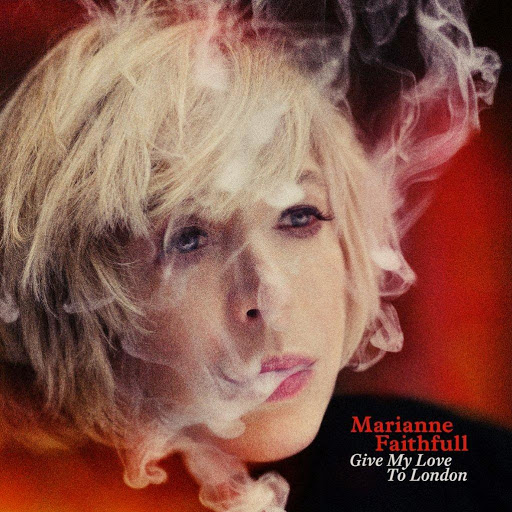
But no doubt about it, Marianne Faithfull’s voice does not please everyone.  Dry, baritonal, the consistency of aged, cracked leather, it’s the voice of too much cocaine, too much booze and too many cigarettes, such as the one whose smoke encircles her face on the cover of her latest album, “Give My Love to London.”

And it’s the  voice which, for going on 35 years, Marianne Faithfull has employed to remake herself from the ingenue of 1964 who scored a hit with (ex-boyfriend) Mick Jagger and Keith Richards’s “As Time Goes By” into a wise, world-weary chanteuse, half-talking, half-singing her way through songs of love, loss, regret, deception, despair and other adult themes.  If you hear latter-day Lotte Lenya in Faithfull’s voice, it’s not a coincidence, given Faithfull’s oft-expressed admiration for her legendary predecessor, and her occasional forays into the Lenya-Kurt Weill songbook (one celebrated item from which, “Pirate Jenny” from “The Threepenny Opera” is referenced in the new album’s title song.)

As smart and sophisticated as it would make me sound, I’m not going to tell you that I love Marianne Faithfull’s music.  Even at it’s best, it’s not very lovable, nor it it suitable for everyday listening.  But I like and admire it very much, and think her new album is terrific.

Released to coincide with Faithfull’s 50th anniversary in the music business, “Give My Love to London” consists of nine good-to-excellent new songs by Steve Earle, Roger Waters, Nick Cave, Ed Harcourt, Tom McRae, Anna Calvi, Patrick Leonard and Faithfull herself, along with covers of the Everly Brothers, Leonard Cohen and Hoagy Carmichael.  No question, the songs primarily explore the darker hues of the emotional spectrum.  But this is no dispiriting wallow in monochrome misery.  And while Faithfull’s voice is by no means pretty, some of the tracks here, such as Cohen’s “Going Home,” achieve at least a fair level of beauty.

Unfortunately, the album saves its worst for last.  In a misguided version of Carmichael’s heartbreaking ballad “I Get Along Without You Very Well,” the arrangement changes the song’s mode from major to minor and backs Faithfull’s vocals with eerie guitar wails and harp plinks. Thus, the balance between the melody’s sweet uplift and the lyrics’ poignance is destroyed, turning an extremely moving song into a merely gloomy one.  This is not the first time in pop music that darkness and ugliness have been falsely equated with emotional depth (listen to Sonic Youth’s disastrous version of “Superstar” on the anthology album “If I Were a Carpenter“), but I wish that artists would knock it off.

Hey, no one or nothing’s perfect, and if you can overlook some flaws, as well as your own prejudices, there some very good music here.  Give a listen:

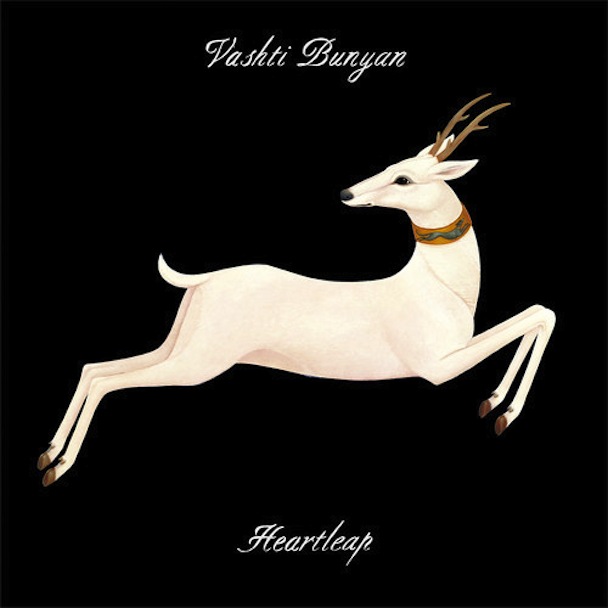
Album du jour: Vashti Bunyan’s “Heartleap”

Vashti-Bunyan-Heartleap

About a year apart, close to a half-century ago, two young women entered London studios to record their interpretations of words and music by one of the hot young songwriting teams of the day, Mick Jagger and Keith Richards of the Rolling Stones.  Here’s what came out:

In the last few months, the two women, Vashti Bunyan and Marianne Faithfull, both now in their late sixties, issued new albums — Bunyan’s fourth and last (or so she says), Faithfull’s twentieth.  How did they come out?  And what do they tell us about what the two women have been up to for the past fifty years?  Over the next two blog posts, we’ll have a chance to listen; first a little background on today’s album.

vashti1vashti2

If you don’t know Vashti Bunyan‘s name or music yet, don’t feel guilty.  Hers is the quintessential real-life fable of unappreciated brilliance, years of obscurity, an emerging cult following and belated recognition, similar to that I chronicled earlier of Californian singer-songwriter Linda Perhacs  (of whom I new nothing until I discovered her on the Vashti Bunyan channel on Pandora — score one for streaming!).  Each, in fact, issued her beautiful but neglected masterpiece of an album in 1970, Perhacs’s “Parallelograms” and Bunyan’s “Just Another Diamond Day.”

Ingenuous, whimsical, filled with cute critters (human and otherwise) and benevolent nature, “Diamond Day” speaks of the time and scene that also gave us Pentangle, Fairport Convention (whose Simon Nicol and Dave Swarbrick played on several tracks), the Incredible String Band (ditto Robin Williamson) and Nick Drake. With Bunyan’s breathy, soothing voice and catchy, compulsively sing-alongable songs, one might have predicted, if not a smash hit, then at least a middling success.

But it wasn’t even that.  Disillusioned, Bunyan quit the music business and, basically, spent the rest of the century in Ireland and Scotland, raising kids and animals.  Then, to complete the fable, came the reissue of “Diamond Day” in 2000, discovery by such young admirers as Joanna Newsom and Devendra Banhart, a second album (“Lookaftering”) in 2005, tours, guest appearances, a documentary a new generation of fans…and they all lived happily ever after.

Judging from her new album, “Heartleap,” the years have treated Vashti Bunyan very well, both vocally and psychically.  Her singing retains its sweet softness, her melodies are as catchy as ever, and her lyrics, wise and mature, express not the slightest cynicism or bitterness.  It’s an intimate affair, with light and lovely string arrangements, discrete synth (mostly simulating harp and celeste) and, at the center, Bunyan’s piano and guitar.  Even if you normally find such music twee and overly precious, listen to the third track, “Mother.”  If you’re not drawn in, beguiled and finally, moved, let down your guard and try again.


Thirty years of Jazz à la Mode

6a00e008dca1f0883401a511672cbb970c-450wi

Tom Reney no doubt remembers to the second how long it took me to respond to his letter of introduction in 1983.  OK, so I dawdled — er, deliberated a little.  In retrospect, it was time well invested in probably the best decision I ever made during my 35 year radio tenure.

I was Music Director of WFCR (now part of the New England Public Radio media empire), while also programming and hosting classical and jazz shows.  Though my jazz radio chops were pretty solid, if I say so myself, it wasn’t as if I couldn’t have been improved upon.  So, when I received a letter offering services from someone with both abiding love of jazz and a decent amount of radio experience, I was intrigued.  A bit of flattery for my own work, indicating a potential kindred spirit who had done his homework, added to his attractions.  And hey, a little ego-stroking never hurts.

Long story short, we at WFCR got more, much more, than we bargained for when Tom joined the roster in 1984.  Three decades and thousands of swinging tunes later, Tom’s “Jazz à la Mode” remains not only essential listening for New England jazz lovers but a model program for How to Do Jazz Radio.

Would that all radio hosts brought Tom’s mix of impeccably high standards and joie de swing to their shows.  You can listen to JALM with complete confidence, knowing that if the music is great, Tom will play it, and if Tom plays it, the music is great.

That Tom knows whereof he speaks when it comes to jazz (and blues, I should add) hardly need be mentioned.  But his knowledge extends well beyond record dates and personnel.  Like all art forms, jazz emerged not from a vacuum but from a confluence of cultures.  You can’t really know the music unless you know where it came from.

And maybe that’s what separates Tom from other equally knowledgeable jazz hosts — the breadth and depth of literary, artistic and sociological understanding he can draw from, not for on-air disquisitions, but as a moral and ethical foundation for what he does and why it matters.  These aren’t just notes, folks — these are people’s lives.  And for the Tom Reneys among us, radio is not just a career, it’s a calling.  If you haven’t added Tom’s brilliant blog to your subscription feed, please do.

This Sunday afternoon from 3-6 at the Community Music School of Springfield, NEPR will throw Tom a “Jazz à la Mode” a 30th anniversary bash (click for tickets and other information).  One way to gauge the respect in which Tom is held by musicians is to take a gander at the roster of performers who’ll be “on the band,” as Tom would put it: Charles Neville, Karrin Allyson, Steve Davis, Avery Sharpe, Grant Stewart, Nat Reeves, Paul Arslanian, George Kaye and Jon Fisher.  That’s about as solid a lineup as will be making jazz anywhere in the world this Sunday — and they’re right here, contributing to a good cause.

So congrats, old colleague and friend.  And here’s to thirty more years of swinging that gone music!


Coming up: A violin for the angels

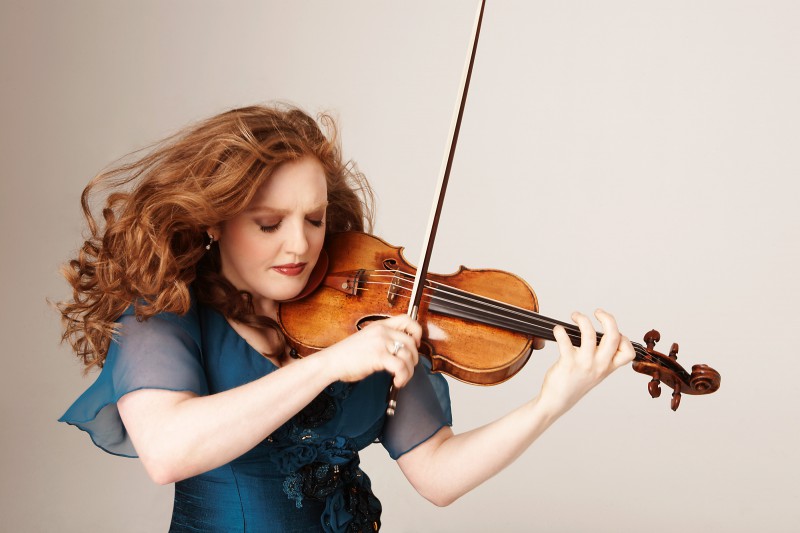
RBP_press5_high

This Sunday afternoon at Sweeney Concert Hall, Smith College, Northampton, violinist Rachel Barton Pine and pianist Matthew Hagle will perform a program of three great violin sonatas (Schubert’s in A Major, Prokofiev’s F Minor, Op. 80 and César Franck’s in A Major) and four selections from Rachel’s “Violin Lullabies” album.  The concert, co-presented by Music In Deerfield (click on link for ticket inf0) and the Smith College Music Department will start at 4:00 — though please come at 3:00 for “Concert Conversations” with Rachel and yours truly.  Yes, I’m Artistic Director (i.e., music picker-outer) for Music In Deerfield, but I hope that, considering the quality of the artists, you’ll forgive the obvious conflict of interest.

Here’s what I wrote for the program booklet:

Can you remember the moment you fell in love?  There you were, minding your own business, listening to the radio, enjoying a recording, or seated in a concert hall.  And then, out of the blue – wham!  A note.  A turn of phrase.  A magical moment, like the oboe entrance in Mozart’s “Gran Partita” that gave Salieri his great epiphany in “Amadeus.”  It could happen to yoooo….

Well, it happened to me, in a hotel conference room, one weekday morning during the annual gathering of public radio music folks.  There we were, buzzing on pastries and coffee, primed to be impressed (or not) by the latest classical hot shot flown in for our delectation by a record label, promoter, or some other handler.

Not that the musician on that particular morning was completely unknown to me, having played her debut recording of Sarasate violin showpieces once or twice on my radio show.  Nothing, however, prepared me for what happened when Rachel Barton (not yet Pine) put her bow down on a string and drew the first note.

Frankly, I don’t recall the selection, some lyrical romantic thing.  But I’ll never forget the bloom of Rachel’s tone – sweet, round, not loud, but wondrously rich, and ample enough to thwart the lousy acoustics of the carpeted, low-ceilinged conference room.  You can go many years and not hear a tone like that.

It was love at first note.  And it’s been a great pleasure since to follow Rachel Barton Pine’s brilliant career, to play her recordings many, many times on-air, and to present her today for her third Music In Deerfield concert.  So beware – it could happen to you!

The pianist vs. the critic

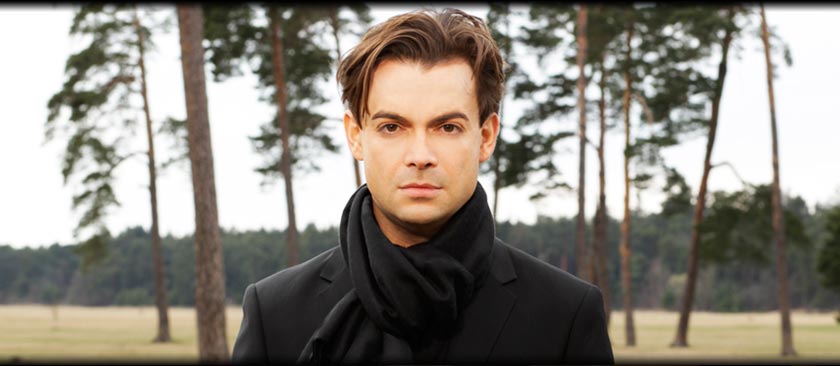
dl_868

And now for the latest bit of excitement to emerge from the ever-frothy world of classical music — a case of artistic integrity, critical judgment and free speech.  To which we might add the head-explodingly confusing differences between American and European law.

The parties are Croatian pianist Dejan Lazić (above), an uncommonly interesting artist I played many times on the radio, and had the pleasure of presenting in concert once with the equally intriguing cellist Pieter Wispelwey, and the Washington Post‘s Anne Midgette, one of America’s “must-read” classical music critics and writers.

As recently summed up by the Post‘s Caitlin Dewey, Midgette published a somewhat negative review of a Lazić recital in 2010.  Now, in the spirit of the European Union’s new “right to be forgotten” law, Lazić has sent the Post a request to have the review taken off the internet.  Before moving on, take some time to read the linked material, including Midgette’s offending review, her own take on “l’affaire Lazić,” and the pianist’s expansion on the reasons for his request (found at the top of his website.)

All set?  Good.  Let me give you my take.

As for Lazić’s “right to be forgotten,” fuhggetaboutit.  Not only is the law obviously unenforceable in this case, but his request represents an affront both to free speech and artistic judgment.  If he would have welcomed a positive review, the kind which musicians quote in their publicity materials, he should have put up with the negative review.  Praise is meaningless without the possibility of criticism.

But there are further issues here worth discussing, of which I will concentrate on one: accountability.

Musicians, of course, are subject to review by critics, including those few remaining critics will access to major publications — like Anne Midgette and the Washington Post.  And in all but the rarest of cases, of which this is one, the critics will get the last word.  If a musician wants to reply, he/she of course can request space in the same publication, with no guarantee that such access will be provided.  Or, the musician can publish a reply on his/her website, which reaches a small fraction of the major publication’s readership.  Few do either, basically conceding final judgment to the critic.

But who critiques the critics?  And to whom is the critic accountable?  “I write for the audience, not for the artist,” writes Midgette,  “and I always encourage artists to do their best not to read reviews at all, since even the most kindly-meant write-up may contain a line or two that can lodge in the subject’s brain and fester.”

As for the first part of that sentence, I would ask how Anne Midgette or any critic knows what the audience and her readership want from his/her reviews.  When I read the most prominent classical music critics still writing for the major papers, I’m impressed with their knowledge and writing skills, as well as their willingness to call ’em as they hear ’em.  I couldn’t do it nearly as well.

But to speak very generally, I don’t get the sense that classical critics are in very close touch with the general classical audience — the 99%, if you will — or that they value this audience’s perspective very highly.  Indeed, especially in the writings of the New York Times‘s Anthony Tommasini and Boston-based critic Lloyd Schwartz (most recently seen in the late, lamented Boston Phoenix), critics tend to view the audience’s perspective as one to rise above, or even to protect the art of music from being sullied by.

While poor would be the musician who panders to the audience (and the audience who wanted to be pandered to, which they generally don’t), poor also is the classical critic who looks upon audience approval and disapproval with snobbish disdain.  I’m afraid there’s still too much of that around, even from otherwise excellent critics who should know better.

As for the second part of Midgette’s sentence (“and I always encourage artists to do their best not to read reviews at all…”), who is she to recommend such a course of avoidance* to the artists?  I strikes me as a presumptuous request for undeserved last-word authority.

In past blogs, I’ve both praised and criticized Anne Midgette on the score of responsiveness to the classical audience and modesty about her critical judgments.  Not that she should care, or even read, what some obscure blogger up here in remote New England and with too much time on his hands has to say.  My perspective is no doubt shaped by my career in public radio, where we had to go directly to the listeners — the audience — to pay the bills, thus instilling a sense of accountability in us.  Since we ask them for so much money, at least we could be responsive to what the audience wants.  Not pandering — accountability.

I wish this sense of accountability were more widespread throughout classical music, including its critics.  The music would be in healthier shape for it.

*The original phrase read “who is she to thus instruct the artists?”  Thanks to volunteer copy editor Scott Belyea (see comment below) for this improvement.

Where the women are

Screen Shot 2014-10-28 at 9.50.45 AM2014_02_24_StVincent_T56

(Left: An actress whose name I have not been able to find — help! — as Anna Magdalena Bach in the film “Composed by Mrs. Bach.” Right:  Annie Clark as St. Vincent.)

Have you kept up with the controversy surrounding the authorship of some of Johann Sebastian Bach’s works?  As summed up in the New Yorker by music critic Alex Ross, an Australia-based musicologist named Martin Jarvis has propagated the theory that the authorship of Bach’s Suites for Solo Cello, long acknowledged to be the summit of the instrument’s literature, should actually be ascribed to Bach’s second wife Anna Magdalena.

Jarvis’s theory, which he first published in 2006, has most recently been advanced in a documentary film called “Composed by Mrs.Bach” (pdf of the poster here), the publicity surrounding which has brought forth much opinionizing from both supporters and detractors.  In general, serious musicologists and other musical notables have been in the latter camp, while Jarvis’s supporters have used the “official” musical community’s “denial” of his theory to bolster their claims that the fix is in and the truth is being suppressed.  While I’m no expert and have no access to source materials, my antennae sense a dubious conspiracy theory along the lines of the questioned authorship of Shakespeare’s plays and the vaccine-autism link.

One of the reasons that such a theory would attract attention in the first place is classicaldom’s guilty conscience about its dearth of female composers, a situation which, while it has been politicized, is no crackpot’s conspiracy — it’s the real deal.  Indeed, the statistics in a study by journalist Ricky O’Bannon found on the Baltimore Symphony Orchestra’s website (and linked on Ross’s article) put it rather bluntly:  “Female composers account for only 1.8% of the works performed (on 2014-15 concert programs of 21 American orchestras). When only looking at works from living composers, they account for 14.8%.”  I’m not particularly surprised about the 1.8% figure, considering how much concert programmers remain beholden to the distant, mostly female-free, past.  The 14.8% figure, however, is pretty stunning.  Haven’t we come further than that?

I guess not, as attested to by other facts and figures.  For instance, since Ellen Taaffe Zwilich became the first woman to win the Pulitzer Prize for music in 1983, only four other women, Shulamit Ran, Melinda Wagner, Jennifer Higdon and Caroline Shaw, have been among the prize’s 31 recipients.  To save you from figuring it out, that’s about 12.9%.  Now, there are probably subsets of the classical concert scene, such as the hipster downtown Poisson Rouge alt-classical scene, where women get a better deal.  Overall, though, it’s a pretty discouraging situation.

But this problem, and a problem I believe it to be, can still be framed more than one way.  Maybe we can see it not just as classical music doing an injustice to its female composers, but also as a matter of potential female composers abandoning classical music for more congenial artistic ground.  Could it be some proportion of both?

I know of no tools to arrive at an answer to that question, other than my own experience as a devoted listener and chronicler of contemporary music in its many and varied manifestations, classical and otherwise.  And lately, I’ve found the most excitement and pleasure in the widely dispersed and ambiguously bordered archipelago of styles typically prefixed by either “indie” or “alt,”  e.g., indie-rock, alt-country, and as cited above, alt-classical — you know, the crazy stuff the cool kids are doing today.

Yes, these areas are male-dominated as well, especially in the field of rock groups, still the domain of the y-chromosome.  But take a gander at the artists who go it alone, composing and performing their own music, often devising alternative noms de musique for their acts, and you’ll find a disproportionate number of absolutely fabulous females.

Since starting this blog in February, for instance, I’ve reviewed albums by such exciting artists at Leyla McCalla, Kate Soper, St. Vincent (I didn’t love her album, but it’s still important), Linda Perhacs, Olga Bell, Tune-Yards, PJ Harvey and Imogen Heap.  They run the gamut from hippie singer-songwriter to avant-garde classical, range from Haitian folksongs to a Russian travelogue, and feature three of the most compelling divas of current indie-pop.  And gee whiz, I haven’t even gotten to the new albums from previous faves like My Brightest Diamond, Grouper, Vashti Bunyan and Anais Mitchell.  As my blog’s title puts it, stay tuned…

What do these extraordinary women have in common?  Not much, musically.  But look at how each has forged a unique path, created a unique identity.  In life and music, theirs are stories of self-invention.  No one can tell them how to do or not to do their music.  They do it their way.  Would classical music afford them the same opportunity?

Here’s how Alex Ross ends his article on “Mrs. Bach”: “A classical-music world dominated by the past will, inevitably, be one dominated by men. Instead of trying to invent a female Bach in prior centuries, let’s seek her in the present.”  Well, asking for a new Bach is goin’ some, as we Yanks used to say.  Otherwise, I’m with Ross all the way.   Except rather than assume that classical composerhood is the highest calling for any talented female musician, I rejoice in the many incredibly talented women who’ve found a happy and conducive medium for their muse in other fields.  Their choice, our benefit.

Albums du jour: The Flaming Lips & Winterpills

9ede7c75 echo

Consider the cover album — you know, when musical artists record albums not of originals, but of previously recorded music associated with other artists.  This category, of course, includes the vast majority of classical albums, few of which have enough new to say about the music they contain to justify their existence, but that’s the subject for another post.

No, I’m talking today of the anthologies, homages, reinterpretations and other cover concepts emanating periodically from pop, rock and myriad sub, sub-sub and sub-sub-sub genres.  Here’s one music critic’s 2012 list of “10 of the Best Covers Albums in Music History,” to which I would add such personal favorites as “Louis Armstrong Plays W.C. Handy” (gotta get some Pops on the list) and Paul Anka’s “Rock Swings.”  What’s that — you’ve never heard Anka’s finger-popping cover of Nirvana’s “Smells Like Teen Spirit?”  Man, you haven’t lived!

Meanwhile, a pair of new cover albums have hogged my CD player this week, though only one of them provides much pleasure.  Goodness, what misery we critics and bloggers go through to keep you informed!  Between them, however, one can learn something about what makes one cover album or any artistic reinterpretation worthwhile, and another a waste of time.

First, the bad news.  On their new album “With a Little Help from My Fwends” (sic), veteran Oklahoma City psychedelic rockers The Flaming Lips, joined by a motley cast of guest artists (including J. Mascis and Miley Cyrus!), re-create, song for song, The Beatles’ “Sgt. Pepper’s Lonely Hearts Club Band” — an album that, if you’ll pardon a little baby-boom navel-gazing, changed my life after I, in 1967, at age 11, picked it out of the record bin at a Woolworth’s.  Is nothing sacred?

No reason it has to be, at least in this case.  I mean, if theater director Peter Sellars can devise a new staging for J.S. Bach’s “St. Matthew Passion,” arguably the greatest musical work ever composed, then “Sgt. Pepper” should be able to survive whatever is thrown at it.

Unfortunately, what The Flaming Lips and friends throw at “Sgt. Pepper” consists mostly of the aural equivalent of dirt and grime.  Of noise, distortion, lo-fi production, flattened dynamics, shouting, mumbling and all-around bad attitude, there’s a-plenty.  Of insight, imagination, tenderness, beauty or even basic musicality, very little.  Is this really what this amazing music says to the artists?   Oh, the album has its moments, but they’re far too few to make enduring the rest worth your while.  Look, I like the Flaming Lips’ original albums, don’t begrudge their concept, and applaud them for supporting a good cause with a portion of this album’s proceeds.  But I also insist that my cover albums at least evince love for the music they cover.  You decide:

One hears the love in every track on a far less ambitious but more meaningful cover album from some of the Pioneer Valley’s best — and if you think I’m just engaging in some home cooking here, listen for yourself to Winterpills‘ loving new album, “Echolalia.”

What’s so good about it?  Well, there’s the inspired, sensitive programming: Twelve pop songs by twelve songwriters as diverse as Sharon van Etten, Buddy Holly, Nick Drake, Lisa Germano, Beck and John Lennon.  Having admired the inspiration and craft of the Winterpills’ original songs on their last few albums, I can hear what drew Winterpills’ core duo, Philip Price and Flora Reed (who mostly go it alone this time) to the melodically rich, achingly expressive tunes presented here.  I’ll admit that a few of the dozen were happy discoveries that have since become fast friends.

Then there’s the sensitive treatment of the songs, which, by enhancing rather than distorting their essential qualities, Winterpills both make their own and offer as tributes to the originals.  Among the many felicities, let me mention the ethereal, elegiac take on Buddy Holly’s “Learning the Game,” the overdubbed cellos (an effect I’m a sucker for) and gentle electronics that add depth to the Go-Betweens’ “Bye Bye Price,” the sweet vocal harmonies, the immaculate, imaginatively layered production, and the overall quality of unity-within-diversity that marks the best of such projects.  I could go on, but it’s better to break off here and give you time to listen.  I’ve put the Spotify version here for a preview, but if you like what you hear, please visit your local CD outlet.  The musicians would appreciate it, and you’ll get much better sound.


Album du jour: Scott Walker & Sunn O))), “Soused”

scott_walker_sunno_soused_lp_1

Want some music to scare the bejesus out of the trick or treaters this Halloween?  Of course you do.  Well, do I ever have the album for the job.  And heck, you might even find it haunting your own nightmares.

It’s an artistic collaboration fated to take place, as no doubt foretold on an ancient scroll buried in some subterranean sarcophagus.  Providing the instrumental juice is Sunn O))) (pronouced “Sun”), a Seattle outfit specializing in a sub-sub-sub-genre known as “doom drone.”  As you could guess from its name, doom drone is not big on songs about bunny rabbits and butterflies.  Earthquake-producing bass drones, unearthly howls, cracking bull whips, yes.  Cute critters, not so much.

What vocalist could possibly stand up to such an onslaught?  Why, Scott Walker, of course.  Owner of one of pop music’s smoothest baritones, as well as one of pop’s oddest careers, the 71-year old Walker long ago metamorphosed from hit-maker (e.g., “The Sun Ain’t Gonna Shine Anymore” with The Walker Brothers — who, it is obligatory to point out, were neither Walkers nor brothers) to auteur of, depending on one’s tolerance for such things, either profound explorations of the dark nights of the soul, or unendurable spewings of meaningless ooga-booga.  Remember the musical version of Faust that the Jack Buchanan character devises in the Fred Astaire film of “The Band Wagon?”  Walker’s music has about as much uplift.

I will admit to not having made it even one time through Walker’s latest couple of albums, “The Drift” and “Bish Bosch.”  I’m not getting paid for this, you know.  But this current album, “Soused,” has me in its grip and won’t let go.  Oh sure, one still has to endure Walker’s sober intoning of such deathless phrases as “Tonight…my assistant will hear the canals of Mars…His cap will be empty…Hey non-e non-e.”  And that’s in number called “Lullaby,” if you can imagine.

But don’t just imagine.  Try it.  If you hear what I hear, you’ll have an album that, if you lower your critical shields and don’t take it too seriously, is creepy, crawly, compulsively listenable fun!  A regular Vienna Philharmonic of metallic sludge (I mean that as  compliment), Sunn O))) provides the perfect backdrop to Walker’s histrionics.  And darned if he doesn’t sound like he believes every word, whether about Brando getting beat up, a modern King Herod or acne on a leper.  I’m not making this up.

So…go ahead, my dearies.  It won’t hurt a bit.  Happy Halloween!

The fall classic and classical music

Charles_Ives_pitcher

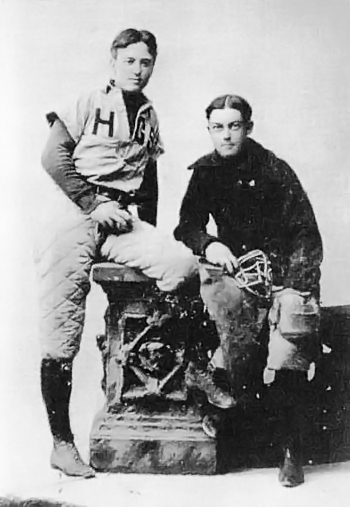
(QUIZ:  Which great classical composer is that on the left of the photo above?  Answer at the end of the blog entry.)

One of the Boston Globe‘s best-known columnists had a thought-provoking piece on a beloved institution in yesterday’s edition.  From his vantage point, the columnist saw an institution in decline, one that no longer occupies the central place in our culture that it once did.  Too slow for the kids and their short attention spans, inconveniently scheduled for working folks, watered-down by attempts to make it more popular, its market share plummeting, it just isn’t the same as in the good old days, i.e., when the columnist first fell in love with it fifty years ago.

Classical music, right?

Nope.  Baseball, in particular the World Series.  Oh, the game still pulls in high revenues, as Globe sports columnist Dan Shaughnessy says in the column in question (“World Series isn’t what it used to be“).  But its biggest event, the “fall classic,” has earned record low TV ratings by some measures this year.  Alas, the National Pastime, as baseball has been known for a sesquicentury (which should be a word even if it isn’t), the sport of poets, professors and Ken Burns, has fallen far behind football  — loutish, violent football — in popularity.  What is the world coming to?

Then I got to thinking:  how would Shaughnessy’s column been different if it had been written by a classical music columnist?  The two institutions, baseball and classical, do share some of the same issues of aging audiences and inability to keep up with the times, though baseball’s travails are nowhere near as serious as classical’s.

For one thing, while Shaughnessy views the current state of the game without rancor (“I blame no one. It’s evolution.”), a classical columnist would more likely rail against the forces that led to its decline.  You could, for instance, see attempts to popularize the game as actually contributing to its downfall, as Washington Post critic Philip Kennicott did for classical music in a piece I took on in this old NEPR blog entry.  Frankly, baseball does have Kennicott’s counterpart in fusty traditionalists like NBC announcer Bob Costas, whom I recently heard praising National League baseball (which does not employ the designated hitter) as being more “textured” than its American League counterpart.  How many sports fans do you think like one sport more than another because of its “texture?”

Or perhaps the classical columnist would place the blame on the fans themselves, especially when a bunch of them leave the stadium in large numbers when the pace of the game decelerates to a slow drip — because of course, they’re not intellectual enough to appreciate such subtle aesthetic pleasures as the incredibly awesome double switch.  No doubt all these supposed “fans” want are cheap thrills like home runs and strikeouts — you know, the exciting parts of the game that appeal to crude American tastes.  Well, we superior connoisseurs of “inside” baseball know better, don’t we, Alex Ross? (My rebuttals here and here).

Hey, I know — how about our classical columnist issue a stirring call to teach baseball in the schools?  After all, since we smart people know that baseball is so much better than the crappy sports the kids are fed today by the corporate media, we should insist that even in times of budgetary austerity (not that we’ll ever tackle the systemic problems that make it so expensive to educate our kids), we prioritize and pay for school programs in the One True Sport.  That will make fans for life out of them, right?  Well, probably wrong in most cases, but not for want of trying.

What our classical columnist would be unlikely to do, based on what happens when classical critics and other scribes actually write about classical music, is to pull back, take Shaughnessy’s long view, and suggest ways that baseball can reform itself from the inside, rather than insisting that its fans get with the program.  Yes, this is changing, though too slowly.  Well, if classical media types want to make themselves even less relevant than they already are, in parallel with the music they’re attempting to shelter from reality, they should keep doing what they’re doing.  It’s working.

Meanwhile, for anyone who wonders why a music-loving guy like me should bother with the trivial pleasures of baseball or any other sport anyway, check out this piece, also from yesterday’s Boston Globe, by retired sports columnist Bob Ryan.  And for a further and (compared with yours truly) smarter comparison of classical and baseball, here’s an excellent piece from Pulitzer Prize-winning composer David Lang.

(QUIZ ENTRY: None other than Charles Ives, star pitcher of the Hopkins Grammar School baseball team.  The teammate’s name is not known.)