Album du jour: Vijay Iyer’s “Mutations”

??????

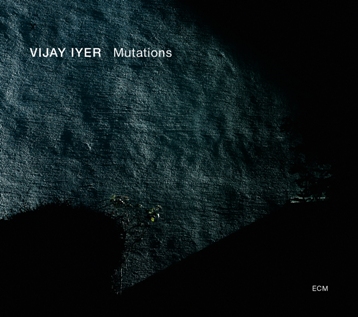
And so, with “Mutations,” jazz pianist-composer Vijay Iyer, the cerebral, MacArthur-winning Yale grad, Berkeley PhD and soon-to-be Harvard professor, makes his debut as a leader on ECM, the German record label specializing in cerebral, spare, musical contemplations accompanied by abstruse liner notes and packaged in somber shades of blue-gray.  What took them so long?

But these are not mere jazz tunes here.  No, the album contains “works,” such as “Spellbound and Sacrosanct, Cowrie Shells and the Shimmering Sea for piano” and “Mutations I – X for string quartet, piano and electronics.”  Funny, I don’t recall Duke Ellington or Thelonious Monk specifying the scoring of their, uh, works on their albums, e.g., “Jeep’s Blues for alto saxophone and jazz orchestra” or “Rhythm-a-Ning for tenor saxophone, piano, contrabass and percussion.”

OK, apples and oranges, or perhaps the Five Spot and Sanders Theater.  As to the works themselves, the pièce de résistance is the aforementioned “Mutations,” a set of ten movements with titles like “Canon,” “Chain,” “Waves” and “Time.”  Here’s Iyer’s explanation:

A mutation process drives each of the ten episodes. In some sections, minute variations or fluctuations in a recurring figure ultimately elicit a structural transformation; in other movements, real-time acts governed by competing directives yield an emergent, spontaneous order. These ten coexisting entities are linked either genetically or by a kind of symbiosis.

Fans of such composers as Steve Reich, Arvo Pärt and David Lang will immediately hear what’s going on in some of these “coexisting entities.”  A rhythmic or melodic process initiated at the beginning of the piece plays itself out, then the piece ends.  Other pieces involve the conflict and play of contrasting ideas, reminding me, especially in the second piece, “Rise,” of Ruth Crawford Seeger’s remarkable 1931 String Quartet — an intentional similarity?  Oddly, the piano enters only in the middle of the third piece, “Canon.”  The electronics are used sparingly and discretely, to the point where they may as well have been dispensed with altogether.  The string writing is reasonably effective, if unadventurous, and well-played by a quartet including former Smith College cellist Kivie Cahn-Lipman.

As to whether the ten movements “yield an emergent, spontaneous order,” I’m not so sure.  Whether a Bach Partita or an Ellington Suite, the best multi-movement works are more than just the sum of their parts.  They’re poems in several stanzas, books in many chapters, unified statements with direction and purpose.  Yes, the ten “Mutations” obviously share some common musical DNA.  But for me, they did not cohere into anything more than ten musical siblings presented in no particular order.  Neither did they come close to fully exploring the possiblities Iyer created for himself.  In this case, sadly, “minimalist” better describes the music’s impact than its style.

The album also contains three pieces for piano with or without electronics, composed and played in Iyer’s post-post-Bill Evans impressionist style.  So discrete, so tasteful, so exquisite were these pieces that they just about made me scream.  I know that moderation is a virtue.  But in music, too much moderation can be a vice.  And that’s why much as I like some of “Mutations,” I can’t love it.  Though I admire Iyer’s intellect and creativity, I prefer music that, even in a little way, satisfies the baser human desires.

How are classical music and pop music different?

beethovenearphones

Here are some off-the-top of my head answers to the question in the title.  The point is not just to emphasize their differences, or to say how one is better than the other, but to suggest things each can learn from the other.  Come back often, as I may add more.  And please, add your own via reply.  Crowdblogging!

Classical music, more than any other art form, is based on constant reiteration of old works.  Pop music, by contrast, is virtually obsessed with the new.

Pop music is based on the vernaculars of the here and now.  Classical music is based, if on any vernaculars at all, largely on those of the then and there.

Classical requires large amount of unearned (i.e., non-ticket) income to keep g0ing.  Pop gets by on what it can earn on its own.

Classical critics often deal with the technical aspects of the music, to the exclusion of its audience appeal or place or its place in the culture.  Pop critics often deal with the cultural aspect of the music (e.g., how cool it is or isn’t) to the exclusion of its technical competence (e.g., whether the singing is in tune or the songwriters use more than three chords).

In classical music, the performers are in the service of the composers, or so they claim.  In pop music, the composers serve the performers.  Often, in pop, the composers are the performers.

In pop, the performers and audience are about the same age.  In classical, the performers stay the same age as the audience gets older.

In classical, it is assumed that the composers and performers are well-trained professionals, with years of training and practice.  No such thing can be assumed in pop.

Pop music compels physical engagement while listening.  Classical music asks that we tamp down our physical engagement while listening.

Much new classical music (though the proportion is decreasing) is made with an eye as much on the future as on the present.  Most pop is designed for immediate consumption.

And yes, pertaining to the illustrations above, the makers of classical music are more likely to be of the deceased, melaninally-challenged, y-chromosome persuasion than the makers of pop.

Coming up: New sounds from an ancient instrument

portrait-serious-nf-sv-316881_960x480

The last time The Wife and I were in Montreal, hungry for live music, we made our way to McGill University for the concluding concert of a weekend organ symposium. (Who just said “wow, you must have been desperate?”)  The performer (also composer), Hans-Ola Ericsson, though unknown to us, was evidently quite an eminence in the somewhat circumscribed world of “the king of instruments,” as it was known back in the day.  Who is this Ericsson?  You can check out his vitals on the above link, none of which prepared us for the onslaught of original, remarkable, unearthly, otherworldly, awe-inspiring and at times, pretty close to deafening sounds that emerged from the magnificent McGill organ and an array of powerful loudspeakers set up around the hall that Sunday evening.  In other words, not your basic E. Power Biggs recital.

I don’t suspect there’ll be anything quite so roof-raising when Hans-Ola Ericsson performs this Sunday afternoon  at 3:00, on the lovely Richards & Fowkes organ (Op. 10, for you organ geeks) of the First Church of Deerfield.  It’s a smaller gem of an instrument, befitting the intimate space of the “Brick Church.”  But in addition to works by the Bachs, J.S., W.F. and C.P.E., Mr. Ericsson will include selections by two progenitors of musical minimalism, John Cage and Erik Satie.  It should be a wonderful opportunity to get up close and personal to a special instrument and a brilliant performer.  See you there?

Album du jour: “St. Vincent”

St._Vincent_-_Marry_MeSt_Vincent_artwork

“Marry Me,” Annie Clark’s first album under her nom de musique, St. Vincent, came out at the same time I came out — out, that is, of my decades-long, self-imposed disdainful ignorance of popular music.  Not to make this all about me, but the two events are not entirely coincidental.  Equal parts ingenuousness and genius, and clearly the work of a very gifted and accomplished young musician, “Marry Me” was among the albums that convinced this old classical and jazz fundamentalist that there was gold to be found among the dross (sometimes entertaining dross, to be sure) of pop, if only I would open my ears to it.

Now, seven years and three albums later, St. Vincent has just released “St. Vincent.”  Make what you will of the self-titling, and the perhaps intentional symmetry of the winsome pose on the cover of her debut on the one hand, and on the other hand, the ice-queen-on-her-throne glower on her latest.  But if you’d been listening all along, you might have seen and heard it coming.  Of the airiness, lyricism and rainbow palette of “Marry Me,” there has been progressively less on each album.  Of darker colors, grittier textures and deeper themes (along with their concomitant critical approval), just the opposite.  Each album has made for extremely compelling listening, but what they have compelled has been shifting from ecstatic discovery and hedonistic pleasure to more sober admiration.  Mind you, we’re not talking Moses und Aron here, and her second-most-recent, “Strange Mercy,” has grown on me over the years.  Still, I long for the days when I could sit in front of my speakers and gape with wide-eyed wonder at St. Vincent’s music.

So, what does Annie Clark/St. Vincent have for us this time?  Eleven songs, forty minutes, lots to consider and discuss, and for this listener, the least pleasure to be had from any item in her discography.  The music sounds closed in on itself, restricted, monochrome, and a rather tarnished and rusty monochrome at that.  The songwriting, though still better than most others’, is by St. Vincent’s standards attenuated, repetitive and lacking in melodic freshness.  Clark’s still got one of the richest and most attractive voices in pop, and can play some pretty mean guitar — if only those virtues could be shown to greater effect.  And while I’m much more a music than a words guy, even I couldn’t help raising an eyebrow at the obscurity and “big theme” pretense of the lyrics, such as the h0-hum critique of the ubiquity of social media on “Digital Witness.” “What’s the point of even sleeping,” she asks, “if I can’t show it and if you can’t see me?”  Well, if she feels so strongly about it, she can shut her Twitter account down.  She won’t, though, as she explained (if you can make head or tail of her explanation) in a recent article in The Guardian.

Of course, we have no right to demand that our artists stay still, and shame upon the artists who do.  What important artists do matters, whether you like it or not.  And for certain, Annie Clark is one of the most important artists in contemporary American music.  Admittedly, mine might be the minority view; Pitchfork, for instance, called the album’s final track, “Severed Crossed Fingers” “the best closing song on a St. Vincent album yet.”  Well, get thee to Spotify, or to your favorite CD store, and compare this song to “What Me Worry,” the final track of “Marry Me, ” a sinuous, harmonically sophisticated ballad in which Annie Clark channels her inner Billie Holiday.  Which one makes your heart soar higher?

Coming up: The Indian dobro?

amjad

We all know the sound of the sitar, thanks primarily to the pioneering Western incursions by the late, great Pandit Ravi Shankar, with an assist from The Beatles.  But the sarod?  It rivals the sitar for supremacy among the leading instruments of Hindustani (northern Indian) classical music.  But I suspect for most westerners attuned to the sitar’s delicate, perfumed tone, the robust, mournful twang of the sarod may come as a surprise.  Give a listen to these clips, and see if you don’t get why I think of it as the Indian dobro:


Hear what I mean?  Of course, there are differences.  For one, unlike the sarod, the dobro has frets, though it’s usually played in slide-guitar fashion, allowing the player to explore the microtones between the usual notes of the scale.  Also, whereas the dobro has just six strings, the sarod has upwards of two dozen.  That’s a lot of tuning!  Actually, only five or so are used for the melody.  Two chikari (drone) strings are played to reinforce the tonality (“key”) of the piece, like their counterpart on the five-string banjo.  And the remainder are not played, but vibrate sympathetically while the other strings are plucked, adding more body and depth to the instrument’s tone.  Such sympathetic strings can also be found not just in other Asian instruments, but also in such curious Western beasts as the viola d’amore.  Finally, the dobro, of course, plays both melodies and chords.  On the other hand, there are no chords, and no chord progressions or (as jazz musicians would call them) “changes” in traditional Indian music.  It’s “just” melody, drone and rhythm.  But in the hands of masters, that’s plenty.

Well, it y0u’re going to post examples of instruments, you might as well go for the best.  For the dobro, that’s Jerry Douglas.  And for the sarod, that’s the masterful, 68-year old virtuoso Amjad Ali Khan — who, it just so happens, is appearing with his ensemble at the UMass Amherst Fine Arts Center this Saturday evening.  Just in case one sarod isn’t enough for you, his two sons will add their own to the festivities, along with two tabla drummers.  No brag, just fact:  On Saturday night, some of the best music in the world will be right here in the Valley.  I hope to see you there.

Coming up: Street Scene

Q:  What did singer-songwriter-cellist-banjoist Leyla McCalla‘s gig last Wednesday at the Iron Horse have in common with the music theater masterwork opening tonight at UMass Amherst’s Rand Theater?

A:  This song.


Sung by the lovelorn young Sam Kaplan in Act I, “Lonely House” is the best-known selection from “Street Scene,” the 1946 “American opera” (the creators’ term) by composer Kurt Weill and librettist Langston Hughes, based on the Pulitzer-Prize winning 1929 Elmer Price play of the same name.  A German Jewish immigrant, collaborating with the unofficial poet laureate of the Harlem Renaissance on the adaptation of an honored work of American theater?  What a great country!

Now, how would one define “American opera?”  Is is just an opera composed by an American?  Or is it an piece of music theater that addresses the essential American themes of class, race and ethnicity, with music that owes as much to American vernacular as to European classical traditions, and which would be equally at home on Broadway as at Lincoln Center?  Works for me.  If you enjoy the other great American operas, such as “Showboat,” “Porgy and Bess” and “West Side Story,” you’ll love “Street Scene.”  Tickets here.

Here’s Leyla McCalla’s version of “Lonely House”:

Album du jour

Soper320

A killing jar is a tool used by entomologists to kill butterflies and other insects without damaging their bodies: a hermitically (sic) sealable glass container, lined with poison, in which the specimen will quickly suffocate. Voices from the Killing Jar depicts a series of female protagonists who are caught in their own kinds of killing jars – hopeless situations, inescapable fates, impossible fantasies, and other unlucky circumstances – each living in a world constructed from among the countless possible sonic environments of the Wet Ink Band.

So writes composer-performer (and Smith College faculty member) Kate Soper of her “Voices from the Killing Jar,” a thrilling, if disquieting, song cycle for voice and chamber ensemble — and when I say chamber ensemble, I don’t mean the Academy of St. Martin in the Fields, unless they’ve added saxophone, percussion and electronics to their instrumentarium.  In eight movements, depicting women of fact (Lucille Duplessis), fiction (Emma Bovary, Lady Macduff, Daisy Buchanan, et al.) and myth (Clytemnestra) in extremis, Soper deploys formidable vocal and compositional chops, demanding maximum virtuosity and agility of herself and the members of Wet Ink — and suspension of normal expectations of classical propriety of the listener.  Yes, this is musical and dramatic ground that had previously been plowed by such composers as Peter Maxwell Davies (“Eight Songs for a Mad King”), George Crumb (“Ancient Voices of Children”), Osvaldo Golijov (“Ayre”) and even Arnold Schoenberg (“Erwartung”), among others.  We can now place Kate Soper in their distinguished company, with extra credit for being both performer and composer.

Most impressive is the way each of the eight women is placed in a unique sound world, at the same time that the entire cycle coheres musically and dramatically.  I found the passages using spoken voice rather than singing to be marginally less effective, especially at the end of movement IV (“MIdnight’s Tolling: Lucille Duplessis”), perhaps because Soper’s voice is more expressive in music than in straight drama.  But compositional felicities abound.  To cite just one example, notice how the palilalia (pathological repetition a word or phrase) in the title of movement III (starting at 9:00 of part one) is depicted not just in the words, but also in the insistent and imaginatively varied repetitions of the note F-sharp in the ensemble.  Strong stuff, not for casual listening, but which will draw you in if you let it.

Kate Soper:  Voices from the Killing Jar.  Kate Soper, voice, Wet Ink.  Available on CD and mp3 download from Carrier Records, and as a download in several formats including FLAC (strongly recommended!) at CD Baby.

Watch Part One:

Watch Part Two:


Album du jour

burial

The best electronica behaves in many ways more like cinema than other kinds of music.  Rather than speak of melody, harmony, rhythm or other standard musical elements when listening to the genre, one is more likely to speak of focus, dissolves, superimposition, montage, and other tricks of the filmmaker’s trade.  Even the favored hip-hop-derived terminology for the auteurs of electronica, “producers,” carries cinematic associations.

At least that’s what struck me while listening to “Rival Dealer,” the latest EP from British electronica producer Burial (William Emmanuel Bevan).  Over three tracks totalling a bit more than 28 minutes, “Rival Dealer” blends vocal fragments (sung and spoken), natural sounds, electronic effects, instrumental riffs, record scratch, jittery beats and a little bit of everything else with a master film director’s sense of pace, action and storytelling.  It’s as gripping and involving a half-hour of sound-art — OK, music — as I’ve heard yet this year.  Give it a try:

Q. How many classical music critics does it take to screw in a light bulb?

edison

A.  Only one.  But that light shines brighter than all the other listeners’.

Anne Midgette, the Washington Post‘s classical music critic, recently wrote a profile/interview with composer Jake Heggie, prior to the opening of Washington National Opera’s production of Heggie’s opera “Moby-Dick”.  A fair amount of the article focused on how the opera audience and the opera critics have expressed different views of Heggie’s operas, also including “Dead Man Walking.”  Here’s how the article starts:

Jake Heggie has been seen as the epitome of contemporary American opera composers. That’s not necessarily a good thing.

Heggie’s “Dead Man Walking,” written with Terrence McNally, had its premiere in 2000. It was a smashing success. It was toward the start of what has become a wave of recent American operas that have taken well-known works — “A Streetcar Named Desire” (André Previn), “Little Women” (Mark Adamo) — and set them to music, to popular acclaim. Some critics, however, deplore the populist turn that some of this work has taken, a style that Heggie — beloved of the public, but not always of the critics — is often seen to represent.

 The fact that the tastes of music critics and the tastes of the general classical and operatic audience are not the same should not come as a surprise to anyone, and was a recurring theme of my earlier blog for New England Public Radio.  Here’s one entry, in which I credit Ms. Midgette for her rare (among fellow critics) awareness of the critical-audience divide.  But, as I put it in my on-line comment on the present article:

There’s a subtext here worth exploring: When the tastes of the critics (how many critics are “some critics,” by the way?) and the audience are at odds, which one is more important? It cannot be doubted that as a class, critics are far more fond of dissonant, edgy, “challenging” (whatever that really means) fare than the audience as a whole. Does that thus make such music better or more important than the more melodic music favored by the audience? Even though they’re in the tiny minority, the critics’ greater access to the media tends to lend weight to their verdicts. Should it? And does anyone speak for the desires of the audience? Perhaps Ms. Midgette could address this is some future piece.

Or put another way:  If you like a piece of music, should you care if a critic doesn’t, or vice versa?  Lots of questions here; please feel free to offer your own answers.

(Photo:  Thomas Alva Edison gazing upon one of his best inventions.  Now there’s the subject for a good opera!)


Album du jour

Image

Could the cello be the new ukulele?  I mean, with excellent new CDs by such cellist-sometimes vocalists-composers as Linnea Olsson and Zoë Keating, added to Canadian musician Kevin Fox‘s haunting “Songs for Cello & Voice,” the classical instrument may soon take its place alongside the uke among the talismans of musical hipsterdom.  Of course, the fact that the aforementioned cellists play the darned thing very, very well certainly helps.

Now we may add another impressive talent to this mini-movement.  A New York City native of Haitian heritage, Leyla McCalla studied the cello for one year under the late John Sessions at Smith College before completing her education at NYU.  Now based in New Orleans, Ms. McCalla is focused on her career as a solo singer-cellist-multi-instrumentalist-composer (lend me a hyphen!) after touring with the acclaimed Carolina Chocolate Drops.

And wow, what a career she seems poised to enjoy!  Give one listen to Leyla McCalla’s new CD, “Vari-Colored Songs — A Tribute to Langston Hughes,” and you’ll add another name to your list of unclassifiable, unforgettable musicians, of the kind to give much hope to even the most pessimistic bewailers of the current state of American musical culture.

Consisting of settings of Langston Hughes’s poetry, arrangements of Haitian folk tunes and a few originals, the new CD features McCalla’s folk-jazz mezzo accompanied by her cello, banjo and guitar, abetted by such stalwarts as Rhiannon Giddens (from the Chocolate Drops) and Don Vappie.  Simple, natural and direct, this is music of artistry, not artifice, of affection, not affectation.  And I would challenge any classical composer to frame Hughes’s lyrics as sympathetically.

As lagniappe, Leyla McCalla is appearing Wednesday evening at the Iron Horse.  See you there?

Image