Album du jour: Ava Luna, “Infinite House”

homepage_large.a04c0dcd

Where has Ava Luna been all my life? Well, in Brooklyn, which one would think needs another hipster indie band like Nashville needs another country singer. But there’s always room for a good one, especially one that adds a unique sound and appealing style to the mix.

Which Ava Luna does big time. Soulful, playful, loose in spirit while tight in execution, this band can turn from mysterious vamp to metallic thrash at the drop of bar line. The three singers, one male and two female, can actually sing, singly and together, though what they sing defies easy description. I will say, however, that it’s refreshing to hear a little blues and funk in a genre that, as some have noted, does tend toward paleness. “Infinite House” is Ava Luna’s third full-length album; now pardon me while I track down the other two. All their music is available for download from Bandcamp. While Spotify is swell, I’m sure they wouldn’t mind if you actually purchased their albums. Heck, they might even be persuaded to make another one someday.

Coming Up: A Bach Bash

maxresdefault

You better wach auf, you better nicht schrei, ‘cuz J.S. Bach is coming to town! The good folks at the UMass Amherst Music Department gotta a whole lotta Bach goin’ on in various Amherst venues, from concert hall to coffee house. From the pièce de résistance, the “St. John Passion,” to many (pun alert!) minor-scaled delights, the music will leave you not just well-tempered but in good temper. Here’s a preview in today’s Daily Hampshire Gazette. See you there?

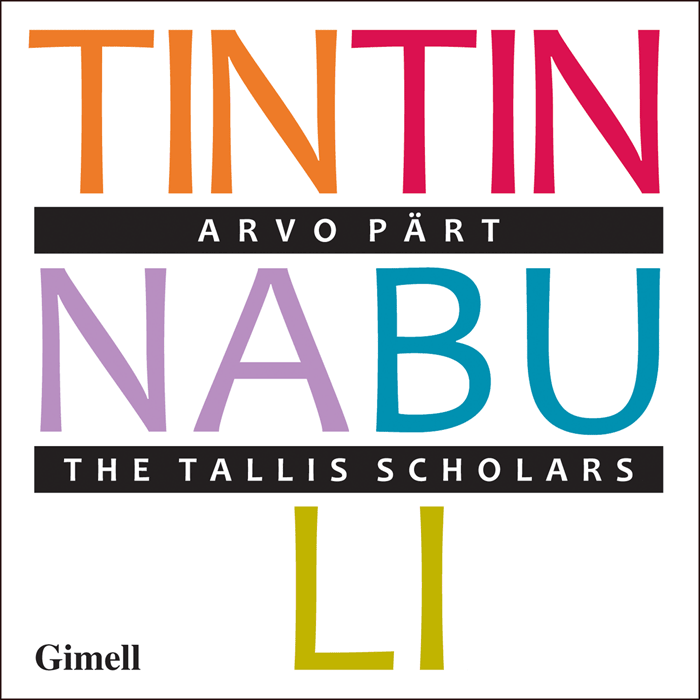
Album du jour: Peter Phillips & the Tallis Scholars, “Arvo Pärt: Tintinnabuli”

755138104921

It was fated, as no doubt foretold by the Sibyl: “And lo, there would come to pass a time when Magister Peter Phillips and his chorus, known throughout Britannia and all ye lands as ye Tallis Scholars, who hath achieveth much acclaim and soldeth many albums, w0uld forsake the house of ye Renaissance polyphony, in which they had become regarded as great princes and princesses, and follow instead the path of the Estonian Pärt, christened Arvo, who liveth for nigh on four score years, and delighteth many ears by composing workes of musicke in a most sparing fashion, choosing his notes as a criticke of musicke chooseth compliments.”

And what we get is pretty much what ol’ Sib would have expected, a wide and varied selection of Arvo Pärt’s a cappella works (click here for repertoire and album notes, and to download), performed with stunning perfection. Not a chord is mistuned, nor a voice unblended. Take it from one who has performed a few of these works: the execution, awesome to behold, reaches the very highest level of choral accomplishment.

So, nothing to quibble about? Well…call me ungrateful, call me impossible, call me irresponsible (oops, that one’s taken). Yet I couldn’t help feeling as I listened that amazing as they are, a certain blandness made these performances a little less than they could be.

This struck me right from the opening selections, “Sieben Magnificat-Antiphonen” (German settings of seven Magnificat Antiphons). As beautifully as the Tallis Scholars sing this music, their German pronunciation lacks bite and character. The voices ring as true as bells, and with about as much expression. The Scholars sound great, but Pärt’s music has more than sound going for it — and more than the Tallis Scholars offer it.

Other groups, especially those from the Baltics — the superb Estonian Philharmonic Chamber Choir comes to mind — sing Pärt with nearly as much technical aplomb, but with more warmth and emotional connection. These Nordic groups even employ a tiny degree of vibrato which, though strictly shunned by early music groups like the Scholars, has never been known to cause physical harm to any listener — sort of like the GMOs of music. Listen to the Estonians’ far more dramatic performance of the Antiphons (sorry, the Tallis Scholars CD is not on Spotify, but may be sampled here).

So, to hear Pärt’s a cappella music done to heavenly perfection, the Tallis Scholars album is a must. To hear it in flesh and blood, check out the Estonians. Here’s their Pärt discography. And for the curious, here’s a basic explanation of the album’s title, “Tintinnabuli,” a very important word in the Pärt lexicon.

L’affaire Lisitsa

1000-valentina-lisitsa3Jeff Melanson,

As reported in this morning’s New York Times:

The Toronto Symphony Orchestra abruptly canceled a performance of Rachmaninoff’s Second Piano Concerto on Wednesday after parting ways with a Ukrainian soloist over concerns that her ribald Twitter commentary had crossed the line into “intolerance.”

Read the report to get the full story.  You can find the comments of TSO CEO Jeff Melanson (above right) here.

The soloist in question, pianist Valentina Lisitsa (above left), has earned considerable worldwide acclaim over the past decade through her shrewd use of social media, becoming the most widely viewed classical artist on YouTube.  Her recordings (including a new 2-CD set of the piano works of Philip Glass) and concert appearances have also elicited praise, though not unqualified, from the musical press.  Without doubt, she qualifies as a major artist, and the Toronto Symphony Orchestra was wise to engage her.

But were they wise to disengage her?  Having been in the music presenting business, radio and concert divisions, for many decades, and having been in somewhat similar if not as consequential circumstances, I prefer to extend the courtesy of not judging other presenters for their actions, just as I would prefer they extend the courtesy of not judging me for mine.  I’ve been on both sides of that equation, too.

However, I can offer some general principles that I fall back on in such cases:

1. Orchestras and other presenters can choose whom they engage and disengage, and what works they play and not play, for whatever reason, or for no reason. It’s not censorship; it’s their choice.

2. Artists should be as free to speak their minds as anyone else, but they’re not free from the consequences when an independent organization decides not to be associated with the artist any longer. Lisitsa remains free to express herself. The TSO remains free not to engage her. Those freedoms are not in conflict.

3. Those who applaud the TSO in this case should keep it in mind when an orchestra disengages an artist or work espousing a cause they believe in.

I’d love to hear your thoughts as well.

Album du jour: Colleen, “Captain of None”

colleen-captain-of-none-artwork-by-iker-spozio

It’s time, dear friend, for another Stay tuned… blog trip off the musical highway and onto a seldom-explored, half-hidden byway.  How by is today’s byway?  Pretty, and prettily, by, that’s how by it is.

The artist, a 39-year old Frenchwoman named Cécile Schott, goes by the nom de musique Colleen.  One wonders whether, had she been christened Colleen Schott, she would go by the name Cécile — but that’s the way you roll along the musical byways, where you dare not give your right name.

Mlle Schott — excusez-moi, Colleen specializes in delicate, somewhat archaic sounds which she treats in an up-to-date post-minimal manner.  Imagine an electronica producer like Apex Twin, or perhaps a an ambient composer like Brian Eno, doing music for recorder quartet and baroque lute, and you’ve kind of got the idea.  One one previous album, Colleen wrote gentle, meditative numbers for viole da gamba, clarinets, classical guitars, spinets and musical glasses (she plays all her own instruments, which she liberally multi-tracks).  Another, one of the coolest byway albums in my collection, consists almost entirely of new music composed and constructed for music boxes.  Who else would think of doing such a thing?

By the standards of those earlier albums, Colleen’s latest, “Captain of None,” is practically Céline Dion in its normality.  This time, Colleen’s instrumentarium consists of treble viola da gamba, (I hear a bass viola da gamba as well, though none is credited) melodica, percussion and effects.  Oh, and she adds her breathy, appealing voice to the texture on about half the tracks, singing (usually in multiples of herself) epigramatic phrases of as much rhythmic interest as melodic or literary.  As I hope you will go on to hear for yourself, the music is hushed, suspenseful and very appealing.  No, it ain’t Beethoven, Billie Holiday or even Beyoncé.  But if you need a pleasant and refreshing diversion from the musical highway, I think “Captain of None” is just the thing.

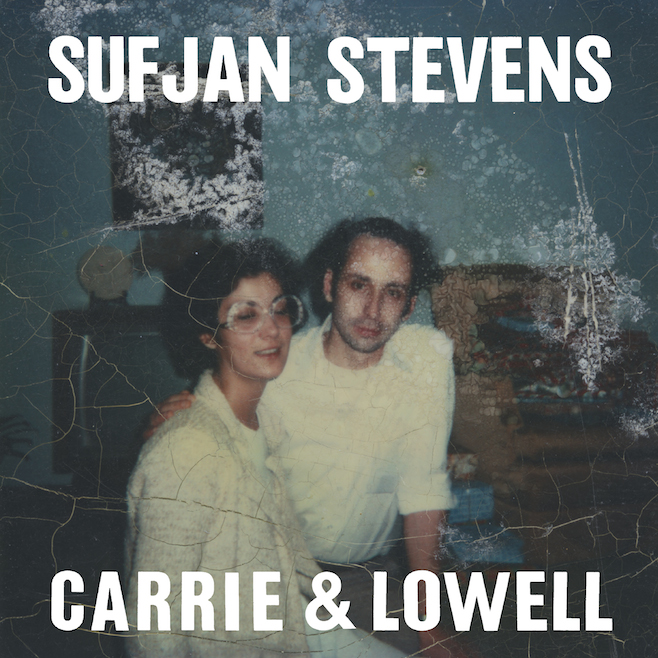
Album du jour: Sufjan Stevens, “Carrie & Lowell”

dbfa1978

I can’t remember the last time I was so moved by a piece of music.  Sanford Sylvan singing “Mache dich mein Herze rein” in Bach’s St. Matthew Passion conducted by the late Blanche Moyse in Vermont?  Bernadette Peters singing “Losing My Mind” in Stephen Sondheim’s Follies on Broadway?  Could be.

I write “piece of music” advisedly, for Sufjan Stevens‘s “Carrie & Lowell” is not just an album of songs.  Like such previously praised albums as Björk’s “Vulnicura” and Gabriel Kahane’s “The Ambassador,” “Carrie & Lowell” is a song cycle, unified in theme, and tracing a continuous musical and emotional arc.  Stevens explained the story behind the album recently to Pitchfork‘s Ryan Dombal in perhaps the smartest and most self-aware artist interview I have ever read.  Reading this interview and listening to the album clarified some mysterious elements in Stevens’s previous music.  I found myself saying things like “ah…that’s what he meant by that lyric” or “that’s where that dark image came from.”  If you’re new to his music, it would be interesting if you were to start here and proceed backwards, getting to know Stevens the way we get to know the characters and music of Sondheim’s Merrily We Go Along.  After “Carrie & Lowell,” your next stop, “The Age of Adz,” may come as a shock — but that’s how it goes with Sufjan Stevens, one of the least predictable, and most defining, musical artists of our era.

So how did Stevens transform such intimate and painful subject matter into words and music?  With sensitivity, restraint, simple beauty, and the ability, bestowed upon only the finest artists, to turn the personal into the universal.  Certain songs, certain phrases in “Carrie & Lowell” make me weep every time.  If you’ve ever been a parent — or a child — you may have the same reaction.  But be warned, or as Stevens put it in Pitchfork:

Don’t listen to this record if you can’t digest the reality of it.

Whad’ya say?

I’ve spent a good part of today with “Vespers for a New Dark Age,” a new work from 34-year old Brooklyn-based composer Missy Mazzoli, and have mostly enjoyed it.  Rather than give it full review here, I’ll simply describe it as a continuous cycle of eight pieces for high voices, chamber ensemble and electronics, composed in, for want of a better descriptor, a very up-to-date post-minimalist style.  The coolest, if not necessarily most important, feature for me so far is the scoring for rock percussion, brilliantly played by Glenn Kotche of the band Wilco  — if you’ll pardon the expression.

But there’s one thing that bums me about Mazzoli’s “Vespers”:  I can’t make out the words.

And apparently, as you can read on the album’s Bandcamp page (from which I downloaded it in high quality audio but sans booklet) or at NPR Music, the words, by poet Matthew Zapruder, contribute plenty to the work’s meaning.  Oh, I can make out individual words or phrases, but not nearly enough to make overall sense of the text.

And I can hear why:  The singers were recorded more as part of the ensemble than as soloists, so are somewhat distanced from the listener.  This distance is particularly hell on consonants, which tend to get sucked into the void.  And though they hardly sound like typical vibrato-laden operatic sopranos, the singers are clearly classically trained.  Thus, they place more emphasis on evenness and beauty of tone than enunciation, especially when they soar to their upper registers, as they frequently do.  This causes distortion in the production of vowels, further obscuring their diction.

Perhaps Mazzoli intended this disembodied effect; I can’t say for sure.  And of course, someone with the full  CD or a concert program would be able to read the words in print, as one often has to do even with classical works in English.

But what fun is that?  I mean, where and when was it decided that classical music, even contemporary classical music, required to listener to have his head buried in the printed page while listening?  What a drag, one up with which I am increasingly unwilling to put.

For the marriage between words and music often provides the key to a vocal work’s deepest meaning.  Who hasn’t thrilled to a sudden melodic leap or harmonic shift that illuminated a text so perfectly as to bring tears to your eyes?  That certainly happened to me during this morning’s constitutional, which I accompanied with Sufjan Stevens’s beautiful new album “Carrie & Lowell” (review to appear soon).  Would I have been as moved if I couldn’t make the words out and had to read them while listening?  No way.

True, this is not just a pop vs. classical thing.  Indeed, as may be the case with Mazzoli’s “Vespers,” the effect of obscured lyrics could sometimes be what the some contemporary pop artists had in mind, so their work should sometimes be judged accordingly.

But not always.  There are plenty of albums whose verbosity would seem to be the secret to appreciating them, if only I could make out the damned words.  Why would the artist take such care with his/her poetry, only to bury it in the mix?  Funny how this effect never occured to Bessie, Bing, Ella, Frank, Hank, Tony, Elvis, Dylan, Bruce, Karen C. or the other immortals of American pop and jazz.  Could you imagine Sinatra handing out a lyric sheet prior to a gig at the Sands?  Fuhgeddaboudit!

So, add this to the list of things that classical music needs to confront if it’s going to appeal to new audiences, and that pop music should confront if it wants to be taken seriously as music.  That is, if either music really cares about either problem.

(“Vespers for a New Dark Age” isn’t on Spotify yet, but you can stream and download it on Mazzoli’s Bandcamp page.  If you have better luck with the words, let me know.)

The show must go on

I am more casual admirer than devoted fan of the music of Wilco, the Chicago-based band that has been at the forefront of alternative rock for over two decades — a very impressive feat.  But an off-stage decision they made this week has, at least in my eyes, cast them in a negative light.  As stated on Wilco’s Facebook page:

We are canceling our May 7 show at the Murat in Indianapolis. The “Indiana Religious Freedom Restoration Act” feels like thinly disguised legal discrimination to us. Hope to get back to the Hoosier State someday soon, when this odious measure is repealed. Refunds available at point of purchase.

Bad move, gentlemen.  Very bad.

For once you commit to a venue and an audience, the show must go on.  Yes, of course, their are cancellations for illness, weather or other unforeseen circumstances, as classical music fans, especially of the operatic persuasion, know all too well.  And no one should insist that performers put their lives on the line by performing in war zones, disease-ravaged areas or the like.

But this, as I see it, is a slap at Wilco’s Hoosier fans, who are being collectively punished for legislation they may or (much more likely, I suspect) may not agree with.  Rather than honoring their commitment and possibly using the occasion to announce their stand and encourage the audience to take action, Wilco took the easy and, I think, unprofessional way out.  I’ve already read praise for what others regard as Wilco’s “act of conscience.”  Please.  Fulfilling their engagement and playing for their paying audience should be at the forefront of their conscience.

Whatever you think of Indiana’s RFRA, neither it nor the opposition to it exists to provide Wilco a political platform.  It’s not about you, guys.  Really — what effect does Wilco think their cancellation will have?  And who will be the parties most affected, most inconvenienced and, frankly, most pissed off?  Their venue and their fans, that’s who.

During my 35-year radio career, there were obviously times I was unable to perform, including one lengthy illness.  And of course I took scheduled vacations, though never as much as provided by my employer.

But if I was supposed to be on, I went on.  I went on after 9-11, Sandy Hook and other disasters.  I went on when I didn’t feel great, and during periods of severe depression.  I went on when there was two feet of fresh snow on the ground, the roads were nearly impassible, and I had such bad gout in both feet that I had to practically f***ing crawl in the snow from the parking lot to the radio station.

And none of this makes me a hero.  If I’m going to brag about anything, it’s that I was a professional, and acted like one.  I didn’t like that day’s news headlines, or a decision my station’s management made?  Too bad.  That wasn’t the audience’s problem, and to snub them for my own personal reasons would have been unprofessional.  The show must go on.  For you too, Wilco.

Paragraphs du jour: Sufjan Stevens on “Carrie & Lowell”

Composer-performer Sufjan Stevens, interviewed by Pitchfork‘s Ryan Dombal on Stevens’s autobiographical new album “Carrie & Lowell”:

Pitchfork: A lot of people make the kind of folky music that’s on this record, but so little of it actually feels meaningful; with music this spare, emotional extremity can seem like a requirement.

SS: Yeah. Like: Don’t listen to this record if you can’t digest the reality of it. I’m being explicit about really horrifying experiences in my life, but my hope has always been to be responsible as an artist and to avoid indulging in my misery, or to come off as an exhibitionist. I don’t want to make the listener complicit in my vulnerable prose poem of depression, I just want to honor the experience. I’m not the victim here, and I’m not seeking other peoples’ sympathy. I don’t blame my parents, they did the best they could.

At worst, these songs probably seem really indulgent. At their best, they should act as a testament to an experience that’s universal: Everyone suffers; life is pain; and death is the final punctuation at the end of that sentence, so deal with it. I really think you can manage pain and suffering by living in fullness and being true to yourself and all those seemingly vapid platitudes.

Read the whole interview here, and check back soon for a review of “Carrie & Lowell,” which is being released today.

Album du jour: Björk, “Vulnicura”

Album Artwork.jpg

As you would know if you had read any of the extensive coverage preceding its formal release this week  (it was put out on iTunes in January, two months ahead of schedule, as a response to leaked versions), “Vulnicura” is Björk‘s contribution to the distinguished literature of the “breakup album.”  To be sure, even without prior knowledge, the album’s subtext would have become obvious the first time through, thanks to the dated subtitles of its first six songs (e.g., “9 months before,” “2 months after”) and the subject matter of the lyrics.

So, as with all such autobiographical art, it’s fair to ask whether we are being drawn more deeply into a private matter than we’re comfortable with, and whether a work of therapeutic benefit to the artist is universal enough to speak to a disinterested audience.  In other words, is it art, or is it Oprah?

I will admit to a TMI cringe or two while listening to “Vulnicura,” especially the first time through.  The more I listened, and the more I detached, the more I admired the album’s manifold musical virtues  — and the more it moved me.

Funny thing, I can hardly ever listen to Björk without being reminded of Baroque music, especially that of the 17th century.  Sure enough, the first song, “Stonemilker” opens with a ground (i.e., simple bass pattern that is then repeated underneath unfolding variations) much like that of Pachelbel’s “Canon,” and to which it returns periodically.  This technique, a Björk favorite, helps provide unity and structure to her fanciful melodic explorations. The album’s superb Henry Purcell-like string scoring adds to the Baroque impression.  And speaking of the “English Orpheus,” the album’s emotional centerpiece, “Black Lake (4 months after)” is nothing less than a stunning aria in the tradition of Purcell’s “Dido’s Lament” and Claudio Monteverdi‘s “Lamento della ninfa.”  I dare anyone to listen to all three and tell me that the comparison is unjustified.

Not everything on “Vulnicura” reaches this level of inspiration, but then again, not every song in Schubert’s “Winterreise” or Schumann’s “Dichterliebe” is a hit either.  Like those immortal works, Björk’s latest might be best heard not as an album of disparate tracks but as an integral song cycle.  Kudos also to The Haxan Cloak and Arca for programming and production that enhances the music without overwhelming it.

It’s now over 20 years since Björk’s “Debut,” and her music remains as timely and relevant now as then.  Of how many creative artists can that be said after two decades of work?  Few musicians of any genre challenge themselves and their listeners as consistently as Björk, whose every project reveals hitherto unknown aspects of this protean genius’s boundless creativity.  I can’t wait to hear what she does next, but still have much to discover in her latest.  Let me give it another spin…

(For now, Björk has decided not to put “Vulnicura” on Spotify, though I’m sure there are other ways to check the album out.  Like purchasing it, for instance.)