Album du jour: Hauschka’s “Abandoned City”

c_2000x2000x1679390x1386161054xHAUSCHKA_ABANDONED_CITY_hi-res_1440x1440px

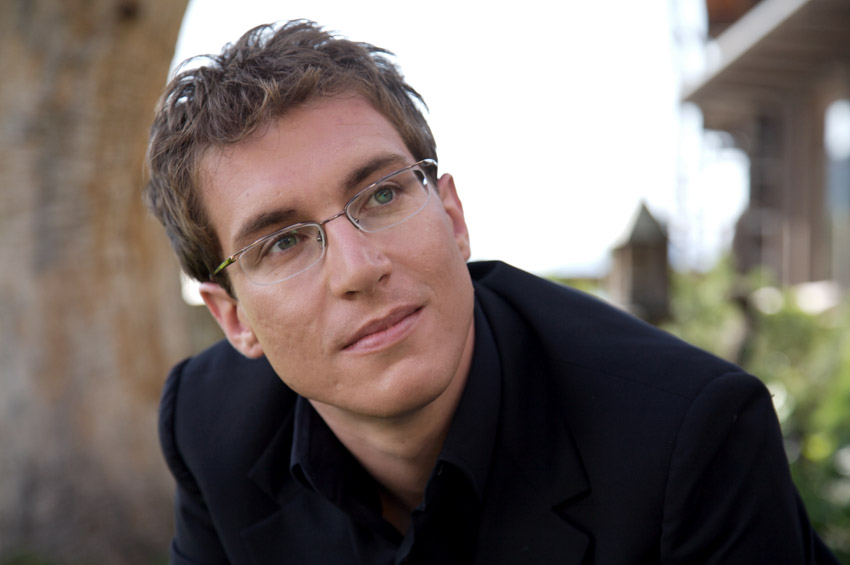
What, you might ask, is a Hauschka?  It’s actually a who, a 47-year old German named Volker Bertelmann, who chose his musical moniker in reference both to a Bohemian composer and Beethoven friend named Vincenz Hauschka, and to Dr. Rudolf Hauschka, eponym of the well-known skin care products.

Under the Hauschka banner, Bertelmann explores the sound-world and pop possibilities of the prepared piano, which, as John Cage fans would tell you, involves sticking screws, erasers and other stuff into the strings of the piano to alter their sound.  Bertelmann claims to have discovered the fun of fooling around with the family grand on his own as a lad, with no prior knowledge of Cage.  Knowing as we do the mischief inventive young minds are capable of, there’s no reason not to believe him.

Now, twelve albums into his recording career (including “Silfra,” a duet album with the great classical violinist Hilary Hahn), Hauschka has issued “Abandoned City,” a collection of nine vignettes named for historical ghost towns, Potemkin villages and other once-flourishing sites now returned to their natural state.  In the artist’s words:

“I was interested in finding a metaphor for the inner tension I feel when I’m composing music, a state of mind where I’m lonely and happy at the same time…When I saw photos of abandoned cities, I felt it was perfect. People once lived there, but they left in a rush and now nature has taken over in a beautiful way, things are growing up from the sidewalk and the seasons are changing colors. The music is dark, but in a quiet, uplifting way. The piano is singing the melody but, because of the effects, you can’t hear it directly. It’s like the sound of a choir under the earth, something you feel without realizing it.”

I hesitate to call this Hauschka’s deepest album, not because it might not be, but because depth is not the number one priority of his music.  And that is in no way to denegrate him.  A spontaneous and inventive musician, Hauschka crafts sophisticated, well-made instrumental pop, with infectious beats, hooky melodies and nice atmosphere.  His basic m.o., once his piano is prepared to give him the right colors and textures, is to establish the rhythmic groove, add the main melodic lick (repeated often enough to make sure we get it), and, with perhaps a side-trip or two into subsidiary material, develop both groove and lick to the end of the piece, three-to-seven minutes later.  A resonant backdrop of acoustic and synthesized instruments adds moisture to the dry, percussive textures Hauschka favors on his keyboard.

You might think of the pieces on “Abandoned City” as modern prepared piano pop versions of Domenico Scarlatti’s Sonatas or perhaps Erik Satie’s piano works, with a little minimalism-lite added to keep it up-to-date.  The well-shaped selections have just enough inner life to compel concentrated listening, but if your mind is inspired to drift a bit, that’s OK too.  Perhaps at least one piece in a major mode would have hit the spot after all the minor-mode moodiness, but that might not have been true to Hauschka’s vision.  And for all the clever sounds and catchy rhythms, the highlights for me are the beautifully flowing melodies of the album’s most somber tracks, “Who Live Here” and “Craco”— which, not by coincidence, are also the tracks that feature the natural “unprepared” piano.  You know, even us modern hipsters might sometimes need to chill out with our equivalent of our parents’ and grandparents’ Roger Williams, Ferrante & Teicher or even (gasp) Yanni.  For that, but also for more than that, you could do much worse than Hauschka.
Coming up: Happy birthday, JSB!

1978905_10201777297143130_1276115297_n - Copy

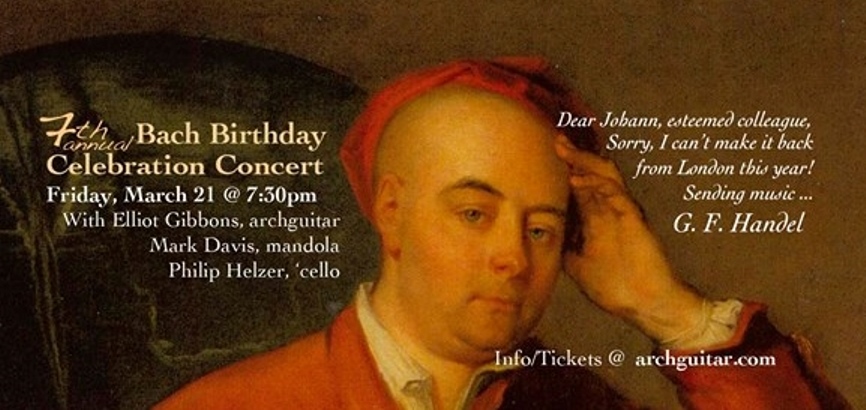
Listen up, people:  The greatest musical genius in the history of the universe only turns 329 once.  So don’t miss your chance to wish him “Alles Gute zum Geburtstag” (in beautifully voiced four-part harmony, of course) this Friday evening, March 21, when Peter Blanchette, the Pioneer Valley’s own Segovia (or perhaps Dick Dale) of the archguitar, brings his posse into the Christian Science Society of Northampton for his 7th Annual Bach’s Birthday Celebration Concert.

Sadly, as you can see above, Handel can’t make it.  But at least old George Frideric (or Georg Friedrich, if you insist) will be represented musically by some of his “Water Music.”  Who else is on the invite list?  One never knows when Peter picks out the tunes.  Also on hand will be one of the few other archguitarists in captivity, Elliot Gibbons; since this is Northampton, archguitar duets are permitted.  And rounding out the band will be Mark Davis on mandola, the instrument that is to the mandolin what the viola is to the violin, and Philip Helzer on cello, the instrument that is to the violin what the cello is to the violin.

Today being Saint Paddy’s, let’s leave you with Peter and his archguitar in a lovely Spanish church, playing one of Turlough O’Carolan‘s best.  Amazing thought: The Irish bard and the Leipzig cantor were contemporaries!  If only they had gotten together to jam…

The voice of the audience

suarez_AndrisNelsonBSO_MET_002

The Boston Globe‘s Jeremy Eichler has an excellent piece in today’s paper about the challenges faced by first-year Boston Symphony Orchestra music director Andris Nelsons.  While having high praise for the BSO’s sound and Nelson’s interpretations of the classics, Eichler also sees an orchestra behind others in America for modernity of vision and diversity of offerings.  Give the article a read before we go on.

Conspicuous and curious in its absence from Eichler’s article is the name of Nelson’s predecessor, James Levine, whose controversial tenure (2004-2011) as BSO director, when viewed in retrospect, put the BSO about a decade behind its peers in confronting the artistic challenges and opportunities of the 21st century.  Resolutely old-school in his interpretation of the classics — none of those newfangled light textures or sprightly tempi for him — and intensely devoted to 20th-century musical modernism (Schoenberg, Carter, et al.), Levine, for all his brilliance, stopped progressing as an artist sometime in the 1970s.  His legacy with the BSO, however exciting it seemed at the time, is one not to build on, but to catch up from.

Well, Eichler may not want to look back on the Levine era, and good for him for moving ahead.  But as you look at the comments on Eichler’s article, you’ll see that at least one audience member remembers Levine, and not fondly.  And while I know better than to assume that one commenter speaks for anyone other than himself, my instinct tells me that there are quite a few classical fans who feel the same way as “mogulmeister.”  Here’s the money quote from the first of his two comments:

Beyond that, yes, new music is fine, but it’s all too easy for critics like Mr. Eichler to focus on “new music” as the cure to an orchestra’s woes or way to expand audiences, and it’s mostly nonsense as far as I’m concerned (and except for LA, there’s no place where you can show that that’s worked as an audience-building approach).  There’s certainly a place for new music, but let’s not elevate it to a role far beyond its real usefulness in audience-building.  It’s more important to hear QUAILITY MUSIC than it is to hear new music, and the two are not mutually exclusive.  And to be clear, while I’m not opposed to hearing new music, I’m not interested in hearing ATONAL music of any sort.  Sorry, but 12-tone excrement is the quickest route for the BSO to wall itself off from its audience.  I’m a hugely informed and passionate classical music lover, and over the years we’ve been subjected to Schoenberg and the sons of Schoenberg (Webern, Berg, Elliot Carter, Milton Babbitt, etc.) to the point that any more of it makes me want to vomit.  More than a few of us were not sorry to see James Levine go.

In truth, I don’t think Eichler deserves the rebuke in mogulmeister’s first sentence, since the critic never came close to saying that new music was any kind of “cure to an orchestra’s woes.”  But that’s on-line comments for you, so we can put it aside for now.

What excites me here is that we actually have, in cyber-print, for all the world to read (or at least the tiny fraction of the world that actually cares), the informed opinion of a “a hugely informed and passionate classical music lover” who happens not to be a critic, musician or other kind of music professional.  He’s not necessarily hostile to new music (if you take his word for it), but discriminates between the “QUALITY” kind he might like and the “12-tone excrement” he doesn’t — the kind which earned the hosannas of some very prominent critics (e.g., Lloyd Schwartz in the Phoenix and Anthony Tommasini in the New York Times) back in the day.  He’s probably exceptionally aware for a BSO patron, but also probably more typical of the denizens of Symphony Hall than the critics and other insiders who form about 1% of the audience but have 99% of the media access for their opinions.

You know, I don’t think Eichler and mogulmeister are really that far apart in what they want.  Eichler loves the basic repertoire too, as long as it’s performed in fresh and vital ways.  And based on my lengthy experience as a classical broadcaster and presenter, I would bet that mogulmeister can easily be won over by new music — of the right sort and the right presentation.  As to what sort and presentation that is, I’ll save that for a later entry.

For now, let me urge all those with a stake in classical music, but especially those closer to the inside of its making, to keep an ear out for the informed opinion of audience members like mogulmeister.  What they have to say is every bit as worth heeding as what the critics write.  Besides, the critics get in for free.  The mogulmeisters have to pay.  We can at least treat them like valued customers and take them seriously.

Twelve fabulous females

nancy vashti3linda2lucia

I will admit that when it comes to music, I generally prefer vocal to instrumental.  And that when it comes to vocal music, I prefer the x-chromosome to the y-.  Here, for the Spotifiers among us, is a playlist of twelve fabulous females, to whose voices I return time and time again, especially when in need of comfort and solace.  By the way, the inclusion of the transgendered Antony Hegarty of Antony and the Johnsons was both intentional and apt.  And yes, they’re pictured in playlist order.  

Please recommend others in the comments section.  Maybe we’ll post “twelve more fabulous females” sometime soon.

maxine2mercedesantonykaren2


mabelbarbara2leewjanet2

What difference does a performance make?

score

As has happened on many previous occasions, two new recordings of the same Violin Concerto were released this month.  As has happened on few if any previous occasions, it’s a Violin Concerto by a living composer, and a youngish (43) composer at that.  Huh!  Time then, thought I, to get to know the work in question, Thomas Adès Violin Concerto, “Concentric Paths.”

If his name doesn’t strike a chord (please pardon the expression), Thomas Adès is a brilliantly accomplished composer, pianist and conductor whose arrival on the British classical scene some twenty years ago was met with mucher ado than that of anyone since Benjamin Britten, with whom Adès is often compared.  As his worklist grows, so does Adès’s reputation as one of the most important composers around, to the point where his gruffly handsome, trim-bearded visage can occasionally break through the performing superstars’ near-monopoly over the covers of the classical mags.  Though Adès works in many genres, he’s attracted most international attention for his operas, especially “The Tempest,” a critical and popular hit last season at the Met.

Serendipitously, Adès’s Violin Concerto would make for a compact but fairly complete introduction to his compelling sound-world.  Intricate to (but only occasionally beyond) the point of finnickiness, abounding in high-flying pyrotechnics, filled with ever-changing colors and shades, extremely wide in dynamic and expressive range, Adès’s music is well-suited to those who like their music up-to-date but still grounded (pun intended, as I’ll explain) in the past.  Perhaps he’s the closest thing to a modern, real-life Alex Hollenius, the composer portrayed by Claude Rains in the film “Deception,” and whose music was described in the script as combining “the rhythm of today with the melody of yesterday.”

As to the work’s sub-title, “Concentric Paths,” here’s the composer’s description:

‘This concerto has three movements, like most, [the movements are called
Rings – Paths – Rounds] but it is really more of a triptych, as the middle one
is the largest. It is the “slow” movement, built from two large, and very many
small, independent cycles, which overlap and clash, sometimes violently, in
their motion towards resolution.
The outer movements too are circular in design, the first fast, with sheets
of unstable harmony in different orbits, the third playful, at ease, with stable
cycles moving in harmony at different rates.’

To which I would only add briefly that the violin writing in the first movement intentionally resembles the ultra-coloratura melodies for the literally and figuratively airborne character of Ariel in “The Tempest.”  And that the second movement is a modern take on the “ground” (there’s that pun), by which we refer to musical variations on a repeated bass line and/or chordal pattern — you know, like the blues, or “In-A-Gadda-Da-Vida.”

Anyhow, I took out the score at a local library, got my hands on the original recording conducted by Adès and featuring the Concerto’s original soloist Anthony Marwood, and downloaded (in CD quality, of course) the new recording on the Bis label by violinist Peter Herresthal with Andrew Manze conducting the Norwegian Radio Orchestra.  I checked out on Spotify the other new recording on the Avie label, with soloist Agustin Hadelich and conductor Hannu Lintu, but won’t comment on it until I can hear it in full CD quality.  (Anyone want to sponsor this blog by gifting me a copy?  I can’t send you a coffee mug, but you will earn the great thanks of all readers.)

Thusly set up, I plunged in, with the new Bis recording as my aural guide.  And from the start, some things about the work started to annoy me.  Why did the violin writing in the first movement have to be so bloody screechy?  Ariel, Shmariel — if it sounds bad, it is bad.  And why did the orchestral interjections have to be either so murky or so thuddingly ugly?  As for the second movement, starting with a string (ahem) of unrelenting double, triple and fourple stops on the violin — OK, I get that we’re trying to rock like Bach (e.g., the Chaconne) here.  But at this degree of difficulty, it’s impossible to play these chords in tune and with good tone.  Again, u-g-l-y!  Then what really drove me nuts later in the second movement was the positively anal rhythmic notation in the solo violin.  Microdivisions within subdivisions within triplets within quintuplets within constantly changing meter — get over yourself, Dude, and stop showing off!  The third movement was less objectionable, or maybe I was worn out by then, though it’s moto could have used more mojo.

Well, that wasn’t fun.  But what a poor critic I would be if I didn’t give Mr. Adès a second chance.  So, I slipped in the original recording, put down the score, and — ahah!  That’s what Adès meant by the Ariel-like violin in the first movement: vertiginous, death-defying but secure!  That’s what the second-movement multiple-stops were meant to sound like: clear, ringing, beautiful and bold!  That’s why the finnicky notation in the second movement: the violin solo is gradually unpinned from its metrical moorings until it has slipped into its own rhythmic dimension, as happens in lots of Charles Ives!  And the finale really cooks!  You know, this is really a very cool piece after all — not a tour-de-farce  but a tour-de-force.

In other words, it wasn’t the piece that pissed me off first time around.  It was the performance.  However fine these performers may be in other repertoire, they can’t play the Concerto.  And if theirs were the only recording available of “Concentric Circles,” it would be a shame.  So, music fans, remember:  If you think you hate a piece, try to hear it again under different circumstances.  It may not be such a bad piece after all.

Here’s the Concerto, done by the A-Team of Anthony Marwood and Thomas Adès:

Coming up: Moonlight, Cotton Mill & Concord

e153941c59043332018086ab99275b896043f68f

This sonata is exceptionally great music–it is, indeed, the greatest music composed by an American, and the most deeply and essentially American in impulse and implication. It is wide-ranging and capacious. It has passions, tenderness, humor, simplicity, and homeliness. It has imaginative and spiritual vastness. It has wisdom and beauty and profundity, and a sense of the encompassing terror and splendor of human life and human destiny–a sense of those mysteries that are both human and divine.

So wrote music critic Lawrence Gilman in the Herald Tribune, following the January, 1939 New York premiere by pianist John Kirkpatrick of a work whose lofty reputation has held up 75 years later — not at all a given, as we well know — and which will be on pianist Gilles Vonsattel‘s impressive faculty recital Monday night at UMass Amherst.

Known formally as “Piano Sonata No. 2, Concord, Mass., 1840–60,” Charles Ives’s “Concord Sonata” is, like many of his other large-scale works,  impossible to date definitively.  For now, let’s say it was composed mainly in or about 1915, based on materials that went back as far as 1904.  Even if Ives fudged the dates of the sonata like he may have those of some of his other more forward-looking works, that’s close enough to conclude that not only had there never been a piano work like the “Concord” up to that time, but that this one sonata alone would qualify Ives to have been one of the most remarkable originals in the entire classical tradition.

So, what’s the “Concord Sonata” about, other than to say “about 45 minutes?”  In the introduction to his Essays Before a Sonata*, published by the Knickerbocker Press in 1920, here’s how Ives puts it:

The whole is an attempt to present [one person’s] impression of the spirit of transcendentalism that is associated in the minds of many with Concord, Mass., of over a half century ago. This is undertaken in impressionistic pictures of Emerson and Thoreau, a sketch of the Alcotts, and a Scherzo supposed to reflect a lighter quality which is often found in the fantastic side of Hawthorne. The first and last movements do not aim to give any programs of the life or of any particular work of either Emerson or Thoreau but rather composite pictures or impressions. They are, however, so general in outline that, from some viewpoints, they may be as far from accepted impressions (from true conceptions, for that matter) as the valuation which they purport to be of the influence of the life, thought, and character of Emerson and Thoreau is inadequate.

To say the Concord Sonata is eclectic in style would be both to understate the obvious, and to falsely imply that it’s disunified and haphazard.  To say that it’s demanding would be both to flatter the pianists willing to take it on, and to falsely imply that listening to it is hard work.  Still, it might be wise to have an idea of the work’s basic contours and sonority, which you can do on this website and in this excellent peformance by pianist Stephen Drury.  If you really want to prepare, Ives’s Essays Before a Sonata is available in .pdf here.


Also on the program is Beethoven Sonata quasi una fantasia, Op. 27, No. 2 — you might know it as the “Moonlight Sonata” — and a very cool piece by Westfield, Mass.-born pianist/composer Frederic Rzewski.  The last of his set of “Four North American Ballads,” Rzewski’s “The Winnsboro Cotton Mill Blues” conjures the constant, deafening clatter of a working cotton mill with some of the most ferocious moto perpetuo piano writing ever, kind of a combination Prokofiev (e.g., “Toccata”) and boogie-woogie (e.g., Meade Lux Lewis’s “Honky Tonk Train Blues”).

7112871577_9c55af7956_o

As for Gilles Vonsattel, the Swiss-American pianist, 2008 Avery Fischer Career Grant winner and UMass Amherst Assistant Professor, let’s just say that he’s one of the several superb recent additions to the Five College music faculty roster that have greatly enlivened the local music scene.  But just because he’s a “local,” if you’ll pardon the expression, doesn’t mean he can’t also be world-class.  He can and is, as you’ll discover if we see you at Bezanson Recital Hall on Monday evening.

*Earlier in the introduction, Ives explained the relationship of the Essays to the Sonata:

The following pages were written primarily as a preface or reason for the [writer’s] second Pianoforte Sonata—”Concord, Mass., 1845,”—a group of four pieces, called a sonata for want of a more exact name, as the form, perhaps substance, does not justify it. The music and prefaces were intended to be printed together, but as it was found that this would make a cumbersome volume they are separate.

Thus, when Ives went on to say “the whole is an attempt to present…,” as quoted above, “the whole” was meant to refer to both music and words together.

Coming up: Eternal Light

1797562_284519648339578_435191834_n

Beautiful music and good cause come together at St. John’s Episcopal Church, Northampton, this Sunday evening at 7:30 in a program called “Eternal Light” (Facebook page here).  That’s the English translation of “Lux Aeterna,” a communion antiphon from the Catholic Requiem Mass (Mass for the dead), and the title of a 1997 choral work, based on diverse Latin texts, by the American composer Morten Lauridsen.  Sacred in inspiration but well-nigh sinful in melodic and harmonic lushness, Lauridsen’s “Lux Aeterna” is one of the closest things classical music has had to a “hit” in many a year.  And while excessive consumption of such music may lead to unexpected consequences, such as an uncontrollable desire to play your old Ramones records really loud, in moderation, it’s wonderful musical comfort food.

The other principal work on the program is, while also spiritually exalted, more earthly in tone and content.  Composed in 1943 for the 50th anniversary of the consecration of St. Matthew’s Church in Northampton — Northampton, England, that is — Benjamin Britten‘s “Rejoice in the Lamb” sets a series of bizarre, visionary passages from Christopher Smart‘s “Jubilate Agno,” written while the English poet was confined to an asylum.  A tour de force of seemingly offhand compositional mastery, with its myriad styles and innumerable deft touches, “Rejoice in the Lamb” is one of the works that could lead one to conclude that, among classical composers, Britten was unmatched for settings of the English language.  The tasty organ writing will also give us a chance to enjoy St. John’s fine instrument, as well as the artistry of Smith College’s superb organist, Grant Moss.

Also on the program is German composer Franz Biebl‘s “Ave Maria,” one the best-known 20th-century examples of the innumerable musical renderings of the “Hail Mary” text.

The Illuminati Vocal Ensemble, made up of several of the Pioneer Valley’s choral-singing luminaries, will be conducted by Tony Thornton, director of choral activities at UMass Amherst.  For The Wife and me, it will be the second part of a day-night musical doubleheader, beginning at 4:00 (pre-game show at 3) at Smith College with the Jupiter String Quartet‘s concert of Beethoven and Bartók.  Disclosure: The quartet concert is presented by Music In Deerfield, of which I am “artistic director,” i.e., music picker-outer.  Too much music?  No such thing.  I hope to see you at either or both.

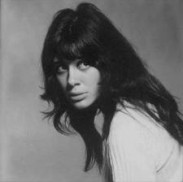
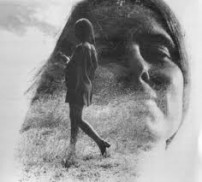
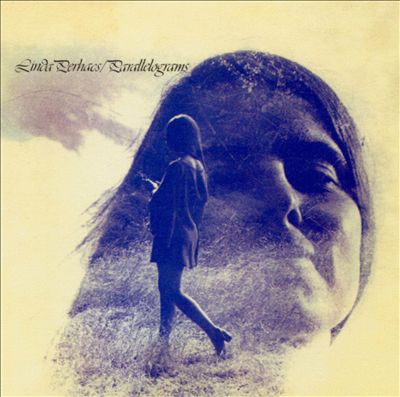
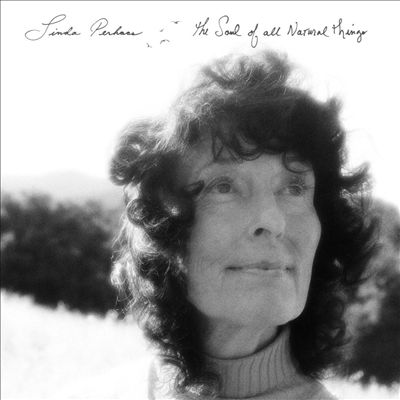
Album du jour: Linda Perhacs, “The Soul of All Natural Things”

MI0001929033MI0003680267

“Linda, I’m a 12-tone composer. I do major film scores. I’m highly degreed. If I could have two ideas in my lifetime this good, I’d be happy with myself.”

The year was 1970.  The speaker was Academy Award-winning composer Leonard Rosenman (East of Eden, Rebel Without a Cause, Fantastic Voyage).  And he was speaking to his dental hygienist.  So begins the legend of Linda Perhacs, as told in a lovely interview with NPR’s David Greene.

The result of the serendipitous encounter between composer and hygienist/singer-songwriter was “Parallelograms,” perhaps the most blissful and beautiful album of folk-pop you’ve never heard.  But don’t scold yourself for that.  Hardly anyone else heard it either.  Disappointed with the album’s poor-sounding, commercial-oriented mix, and with its lack of impact, Linda Perhacs stuck with dental hygiene, a trade that she still pursues upwards of six days per week.

But as happened at about the same time to her English contemporary Vashti Bunyan, whose equally blissful and beautiful “Just Another Diamond Day” also came out in 1970, Linda Perhacs was belatedly discovered by a few devoted younger listeners, her long-lost album was re-released on CD, and she was introduced to a small but fervent legion of new fans.  I discovered “Parallelograms,” in fact, on the Vashti Bunyan channel on Pandora.  And it’s been near-obsessive listening ever since.  Such a pure voice, so perfect in production and intonation!  Such fresh songs, that immediately made a permanent imprint on my consciousness!  Such a luminous vision, which completely disabled my well-developed critical skepticism!

So now, at age 70, Linda Perhacs has finally released a second album, “The Soul of All Natural Things,”on Sufjan Steven’s Asthmatic Kitty Records label — and a most worthy follow-up it is.  With overdubbed vocals, and gentle electronic-acoustic back-up peppered with resonant Latin-esque percussion,  the sound may threaten to enter New Age territory on occasion.  And some of the lyrics almost had me rolling my eyes.  But no.  There’s too much wisdom and honesty in Linda Perhacs’s vision to smirk it away.  Still pure of voice, still finding spiritual and musical inspiration in the natural world, still able to haunt my consciousness, Linda Perhacs has me in her thrall.  Check her out for yourself on NPR’s “First Listen.”

What’s in a (group’s) name?

banchettoboston baroque

Boston Baroque has just announced the program for its 2014-2015 season.

Note that even if you had never previously heard of Boston Baroque, you now know where they are and what they play.  Would that have been true had the ensemble maintained its original name, Banchetto Musicale?  In fact — be honest — are you absolutely sure how to say “Banchetto Musicale?”

My point exactly.

Music lovers of my age or older will recall the 1960’s and ’70’s, when an unprecedented number of early music groups came onto the Anglophone classical scene.  Since it was crucial to these groups’ image to indicate their separateness from the classical mainstream, they tended to adopt obscure monikers in foreign, often dead, languages.  That’s how we got Banchetto Musicale, Syntagma Musicum, Pomerium Musices, Cappella Cordina, Pro Cantione Antiqua, Sine Nomine, Cappella Alamire, et al.  Not just to pick on early music, such was also the case in new music of the time, though more in the wonky names of pieces (“Algorithms I,” “Synchronisms No. 6,” “Syzygy”) than performing groups.

Getting back to early music, such names may have been fine for groups that aspired to nothing further than performing for other specialists, making the rounds of early music festivals, and generally singing to the choir, as it were.  But for any group desirous of busting out of the cozy confines of ye earlie musicke, such a name wouldn’t do.  I mean, could you just imagine what hash your local TV news anchor would make out of “Banchetto Musicale?”*  Actually, it’s unfair to pick on the local news anchor, since some pretty well-known NPR national program hosts have been known to mangle what to many of us would be everyday musical terms, like “concerto.”

So, if it’s traditional mainstream classical acceptance and a broader audience you seek, choose a name that’s pronounceable, memorable, and in very few syllables, suggests what it is that you do.  Like Boston Baroque.

But what if rather seeking mainstream classical acceptance, your cool new classical group wants to appeal to the same smart young listeners who may not know their Brahms from their Borodin, but groove to the tunes of tUnE-yArDs, of Montreal and the F*** Buttons?  Would you then go for such outré handles as Alarm Will Sound, ETHEL, itsnotyouitsme and Roomful of Teeth (performing Friday evening at Amherst College)?  Yes, you would, and should.  For where names like Banchetto Musicale and Syntagma Musicum were once confining, names like ETHEL are now liberating.  And what they’re liberating from is the tradition-enslaved mode of classical music presentation, one which the youngest few generations of potential listeners has convincingly rejected.  There’s a large, inquisitive, intelligent potential audience for the kind of music these new groups make, and I don’t blame them at all for reaching out, in name and in every other way, to their target audience, even if their names make some of us oldsters shake our heads.

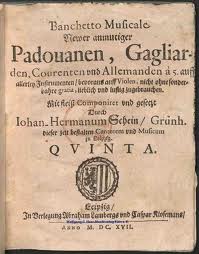
*The name “Banchetto Musicale,” meaning “musical banquet,” comes from a 1617 set of instrumental suites (original cover page above) by German composer Johann Hermann Schein.  Boston Baroque retains the name for an annual celebratory gathering.

Coming up: Roomful of Teeth

roomful

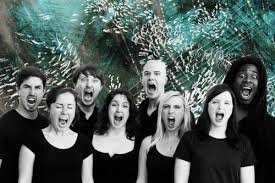
They moan!  They groan!  They growl!  They wail!  They yodel!  They belt!  Are they a toy store full of Chatty Cathys?  No!  They’re Roomful of Teeth, the vocal octet — part chamber choir, part demented college a cappella — that’s performing at Amherst College this Friday evening.

Founded (2009) and directed by Brad Wells of Williams College, and in residence ever summer at Mass MoCA, Roomful got quite a boost when one of its singers, Caroline Shaw, won the Pulitzer Prize for Music in 2012 for her “Partita for Eight Voices,” a four-movement suite composed for Roomful, and inspired by the Sol Lewitt line drawings at Mass MoCA.  The Partita is on Roomful’s self-titled debut album (purchase and download in high quality formats here), along with pieces by such new music stalwarts as Judd Greenstein, Caleb Burhans and (Smith alumna and tUnE-yArDs creator) Merrill Garbus.  Dunno what they’ll be doing this Friday, but I can pretty safely say that if you have any interest at all in what those crazy, wonderful kids are up to today, you’ll want to be there.  Here they are performing Rinde Eckert’s “Cesca’s View.”  I told you they yodeled!